Day 253 – What the Bible Says about Salvation
 istockphoto
“There is salvation in no one else, for there is no other name under heaven given among men by which we must be saved.” Acts 4:12
What does the Bible say about “salvation”? The word comes to us from the Latin “salvatio” which has at its root meaning to be safe (or saved). The idea is safety from harm. Thus, we speak of being saved from sin and its effects or consequences.
The Focus of Salvation
Two other words are repeatedly used to direct us to the “how” of salvation. How are we saved? The Bible says we are saved by faith or belief. Let’s think about those words. To believe (or have faith in) something or someone is to have confidence, trust, or expectation in that thing or person. There has to be a focus for this belief. The Bible teaches that the focus or object of our trust is Jesus Christ.
Romans 10:9-10 – “Because, if you confess with your mouth that Jesus is Lord and believe in your heart that God raised Him from the dead, you will be saved. For with the heart one believes and is justified, and with the mouth one confesses and is saved.”
I Peter 1:8-10, “Though you have not seen Him [Jesus Christ], you love Him. Though you do not now see Him, you believe in Him…obtaining the outcome of your faith, the salvation of your souls.”
So, we look to Jesus and believe. This belief is heartfelt – “believe in your heart”. It is also a belief that comes as a result of hearing the Word of God.
I Corinthians 1:21, “For since, in the wisdom of God, the world did not know God through wisdom, it pleased God through the folly of what we preach to save those who believe.”
Romans 10:17, “For faith comes by hearing and hearing through the word of Christ.”
Furthermore, scripture emphasizes that there is no other name than Jesus’ name by which to be saved – see the verse at the top: “there is salvation in no one else”.
The Power of God
While we have the responsibility to believe, we also realize that even the faith we express is a work of God within us. He gives us the ability to believe.
This gift of faith is an example of the grace of God – “by grace you have been saved”. What is “grace? The Bible teaches that there is one kind of grace common to all humankind and another kind which we call special or particular grace – it is given believers. Here is a basic explanation of common grace – from Ligonier.org :
The doctrine of common grace encompasses the biblical teaching about the universal and undeserved goodness of God toward sinners. By common grace, God restrains sin, evil, misery, and wrath in this fallen world, while conferring general, non-redemptive blessings on all mankind. [https://www.ligonier.org/guides/common-grace].
Jesus said that God sends the rain and sun on both the righteous and the wicked (Matthew 5:44. Special grace, on the other hand, can be described this way:
Special grace is the work of the Holy Spirit in calling, regenerating, justifying, and sanctifying individual sinners. Special grace is restricted to those who actually come to saving faith in Jesus Christ through the work of the Holy Spirit. [ Hugh Whelchel, https://tifwe.org/what-special-grace-means-for-you/ ]
Hebrews 7:25, Consequently, He [Jesus] is able to save to the uttermost those who draw near to God through Him, since He always lives to make intercession for them.
II Corinthians 6:2, ““In a favorable time I listened to you,_and in a day of salvation I have helped you.”
I Timothy 4:10 – “…we have our hope set on the living God, who is the saviour of all people, especially of those who believe.”
So, God begins the work of salvation and accomplishes it in the sacrifice and resurrection of Christ, and we respond with faith.
Week 37 – Day 254: What the Bible says about the Church
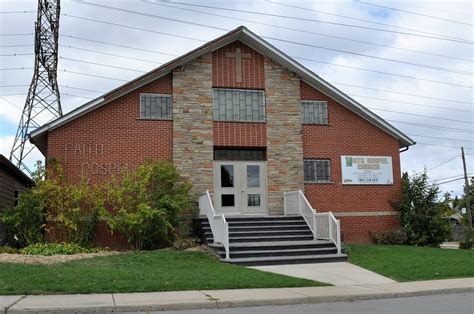
Faith Gospel Church, Hamilton, Ontario – from HistoricalHamilton.com
Built on the foundation of the apostles and prophets, Christ Jesus Himself being the cornerstone, in whom the whole structure, being joined t together, grows into a holy temple in the Lord. In Him you also are being built together into a dwelling place for God by the Spirit. Hebrews 2:20-22
My country – Canada – has a population of 41 million, as of this writing (early 2024). There are approximately 180,000 Protestant churches in the country, with over 70% of them what we would consider “small” churches – that is, churches of 175 or fewer weekly attendees. At the other end of the spectrum, about 12.5 % attend a “large” church of 1000 or more people per week. When you think of ways to describe a church, what comes to mind? the size? location (city or rural)?, the denomination? the style of worship (traditional or contemporary music)? strong preaching? demographics? Some combination of these factors?
How does the Bible define and characterize churches?
Terminology
The Greek term for “church” is “ekklesia”, which means ‘called out’. It was used, for example, to describe an assembly of citizens of a Greek city. Christians used the term to describe themselves as called out by God for a purpose. For example, “the church in Corinth” – called out to serve in that city. Sometimes the word describes all the people of God. Example: “fellow citizens” or “saints” together formed the “household of God” (Ephesians 2:19).
Similes
In the New Testament, God uses various illustrations to help us understand the concept of “church”. We’ll look at these: a building, a body, a flock, a household, and a bride.
Building: Notice the references to a building in the above verse – a foundation, a cornerstone, a structure, a holy temple (this and the next one are types buildings), a dwelling place. Christ and the apostles are the foundational parts of the church, which has a holy purpose and is to be suitable for God and His Spirit.
Body: By far most the most used picture of the church is that of a body. A physical body has various parts. The church does likewise (e.g., members, head [namely, Christ], joints). When one part of a body suffers , the whole body suffers. When one part is honoured the whole body feels good. . Thus, we are to care for all the parts.
So we, though many, are one body in Christ, and individually members one of another. Romans 12:5
And He is the head of the body, the church. He is the beginning, the firstborn from the dead, that in everything he might be preeminent. Colossians 1:18
From whom the whole body, joined and held together by every joint with which it is equipped, when each part is working properly, makes the body grow so that it builds itself up in love. Ephesians 4:16
Now I rejoice in my sufferings for your sake, and in my flesh I am filling up what is lacking in Christ’s afflictions for the sake of his body, that is, the church, Colossians 1:24
And he put all things under his feet and gave him as head over all things to the church, which is his body, the fullness of him who fills all in all. Ephesians 1:22-23
And he gave the apostles, the prophets, the evangelists, the shepherds and teachers, to equip the saints for the work of ministry, for building up the body of Christ,… Ephesians 4:11-12
That there may be no division in the body, but that the members may have the same care for one another. If one member suffers, all suffer together; if one member is honored, all rejoice together. I Corinthians 12:25-26
Flock: The leaders of the church are to look after the “flock”, do so honourably and selflessly, being examples for others to follow. The elders do this as accountable to the chief shepherd – Christ.
So I exhort the elders among you, as a fellow elder and a witness of the sufferings of Christ, as well as a partaker in the glory that is going to be revealed: shepherd the flock of God that is among you, exercising oversight, not under compulsion, but willingly, as God would have you; not for shameful gain, but eagerly; not domineering over those in your charge, but being examples to the flock. And when the chief Shepherd appears, you will receive the unfading crown of glory. I Peter 5:1-4
Household: Being a household reminds us of a family and how family members are to act towards one another. Families that get along well, are support structures and attractive elements, like pillars of a building. They also are buttresses – providing support for the building. This verse emphasizes the value of families who are true to God.
If I delay, you may know how one ought to behave in the household of God, which is the church of the living God, a pillar and buttress of the truth. I Timothy 3:15
Bride: Lastly, and most lovely, the church is Christ’s bride, deeply loved by Him.
Husbands, love your wives, as Christ loved the church and gave himself up for her, Ephesians 5:25
Activities
Finally, a word about what the church is to be doing. I won’t list all the verses here, even a cursory reading of the New Testament reveals that the church is to be busy doing these things:
- meeting regularly
- teaching one another
- singing in worship of God
- praying together and individually
- encouraging one another
- suffering – not seeking it, but expecting it
- feeding one another spiritually
Your Turn:
- Read Acts 11:19-26 and Romans 12:3-8.
- Think about your church. What is a strength of your church that you can thank God for today?
- What saddens you about some churches in our time? Are you praying about that issue? Seeking God’s mind on that issue?
- God has gifted the church with leaders and with a group of people whose spiritual gifts can join together to accomplish great things. What is your spiritual gift (e.g., Romans 12:7-8, serving, teaching, exhorting, contributing, leading, showing mercy)? How do these verses say you are to use your gift?
DAY 255 – What the Bible says about the Future

And if I go and prepare a place for you, I will come again and will take you to Myself, that where I am you may be also. John 14:3
The Bible assures us that there is a future awaiting all people. For example, the Apostle Paul said this,“4 But this I confess to you, that according to the Way,which they call a sect, I worship the God of our fathers, believing everything laid down by the Law and written in the_Prophets, 15 having a_hope in God, which these men themselves accept, that there will be a_resurrection of both the just and the unjust. (Acts 24:14-15) The Apostle John calls these the first and second resurrections (Revelation 20:4-6). The futures are different, with the first being for believers in Christ and the second being for those who are not.
One theologian (J. B. Payne) counted 1,817 prophetic passages in the Bible (27% of the Bible) and estimated that about half have been fulfilled and half are yet to come. Examples of both follow below. You see these already fulfilled and yet-to-be fulfilled aspects in Luke 4. Jesus says He was the fulfillment of Isaiah 61: 1-2a (which relates to His first coming), but He leaves out verse 2b (on judgment), which awaits fulfillment.
Here are some Bible verses – by no means all – that were prophetic when written and have been fulfilled, and other verses that we wait to see come to conclusion.
Already Fulfilled
- The virgin birth: Isaiah 7:14,Matthew 1:22-23
- Jesus to be born in Bethlehem: Micah 5:2
- Jesus’ triumphal entry into Jerusalem: Zechariah 9:9 – John 12:13
- Jesus’ crucifixion: Isaiah 53:1-12Psalm 22:18
- John the Baptist’s introduction of Jesus: Luke 7:27 Malachi 3:1
- Judas’ betrayal and replacement: Acts 1:16
- Christ’s resurrection: Acts 26:23
- Pentecost – the coming of the Holy Spirit on believers: Acts 2:17.
- Destruction of the Temple in 70 AD: Matthew 24:1-2
Yet to be Fulfilled
- Events prior to Christ’s Second Coming: II Thessalonians 2:1-4
- A new covenant for Israel implanted in minds and hearts: Hebrews 8:8-12
- Christ (David’s decendant) reigns: Jeremiah 23:5
- The Rapture: I Thessalonians 4:16-17
- False christs, wars, famines, earthquakes: Matthew 24:3-14
- Millennium: Revelation 20:1-15
- Tribulation and Eternal Life or Judgement: Daniel 12:1-3
- Resurrection: I Corinthians 15:51-52
- Judgement by Christ: Matthew 25:31-46
- New Heavens, Earth, Jerusalem: Revelation 21:1-4
- Antichrist: II Thessalonians 2:1-12:
When?
How do all these, and other events fit together? There are different understandings among Christians about the sequencing of prophetic events. For example, where does the millennium (1000 years) fit? Here are three views:
- Amillennialism: there is no literal millennium, rather, a long time of advancement of the gospel amid considerable opposition until Christ returns
- Premillennialism: Christ returns before the millennium, defeating and confining Satan for 1,000 years during which believers (now raised and with a new body) reign with Christ in a righteous kingdom
- Postmillennialism: believers are raised after the millennium. Then judgment of unbelievers occurs and a new heaven and earth are created.
There is much to investigate in this area of God’s plan for the world and its people. Over the centuries, many, many people have suggested dates – just scan the Wikipedia article on “List of dates predicted for apocalyptic events” – but, here is what Jesus Himself said,
Mark 13:32-37 “But concerning that day or that hour, no one knows, not even the angels in heaven, nor the Son, but only the Father. Be on guard, keep awake. For you do not know when the time will come. It is like a man going on a journey, when he leaves home and puts his servants in charge, each with his work, and commands the doorkeeper to stay awake. Therefore, stay awake—for you do not know when the master of the house will come, in the evening, or at midnight, or when the rooster crows, or in the morning— lest he come suddenly and find you asleep. …”
So, we are to be actively doing God’s work, expecting the return of Jesus Christ at any time.
Your Turn:
- Read Mark 13.
- Don’t be afraid of studying Bible prophecy. Revelation 1:3 says, “Blessed is the one who reads aloud the words of this prophecy, and blessed are those who hear, and who keep what is written in it. For the time is near.”
- What can we learn about God as we study prophecy?
- What does your church/denomination believe about the future?
- If Christ does not return in our lifetime, there is a future each of us will face: death. I will focus on this in a later Short Thought. For now, think of this: for those who are trusting in Jesus, the prospect of death is not so bad! Consider this:
One of the two thieves on a cross beside Jesus’ believed and said, “Lord remember me when You come into Your kingdom.” Jesus answered, “Today you will be with Me in Paradise.” (Luke 23:42). Paul wrote, “So we are always of good courage. We know that while we are at home in the body, we are away from the Lord… we would rather be away from the body and at home with the Lord…” (II Corinthians 5:6-8).
Day 256 – What the Bible says about Angels
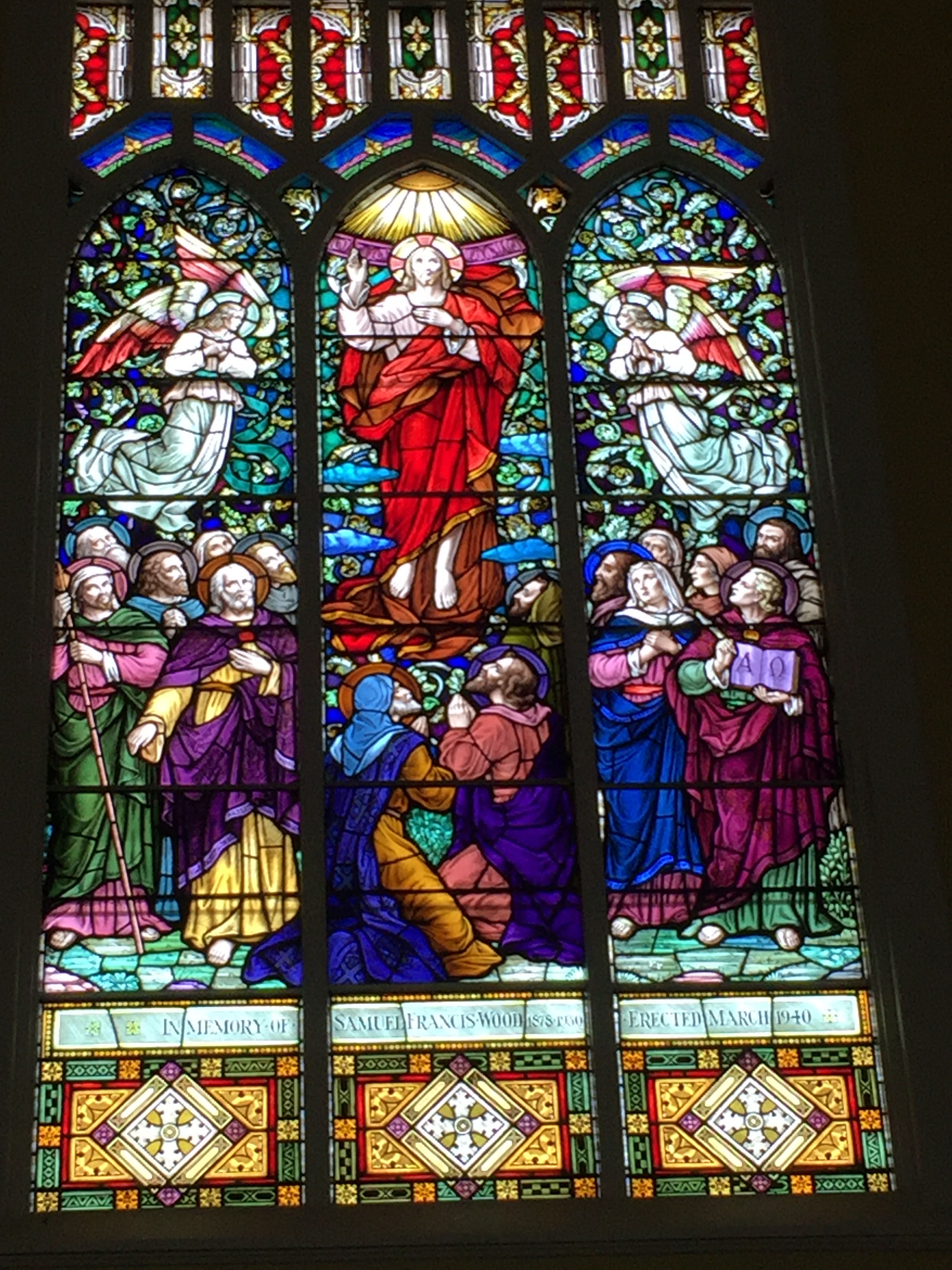
14 Are they not all ministering spirits sent out to serve for the sake of those who are to inherit salvation? Hebrews 1:14
Common representations of angels in art show them as female, or babies (cherubs). A common idea some hold is that when a loved one dies, she or he becomes an angel in heaven. Rather than simply accept these images and ideas, let’s see what the Bible says about angels.
Actually, the Bible says a lot about who angels are and what they do. Angels are mentioned in 34 of the 66 books of the Bible. Both the Hebrew “melak” or “malachi” and the Greek “angelous” mean “messenger”. An angel is a spirit being sent by God to carry a message or provide a service to a human being or nation.
Description – Who they Are
- Created – Like humans, angels are created beings (Colossians 1:6). Like us, they are servants of God and are not to be worshipped (Revelation 19:10). Also, they possess limited knowledge (Matthew 24:36; I Peter 1:12 , “things into which angels long to look”). Unlike us, they do not marry and they do not die (Matthew 22:30; Luke 20:36).
- Appearance – Angels sometimes appear as human beings (male), and sometimes as creatures with wings. Seraphim (= firey or burning ones) appear in God’s presence and use four of the wings to cover their faces and feet, acts of humility and respect (Isaiah 6:2). Samson’s mother described the angel who appeared to her as “a man of God…very awesome” (Judges 13:6). The Apostle John described one “mighty angel” as having a face like the sun, legs like pillars or fire, hands and feet, a loud voice like a roaring lion (Revelation 10:1-6).
- Power & Numbers – Angels are empowered by God for service (II Peter2:11, great in might and power). They are said to be “mighty” (II Thessalonians1:7) . This is especially so when they combine forces. Various verses indicate there are many angels. We find words to this effect: many myriads, thousands upon thousands, multitudes, more than 12 legions (i.e., 6000+ X 12= 72000+), innumerable. See Revelation 5:11-12; Psalm 68:17; Matthew 26:53. This reinforces the message that angels are a powerful force.
What Angels Do
- Protect – Angels protect or guard us. We see this over and over:
(Psalm 91:11, “to guard you in all your ways”; Psalm 103:20, “mighty ones”; Daniel 6:22, “My God sent His angel and shut the lions’ mouths”; Acts 5:19, “an angel of the Lord opened the prison doors…”; Revelation 12:7, “Michael and his angels fighting against the dragon…”; Acts 12:23, “an angel of the Lord struck him down…”; II Kings 19:35, “struck down 185,000 in the camp”;
- Fight evil and Judge – Angels are sent by God to fight evil forces:
(II Kings 6:17, an army surrounding Elisha; Daniel 10:13, “Michael…came to help me; Daniel 12:1, “Michael, the great prince who has charge of your people. And there shall be a time of great trouble… But at that time your people will be delivered”
Angels will have a part in judgment:
Matthew 13:49, “at the end of the age, the angels will come out and separate the evil from the righteous”.
- Serve us & Praise God in various ways – Serving: Hebrews 1:14, “ministering spirits sent out to serve…those who inherit salvation”; rejoicing over a sinner who repents (Luke 15:10); Matthew 18:10, “For I tell you that in heaven their [i.e.,‘little ones’] angels always see the face of My Father who is in heaven”; Exodus 23:20, an angel guided and guarded the Israelites through the wilderness; Matthew 4:11, “angels came and were ministering to Him” [Jesus, after the temptation]; Acts 8:26, an angel directed Philip to a desert place where he met the Ethiopian prince; angels informed Joseph, Mary, Zechariah, & shepherds of Christ’s coming & birth (Matthew 1:20); angels participated in the giving of the scriptures (Revelation 1:1; 22:6; Acts 7:53); angels were present at His resurrection (Matthew 28:5-6; John 20:12)
Praising – Angels continually praise & worship God.
(Psalm 148:2; Hebrews 1:6; Nehemiah 9:6; Revelation 511-12).
False Angels– We should be aware that there are fallen and false angels.
We are not to engage in false worship that includes worship of angels (Colossians 2:8). God has judged fallen angels in the past and will do so in the future (II Peter 2:4; Satan sometimes disguises himself as an angel (II Corinthians 11:14).
- Types & Names – Two particular types or orders of angels are mentioned in the Bible: seraphim and cherubim. After Adam and Eve were expelled from the Garden of Eden, Cherubim were assigned to guard the way to the Tree of Life (Genesis 3:24) and are associated with the Tabernacle – for example, cherubim figures made of gold were placed on the mercy seat (Exodus 25:18-22). They are pictured as carrying the throne of God (Ezekiel 10). Similarly, the seraphim are also associated with worship (Isaiah 6:2-7).
Two angels are named: Michael and Gabriel – Gabriel is mentioned four times, always as a messenger carrying information for the recipients (Daniel, Zacharias, Mary). “I am Gabriel, I stand in the presence of God, and I was sent to speak to you…” (Luke 1:19). Michael holds a high position – he is the archangel or chief angel (Daniel 10:13, 21;12:1; Jude 9), a military commander who fights Satan and his forces (Daniel 10:21).
Your Turn:
- Read Revelation 5.
- Have you ever had an experience where you thought that perhaps you met an angel? Have you entertained an angel unawares (Hebrews 13:2)?
- Scripture gives a lot of attention to angels – but the angels themselves warn us not to worship them – worship only God.
- Notice how in the nativity story, angels are quick to tell Mary, Joseph, Zechariah, and the shepherds not to fear them. How would you have reacted!? We would be surprised, and maybe need some convincing and comforting, even though angels do seem to be busy guarding and guiding us, and helping us to see God.
Day 257 -What the Bible says about Demons

Put on the whole armor of God, that you may be able to stand against the schemes of the devil. For we do not wrestle against flesh and blood, but against the rulers, against the authorities, against the cosmic powers over this present darkness, against the spiritual forces of evil in the heavenly places. Ephesians 6:11-12
Some topics you would rather not have to think about. This is one of them.
Demons are evil supernatural beings who are subservient to Satan (Evangelical Dictionary of Theology, ed. Walter Elwell, Baker Book House, 1984). They are often mentioned in the Bible. The Old Testament refers to them directly as “demons” (3 times), “evil spirits” (8 times), or sometimes in a more obscure sense such as “prince” (in Daniel 10). The New Testament mentions demons many more times, calling them either “demons” (daimónion) or “evil spirits” over 80 times. “ (https://www.gotquestions.org/where-do-demons-come-from.html )
Past
II Peter 2:4 says, “For if God did not spare angels when they sinned, but cast them into hell and committed them to chains of gloomy darkness to be kept until the judgment.” This verse indicates that demons were angels who sinned against God. Matthew 25:41 and Revelation 12:9 confirm that demons are Satan’s “angels”. Their frequent encounters with Jesus during His earthly ministry show that they are enemies of the Lord.
Present
By “present” in this case, I mean from Old Testament times to the current day. Demons have been active in opposing God and His people.
- People wrongly sacrificed to demons (Deuteronomy 32:17; Leviticus 17:7; Psalm 106:37)
- An evil spirit troubled King Saul ( Samuel 16, 18, 19)
- Demons fed lies to some prophets who then wrongly advised King Ahab (II Chronicles 18:20-23)
- In the New Testament we see Jesus (and the disciples) exorcising demons from individuals. The demons appear to be responsible for such mental and physical afflictions as inability to speak, blindness, self-injury, and madness. (Luke 11:14; 8:2; 8:26-39; 9:1; 10:17; 1:27; 9:29; Matthew 17:14-18; 9:32-33; etc.)
- We are warned not to be involved in demon-inspired activities, including sacrifices to demons, fortune telling, and supposed communication with the dead (I Corinthians 10:20-21; Acts 16:16-18)
Demons recognized Jesus as the Son of God and were subject to His power over them (Mark 1:24. Jesus Himself cautioned us to be careful and said demons could be handled only through prayer (Mark 9:29). When the disciples cast out demons, they did so only by the power given them by Jesus Christ (Luke 9:1; 10:17). The Apostle Paul also clearly stated that believers are to put on God’s full armour (truth, righteousness, the Word of God, the gospel of peace, prayer) because “For we do not wrestle against flesh and blood, but against the rulers, against the authorities, against the cosmic powers over this present darkness, against the spiritual forces of evil in the heavenly places” (Ephesians 6:10-18).
Future
What does the future hold for demons?
- II Peter 2;4, “For God did not spare angels when they sinned, but cast them into hell and committed them to gloomy darkness to be kept until judgment.”
- Revelation 12:7-9, “Now war arose in heaven, Michael and his angels fighting against the dragon. And the dragon and his angels fought back, but he was defeated, and there was no longer any place for them in heaven. And the great dragon was thrown down, that ancient serpent, who is called the devil and Satan, the deceiver of the whole world—he was thrown down to the earth, and his angels were thrown down with him.”
- Revelation 20:10, “And the devil who had deceived them was thrown into the lake of fire and sulfur where the beast and the false prophet were, and they will be tormented day and night forever and ever.”
Today’s world there are still many practices that the Bible warns us about. These include using mediums to talk to the dead and beliefs about reincarnation. The practice of “spiritism” is said to have over 13 million followers and many more who are sympathetic to its practices (see the Wikipedia entry on “Spiritism”). The movement known as Scientology believes in reincarnation. Paganism has been around for many centuries and in modern days there is “Heathenism” or “Heathenry” in which people accept many deities. Animism sees a spiritual essence in all sorts of things: animals, plants, rivers, etc. Astrology is another way in which people look for meaning, in this case, in the influence of the stars in human affairs.
The ten commandments begin, “You shall have no other gods before Me. You shall not make for yourself a carved image, or any likeness of anything that is in heaven above, or that is in the earth beneath, or that is in the water under the earth. You shall not bow down to them or serve them.” (Exodus 20:3-5) The Bible also alerts us to the danger posed by Satan and his demons, who try to entice us away from the one true God and the atoning work of His Son, Jesus Christ.
Your Turn
1, Read Ephesians 6:10-20.
- Are you allowing anything into your life that might be associated with demonic practices?
- Do you accept the Bible’s teaching on demons?
- Are you calling upon God’s Holy Spirit and leaning upon the truths of scripture to protect you against Satan’s attacks?
- Do you believe that God is greater than any evil force?
DAY 258 – What The Bible Says About HUMANKIND

So God created man in his own image, in the image of God he created him; male and female he created them. Genesis 1:27
The doctrine of man (= anthropology) focuses on creation and redemption.
Creation
The creation account is found in Genesis 1 and 2. There we see that God made a world suitable for humans, a world with sky, sea and land, birds, fish, plants, and animals. He created the male and female “in His own image”. What does this mean?
To begin with, it means humans are essentially different than any other created thing. We are different from plants, which have a body but no soul or spirit. We are different from animals which have feelings, personality, and some capacity to love, but have no awareness of God. Humans have a body, soul, and spirit – an ability to relate to and enjoy fellowship with one another and God. These things we can see in Genesis 2. Psalm 8 adds that though angels are ‘higher’ than us, they lack the “glory and honour” of humankind and are not given the responsibilities of care for the creation that men and women are.
3 When I look at your heavens, the work of your fingers, the moon and the stars, which you have set in place, 4 what is man that you are mindful of him, and the son of man that you care for him? 5 Yet you have made him a little lower than the heavenly beings and crowned him with glory and honor. 6 You have given him dominion over the works of your hands; you have put all things under his feet,7 all sheep and oxen,and also the beasts of the field, 8 the birds of the heavens, and the fish of the sea, whatever passes along the paths of the seas.
God created humans with the ability to rule or have dominion over creation (Genesis 1:28-30), make moral judgments and commit to obedience to God (Genesis 2:16), and commit to one another as male and female (Genesis 2:24), as well as to show creative talents in making tools and musical instruments (Genesis 4:21-22).
Redemption
When the New Testament talks about the new life of the believer in Christ, it refers to being created in the image of God – Ephesians 4:24, “…the new self, created in the likeness of God in true righteousness and holiness.” To be in the image of God includes becoming born again and characterized by the righteousness and holiness that is applied to us because of Jesus Christ’s giving of Himself for us.
We need this redemption because we are prone to sin. Sin enslaves us; Christ’s redemption frees us. John 8:34, “Truly, truly, I [Jesus] say to you, everyone who practices sin is a slave to sin.” Other verses speak to our sin nature – e.g.,
Romans 3:23, For all have sinned and fall short of the glory of God. II Corinthians 5:21, For our sake he made him to be sin who knew no sin, so that in him we might become the righteousness of God.
Once proclaimed a new person in Christ, we are responsible to live as God intended when He created us.
I Corinthians 6:19-20, Or do you not know that your body is a temple of the Holy Spirit within you, whom you have from God? You are not your own, for you were bought with a price. So glorify God in your body. II Timothy 2:15, Do your best to present yourself to God as one approved, a worker who has no need to be ashamed, rightly handling the word of truth. James 1:27, Religion that is pure and undefiled before God the Father is this: to visit orphans and widows in their affliction, and to keep oneself unstained from the world. Ephesians 5:11 Take no part in the unfruitful works of darkness, but instead expose them. Hebrews 10:24-25 And let us consider how to stir up one another to love and good works, not neglecting to meet together, as is the habit of some, but encouraging one another, and all the more as you see the Day drawing near. Colossians 1:12-18 Giving thanks to the Father, who has qualified you to share in the inheritance of the saints in light. He has delivered us from the domain of darkness and transferred us to the kingdom of his beloved Son, in whom we have redemption, the forgiveness of sins. He is the image of the invisible God, the firstborn of all creation.
The Bible speaks of the “first Adam” who fell into sin, and also of the “second Adam (Jesus Christ) who rescues us from sin and its consequences. With spiritual birth, humans can look forward to resurrection to a new spiritual body
I Corinthians 15:42-49, 42 So is it with the resurrection of the dead. What is sown is perishable; what is raised is imperishable. 43 It is sown in dishonor; it is raised in glory. It is sown in weakness; it is raised in power. 44 It is sown a natural body; it is raised a spiritual body. If there is a natural body, there is also a spiritual body.45 Thus it is written,_”The first man Adam became a living being” the last Adam became a life giving spirit. 46 But it is not the spiritual that is first but the natural, and then the spiritual. 47The first man was from the earth, a man of dust; the second man is from heaven. 48 As was the man of dust, so also are those who are of the dust, and as is the man of heaven, so also are those who are of heaven. 49 Just as we have borne the image of the man of dust, we shall also bear the image of the man of heaven.
Your Turn:
- Read Genesis 1:27-31; 2:7, 15-25.
- What evidence of the fall of humans into sin do you see in your own life and in the world around you?
- How do you understand God corrected this problem?
- How is mankind different from the animals?
- Do you have inward assurance of rescue from sin and a better future to come?
Day 259 – What the Bible says about SIN

Dreamstime_s_25730631-2864314220.jpg
Surely, He has borne our griefs and carried our sorrows; yet we esteemed Him stricken, smitten by God, and afflicted. But He was perched for our transgressions; He was crushed for our iniquities; upon Him was the chastisement that brought us peace; and with His wounds we are healed. Isaiah 53:4-5
This is the last in the series of what the Bible says about _______ . In it we have considered what we learn in the Bible about God, Jesus, the Holy Spirit, itself, salvation, the church, the future, angels, demons, and humans. Now, what do the scriptures say about sin?
We begin by defining “sin”.
- Failing to do the right thing: “Whoever knows the tight thing to do and fails to do it, for him it is sin.” James 4:17
- Lawlessness (breaking God’s laws): “Everyone who makes a practice of sinning also practices lawlessness; sin is lawlessness.” I John 3:4
- Wrongdoing: “All wrongdoing is sin…’ I John 5:17
- Trespassing God’s limits: “In Him we have redemption through His blood, the forgiveness of our trespasses, according to the riches of his grace,” Ephesians 1:7
Now, if we are unclear about any of these terms, we find many lists of specific sins in the Bible that are bound to resonate with us in some way – either as someone who has failed and been guilty of some of these sins or been victimized by others who have committed one or more of these sins against us.
- evil thoughts, sexual immorality, theft, murder, adultery, coveting, wickedness, deceit, sensuality, envy, slander, pride, foolishness Mark 7:20-23
- sexual immorality, impurity, sensuality, idolatry, sorcery, enmity, strife, jealousy, fits of anger, rivalries, dissensions, divisions, envy, drunkenness, orgies, and things like these. Galatians 5:19-21
- be lovers of self, lovers of money, proud, arrogant, abusive, disobedient to their parents, ungrateful, unholy, heartless, unappeasable, slanderous, without self-control, brutal, not loving good, treacherous, reckless, swollen with conceit, lovers of pleasure rather than lovers of God, having the appearance of godliness, but denying its power… II Timothy 2:1-5
- everyone who looks at a woman with lustful intent has already committed adultery with her in his heart. Matthew 5:28
- the sexually immoral, nor idolaters, nor adulterers, nor men who practice homosexuality, nor thieves, nor the greedy, nor drunkards, nor revilers, nor swindlers. I Corinthians 6:9-11
- … Pride and arrogance and the way of evil and perverted speech I hate. Proverbs 8:13
There are about 60-70 sins listed, some repeated, resulting in two or three dozen categories of sin. Perhaps you or I look at such lists and say, ‘Yes, I see several things here that are wrong and hurtful, but how can this one or that one be called “sin”?’ Perhaps, we might argue, they are in the lists because they were socially unacceptable at the time of writing, but not in our day. Or perhaps only when done in excess is this or that one unacceptable. But, here they are, in the Bible, God’s word. At the very least we should give the sins in these lists some thought. Ask yourself, ‘Why are these offensive to God?’
Also, note how these sins arise in us. The Bible teaches that we were born with a sin nature, and then that sinful actions come from passion and desires and wrong thinking in our hearts. (Psalm 51:5; Romans 5:12; James 1:14; Ephesians 2:1-3).
I’ll move along. What is the impact of sin in our lives?
- God doesn’t get the glory due Him: “For all have sinned and fallen short of the glory of God.” Romans 3:23
- Inner defilement: “And He said, “What comes out of a person is what defiles him. For from within, out of the heart of man, come [see list above] . All these evil things come from within, and they defile a person.” Mark 7:20-23
- Missing out on the Kingdom : “… those who do such things will not inherit the kingdom of God.” Galatians 5:19-21
- Self-deception – not seeing the truth – calling God a liar: “If we say we have no sin, we deceive ourselves, and the truth is not in us…If we say we have not sinned, we make Him a liar, and His word is not in us. (I John 1:8-10)
- Enslavement: Jesus answered them, “Truly, truly, I say to you, everyone who practices sin is a slave to sin.” John 8:34
- Impoverishment: “Whoever conceals his transgressions will not prosper.” Proverbs 28:13
- Death: “Then desire when it has conceived gives birth to sin, and sin when it is fully grown brings forth death.” James 1:15. See also Genesis 2:17.
- Being linked to the devil: “Whoever makes a practice of sinning is of the devil, for the devil has been sinning from the beginning…” I John 3:6-10
- Debased thinking and living: “And since they did not see fit to acknowledge God, God gave them up to a debased mind to do what ought not to be done.” Romans 1:28
- Separation from God: “But your iniquities have made a separation between you and your God, and your sins have hidden His face from you so that He does not hear.” Isaiah 59:2
That is quite a list of consequences!
But there is hope for us. First, God sent His Son into this world to deal with the sin problem once and for all. “The free gift of God is eternal life in Christ Jesus our Lord.”
- For all have sinned and fall short of the glory of God, and are justified by his grace as a gift, through the redemption that is in Christ Jesus. Romans 3:23-24
- He himself bore our sins in his body on the tree, that we might die to sin and live to righteousness. By his wounds you have been healed. I Peter 2:24
- But you were washed, you were sanctified, you were justified in the name of the Lord Jesus Christ and by the Spirit of our God. I Corinthians 6:9-11
- “Come now, let us reason together, says the Lord: though your sins are like scarlet, they shall be as white as snow; though they are red like crimson, they shall become like wool. Isaiah 1:18
Second, once we are born again, God’s Spirit enables us in various ways to overcome individual temptations to sin.
- He provides a way out from the temptation: No temptation has overtaken you that is not common to man. God is faithful, and he will not let you be tempted beyond your ability, but with the temptation he will also provide the way of escape, that you may be able to endure it. I Corinthians 10:13
- He accepts our confession and forgives us: If we confess our sins, he is faithful and just to forgive us our sins and to cleanse us from all unrighteousness. I john 1:9. Also: I acknowledged my sin to you, and I did not cover my iniquity; I said, “I will confess my transgressions to the Lord,” and you forgave the iniquity of my sin. Psalm 32:28. And one more: Who is a God like you, pardoning iniquity and passing over transgression for the remnant of his inheritance? He does not retain his anger forever, because he delights in steadfast love. He will again have compassion on us; he will tread our iniquities underfoot. You will cast all our sins into the depths of the sea. Micah 7:18-19
- He invites us to walk in the strength of His Holy Spirit: But I say, walk by the Spirit, and you will not gratify the desires of the flesh. Galatians 5:16
- He challenges us to submit to Him and then resist the devil. Submit yourselves therefore to God. Resist the devil, and he will flee from you.
- He reminds us in a very practical way to avoid those who practice sin: Avoid such people. II Timothy 3:5
- Meditate on the Word of God: I have stored up your word in my heart, that I might not sin against you. Psalm 119:11
- If then you have been raised with Christ, seek the things that are above, where Christ is, seated at the right hand of God. Set your minds on things that are above, not on things that are on earth. Colossians 3;1-2
Your Turn:
- Read Isaiah 53.
- Do you have trouble accepting this teaching on the persuasiveness of sin?
- If God is righteous and holy, do you see how He must do something about sin?
- To overcome the temptations to sin you notice in your own life, are you willing to do the things mentioned in the last bullet points above?
Here’s a preview of the next devotional, coming in Week 38!
Week 38 – Day 260: Repentance
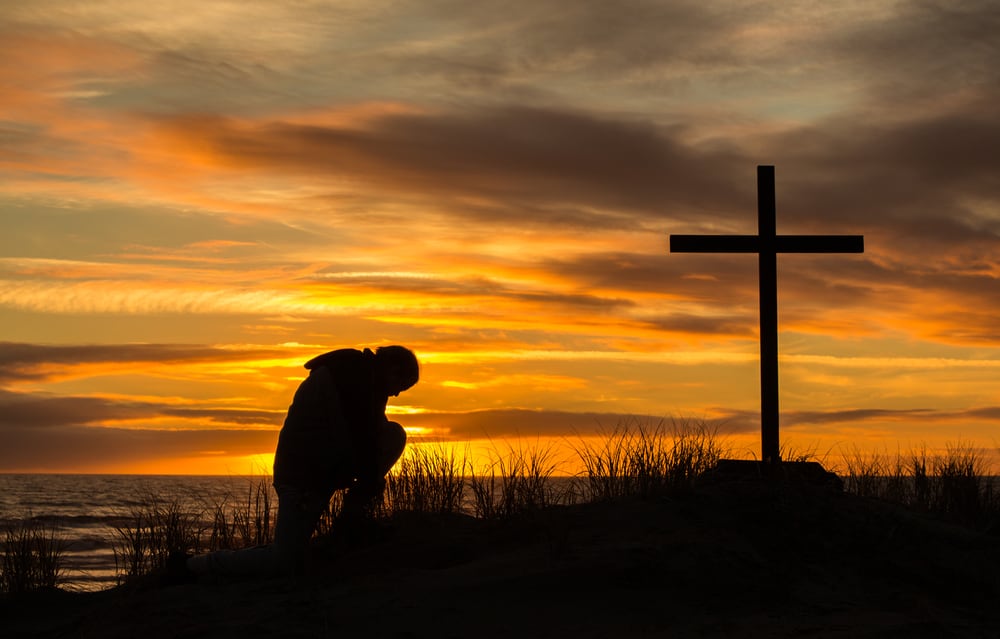
Now on the twenty_fourth day of this month the people of Israel were assembled with fasting and in sackcloth, and with earth on their heads. 2 And the Israelites separated themselves from all foreigners and stood and confessed their sins and the iniquities of their fathers. Nehemiah 9:1-2
I may have mentioned in an earlier “Short Thoughts” the Western Canadian Revival of the early 1970s. Two evangelists from Ohio had been invited for a week of evangelistic meetings in Saskatoon, Saskatchewan. God did something special that week and far beyond as a time of confession and renewal took place in the lives of thousands of believers across Canada and parts of the United States. People confessed their sins in public meetings, sought to restore broken relationships, went to merchants to confess they had stolen something years before and now wanted to make it right, acknowledged sins of pride, holding grudges, etc. in their own lives, and repented. [See the story at https://www.impact-canada.com/saskatoonrevival and at https://pastoral-theology.com/2014/05/15/the-canadian-revival-of-1971/ . Or read the full story in the book, Flames of Freedom (Moody Press, 1976), by Irwin Lutzer.] At the time, I was living in Winnipeg, Manitoba and say first hand the impact of changed lives in the church I attended.
Times of revival have occurred throughout history, in many places in the world. And stories of such renewal of faith are also found in the Bible itself.
In Bible times: Jonah in Nineveh, Elijah n Mount Carmel, Hezekiah’s reforms, Josiah’s reforms, the Day of Pentecost, revivals in Samaraia, Philippi, Thessalonica, Ephesus, Antioch, etc.
Since 1700: The Great Awakening (American colonies, 1725-1760), the 2nd Great Awakening (U.S.A., 1801-1806), the Prayer Meeting Revival (New York City, 1857-59), the Welsh & Azusa Street Revivals (Wales & Los Angeles, 1904-1906), the tremendous growth of the church in China (1953-2000, from 2 million Christians to 75 million, the East Africa revival (1930s-60s), the Jesus movement (U.S.A., 1960s-70s), and many others).
In this devotional, I will focus on the revival that took place in Judah, among a group of exiles – Jews who had long been living in captivity in Babylon and Persia. You will find the story in Nehemiah, chapters 8-10. Nehemiah was a servant in the residence Artaxerxes I of Persia (465-424 BC). He received permission from the king to go to Judah and rebuild the city of Jerusalem. With the help of the priest, Ezra, Nehemiah led the people in repentance and renewal of faith. Chapters 8-10 are focused on that time and offer us a good window into what repentance involves.
First, though, let’s define two important terms [as defined in Homan Bible Dictionary]:
Confession = two sides: (1) an admission and declaration, of sin and (2) an acknowledgment of and commitment to God; a public acknowledgment of Jesus as the basis for forgiveness and salvation
Repentance = a feeling of regret, a changing of the mind, with a turning from sin to God
Both experiences can be individual (my confession/repentance) or collective (an organization’s or nation’s confession/repentance).
So, what does Nehemiah 8-10 tell us about repentance?
- It is a must ,always available, and must be based on scripture
In chapters 1-5 of the Book of Nehemiah, Nehemiah returns to Jerusalem, inspects the dilapidated wall, faces local opposition to the project, rebuilds the wall, deals with some injustices in the region, financially supports the project out of his own pocket, and lists the returned exiles.
In chapter 8, a public gathering is held, in which Ezra the scribe reads from the Book of the Law of Moses (first five books of the Bible) and he and his assistants “helped the people to understand” the meaning. Repentance means agreeing that we have failed to keep true to God’s Word. Since it involves God’s instructions, it is a “must” that we face such times. Though it had been a long time since the people had observed the required Feast of Booths (one of Israel’s feast days, with a focus on God’s protection in the wilderness years), it was always the right time to repent of our failures – and repentance must be scripturally-based.
Churches include Scripture readings in their services; the Apostle Paul directed Timothy to “rightly divide the word of truth” and “preach the Word”. He expected elders to be “able to teach” the Word. That will lead to confession and repentance.
- Confession and worship
Chapter 9 tells of the people’s confession of their neglect of God’s Word. Notice in 9:1 that the people assembled “with fasting and sackcloth”. That was a sign of how seriously they took this. Wearing sackcloth and sprinkling dust on their heads was an outward illustration of their heart-felt and humble desire to turn from neglect to obedience. One thing they did was to separate from “foreigners” – that is, people who did not acknowledge the one true God; they wanted no corrupting influence on their worship. They spent 6 hours reading the scriptures, and 6 hours in confession and worship (9:3). Confession is a part of worship. Other aspects of worship present that day were recalling and giving thanks for God’s presence and provision in times past, God’s miraculous leading of them out of Egypt, His giving of the commandments, His gift of bread from heaven, His forgiveness of past sins, His instruction of them His gift of a new land of plenty, more forgiveness from recurring sins, and His steadfast love.
Some churches have a “prayer of confession” in the weekly worship service, sometimes including silent prayer by each one alongside the oral prayer of the Pastor or leader.
- Covenant
Nehemiah 9:38 says that they made “a firm covenant in writing”. This document was signed by the tribal leaders (10:1-27) and the Levites and the rest of the people (10:28). They promised to separate themselves from wrongful alliances and failure to observe the Sabbath. They said they would practice God’s law with regard to forgiveness of debts and with reference to tithes and other giving to support the priestly families and the carrying out of God’s work in the Temple. This covenant showed a desire to follow God faithfully, in practical ways like Sabbath-keeping and gifts from their crops and animals and monies.
Many churches, including the one we now attend have a “Covenant Agreement” to which members to commit. Ours includes details on these four points: (1) I will protect the unity of my church (love, no gossip, follow leaders, submit to Elders’ care/discipline), (2) I will share the responsibility for my church (praying, encouraging, welcoming), (3) I will serve the ministry of my church (using my gifts/talents, developing a servant’s heart), and (4) I will support the ministry of my church (attendance, giving, being an example). In a previous church, the Pastor would annually have the congregation read aloud the covenant.
Your Turn
- Read Nehemiah 8-10.
- Are confession and repentance a part of your walk with God?
- I s there something specific that you should confess to God right now?
- Do you include thanksgiving as a regular part of your worship practice?
- If your church has a “church covenant”, get a copy and reflect on what it says. If you are a member of that church, no doubt you have given assent and promised to keep that covenant.
 Abundant Living