Day 260: Repentance
Now on the twenty_fourth day of this month the people of Israel were assembled with fasting and in sackcloth, and with earth on their heads. 2 And the Israelites separated themselves fromall foreigners and stood and confessed their sins and the iniquities of their fathers. Nehemiah 9:1-2
I may have mentioned in an earlier “Short Thoughts” the Western Canadian Revival of the early 1970s. Two evangelists from Ohio had been invited for a week of evangelistic meetings in Saskatoon, Saskatchewan. God did something special that week and far beyond as a time of confession and renewal took place in the lives of thousands of believers across Canada and parts of the United States. People confessed their sins in public meetings, sought to restore broken relationships, went to merchants to confess they had stolen something years before and now wanted to make it right, acknowledged sins of pride, holding grudges, etc. in their own lives, and repented. [See the story at https://www.impact-canada.com/saskatoonrevival and at https://pastoral-theology.com/2014/05/15/the-canadian-revival-of-1971/ . Or read the full story in the book, Flames of Freedom (Moody Press, 1976), by Irwin Lutzer.] At the time, I was living in Winnipeg, Manitoba and say first hand the impact of changed lives in the church I attended.
Times of revival have occurred throughout history, in many places in the world. And stories of such renewal of faith are also found in the Bible itself.
In Bible times: Jonah in Nineveh, Elijah n Mount Carmel, Hezekiah’s reforms, Josiah’s reforms, the Day of Pentecost, revivals in Samaraia, Philippi, Thessalonica, Ephesus, Antioch, etc.
Since 1700: The Great Awakening (American colonies, 1725-1760), the 2nd Great Awakening (U.S.A., 1801-1806), the Prayer Meeting Revival (New York City, 1857-59), the Welsh & Azusa Street Revivals (Wales & Los Angeles, 1904-1906), the tremendous growth of the church in China (1953-2000, from 2 million Christians to 75 million, the East Africa revival (1930s-60s), the Jesus movement (U.S.A., 1960s-70s), and many others).
In this devotional, I will focus on the revival that took place in Judah, among a group of exiles – Jews who had long been living in captivity in Babylon and Persia. You will find the story in Nehemiah, chapters 8-10. Nehemiah was a servant in the residence Artaxerxes I of Persia (465-424 BC). He received permission from the king to go to Judah and rebuild the city of Jerusalem. With the help of the priest, Ezra, Nehemiah led the people in repentance and renewal of faith. Chapters 8-10 are focused on that time and offer us a good window into what repentance involves.
First, though, let’s define two important terms [as defined in Homan Bible Dictionary]:
Confession = two sides: (1) an admission and declaration, of sin and (2) an acknowledgment of and commitment to God; a public acknowledgment of Jesus as the basis for forgiveness and salvation
Repentance = a feeling of regret, a changing of the mind, with a turning from sin to God
Both experiences can be individual (my confession/repentance) or collective (an organization’s or nation’s confession/repentance).
So, what does Nehemiah 8-10 tell us about repentance?
- It is a must ,always available, and must be based on scripture
In chapters 1-5 of the Book of Nehemiah, Nehemiah returns to Jerusalem, inspects the dilapidated wall, faces local opposition to the project, rebuilds the wall, deals with some injustices in the region, financially supports the project out of his own pocket, and lists the returned exiles.
In chapter 8, a public gathering is held, in which Ezra the scribe reads from the Book of the Law of Moses (first five books of the Bible) and he and his assistants “helped the people to understand” the meaning. Repentance means agreeing that we have failed to keep true to God’s Word. Since it involves God’s instructions, it is a “must” that we face such times. Though it had been a long time since the people had observed the required Feast of Booths (one of Israel’s feast days, with a focus on God’s protection in the wilderness years), it was always the right time to repent of our failures – and repentance must be scripturally-based.
Churches include Scripture readings in their services; the Apostle Paul directed Timothy to “rightly divide the word of truth” and “preach the Word”. He expected elders to be “able to teach” the Word. That will lead to confession and repentance.
- Confession and worship
Chapter 9 tells of the people’s confession of their neglect of God’s Word. Notice in 9:1 that the people assembled “with fasting and sackcloth”. That was a sign of how seriously they took this. Wearing sackcloth and sprinkling dust on their heads was an outward illustration of their heart-felt and humble desire to turn from neglect to obedience. One thing they did was to separate from “foreigners” – that is, people who did not acknowledge the one true God; they wanted no corrupting influence on their worship. They spent 6 hours reading the scriptures, and 6 hours in confession and worship (9:3). Confession is a part of worship. Other aspects of worship present that day were recalling and giving thanks for God’s presence and provision in times past, God’s miraculous leading of them out of Egypt, His giving of the commandments, His gift of bread from heaven, His forgiveness of past sins, His instruction of them His gift of a new land of plenty, more forgiveness from recurring sins, and His steadfast love.
Some churches have a “prayer of confession” in the weekly worship service, sometimes including silent prayer by each one alongside the oral prayer of the Pastor or leader.
- Covenant
Nehemiah 9:38 says that they made “a firm covenant in writing”. This document was signed by the tribal leaders (10:1-27) and the Levites and the rest of the people (10:28). They promised to separate themselves from wrongful alliances and failure to observe the Sabbath. They said they would practice God’s law with regard to forgiveness of debts and with reference to tithes and other giving to support the priestly families and the carrying out of God’s work in the Temple. This covenant showed a desire to follow God faithfully, in practical ways like Sabbath-keeping and gifts from their crops and animals and monies.
Many churches, including the one we now attend have a “Covenant Agreement” to which members to commit. Ours includes details on these four points: (1) I will protect the unity of my church (love, no gossip, follow leaders, submit to Elders’ care/discipline), (2) I will share the responsibility for my church (praying, encouraging, welcoming), (3) I will serve the ministry of my church (using my gifts/talents, developing a servant’s heart), and (4) I will support the ministry of my church (attendance, giving, being an example). In a previous church, the Pastor would annually have the congregation read aloud the covenant.
Your Turn
- Read Nehemiah 8-10.
- Are confession and repentance a part of your walk with God?
- I s there something specific that you should confess to God right now?
- Do you include thanksgiving as a regular part of your worship practice?
- If your church has a “church covenant”, get a copy and reflect on what it says. If you are a member of that church, no doubt you have given assent and promised to keep that covenant.
DAY 261 – EASTER WEEK: Palm Sunday

9 Rejoice greatly, O daughter of Zion! Shout aloud, O daughter of Jerusalem! Behold, your king is coming to you; righteous and having salvation is He, humble and mounted on a donkey, on a colt, the foal of a donkey. Zechariah 9:9
The King
Well, it’s not the foul of a donkey, but the picture above is the closest I could find in my collection! The verse is from the Old Testament Book of Zechariah, written 500 years before Jesus rode into Jerusalem for what became Easter Week. The prophet begins chapter 9 like this, “The LORD has an eye upon mankind and on all the tribes of Israel.” He then speaks about the cities of Tyre and Sidon and their future (especially of Alexander the Great’s conquest of Tyre in 332 BC). Then, the prophet moves farther ahead, to 33 AD, when another king, namely Jesus Christ, would enter Jerusalem as the long-expected Messiah.
Only, this king would come humbly. And what would He accomplish? Here’s what the rest of Zechariah 9 says:
- Deliver salvation
- Speak peace to the nations
- Rule from sea to sea & from the river to the ends of the earth
- Save His people
Then, Jesus came and very deliberately acted out this prophecy. Matthew, Mark, and Luke report Jesus’ entry into Jerusalem that week. We see Jesus instructing His disciples to go to the village of Bethpage where they would find a colt on which no one had yet ridden, untie it, answer the owners by explaining that “the Lord has need of it”, and take it back to Jesus. They placed cloaks on the colt and the Lord sat on it, while others spread cloaks and palm branches on the ground ahead of Him, all the while shouting with joy,“Blessed is the King who comes in the name of the Lord! Peace in heaven and glory in the highest!” The deliberate enactment of the prophecy is surely a direct claim by Jesus to be the fulfillment, the King. Matthew, in fact, writes, “This took place to fulfill what was spoken of by the prophet, saying, ‘Say to the daughter of Zion, Behold your King is coming…’” (Matt. 21:4-5a). Jesus claimed it and Matthew explains it – Jesus is the coming King.
What other parts of this account tell us significant truths about the Lord? (I’m using Luke’s account in Luke 19:28-40.)
- 28 – Jesus had a strong sense of His responsibility and to this moment as the right time– “going up to Jerusalem”
- 30 – Jesus foreknew the colt was there and that the owners would accept His claim to borrow it – it was “just as He had told them” (v. 32)
- 31-32 – Jesus ascribes to Himself the title “Lord”
- 35-36 – He rode the unbroken colt, showing power over nature
- 35-36 – cloaks were spread on the road (and palm branches, Matt. 21:8; Mark 11:8; & John 12:13) – a sign of acceptance of the rider as king (as done for Jehu in II Kings 9:13).
- 37-38 – the crowd praises Jesus for His mighty (miraculous) works, identifies Him as King
- 38 – God in heaven receives praise for what Jesus is about to accomplish (quoting Psalm 118:25-26).
Contrasts
The crowd spoke of “peace in heaven” (v. 38) but the Lord immediately after the Triumphal Entry into Jerusalem weeps over the city for its rejection of Him and the true peace and salvation which He could give them through His coming sacrifice. The crowd that had welcomed Him as King would also reject Him as King (vv. 41-44)
They also tolerated the disrespect for the Temple (v.46 – “a house of prayer”) and what it stood for (vv. 45-48). The Temple had become a marketplace where merchants sold animals for sacrifice and took advantage of the Passover crowds. The city was also the setting for the religious leaders who plotted His death. So, the contrasts of a flawless Saviour – for the moment followed by crowds who hung on to every word He spoke – on the one hand, and priests and scribes who sought to destroy Him, tell the story of how Easter Week began.
Your Turn:
- Read Luke 19:28-48 and Zechariah 9:9.
- What do you have that “the Lord has need of”? Are you willing to give it to Him?
- How deep was the praise of the crowd? How deep is your acknowledgement of Him?
DAY 262 – Easter Week: Monday
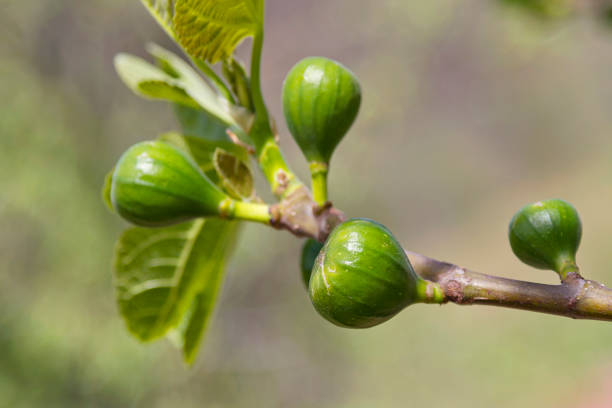
21 And Jesus answered them, “Truly, I say to you, if you have faith and do not doubt, you will not only do what has been done to the fig tree, but even if you say to this mountain, ‘Be taken up and thrown into the sea,’ it will happen. 22 And whatever you ask in prayer, you will receive, if you have faith.” Matthew 21:21-22
The Temple Cleansed
At the beginning of Easter Week there are two unique incidents that take place: the cleansing of the Temple and the cursing of the fig tree. The Temple cleansing incident is recorded in Matthew 21:12-17; Mark 11:15-19; and Luke 19:45-48. Arriving at the Temple, the Lord saw the money changers busy converting Greek and Roman currency into Temple currency. Others sold animals and birds that would be used for sacrifices. There was a place for such business activities, but it wasn’t in the Temple area! Also, it is probable that prices charged the travellers from afar were excessively high. Jesus overturned the tables and reminded he people, “My house shall be called a house of prayer,” (quoting Isaiah 56:7) and added, ‘But you make it a den of robbers.” (Matt. 21:13) He would not allow casual traversing of the Temple (Mark 12:16). The temple was the house of God. In its precincts priests slaughtered animals and offered them on the altar as sacrifices for sin. People worshipped and heard the Old Testament Law read and explained. It was a sacred place. The commotion of buying and selling, especially if done irreverently, was out of place. It deserved respect – God deserved respect.
The Temple initially was intended by God to send a message to all peoples of the way to God. Mark 11:17 includes “for all the nations” – “a house of prayer for all the nations” (also found in Isaiah 56:7). However, it had become a symbol of Jewish nationalism, more than a place of prayer. In both respects (commercialism and nationalism), the people needed to be reminded of its intended purpose.
Jesus healed the blind and the lame (Matt. 21:14) and taught there (Luke 19:47). These were appropriate Temple activities! But as He did that, some religious leaders, jealous of the attention the people gave Jesus, plotted how to get rid of Him (Mark 11:18; Luke 19:47). A lot is happening on these days before Good Friday and Easter Sunday.
The Fig Tree Cursed
Then, we have the strange case of the fig tree. Leaving Bethpage on Monday morning, along the way, Jesus spots a fig tree and is hungry. It wasn’t yet the season for figs but the tree was in leaf and early fruit might be there. It wasn’t. Jesus curses the tree, “May no fruit ever come from you again!” (Matt, 21:19; Mark 11:14) The next morning, Peter comments on the tree, that it has withered and the others wonder how that could happen so quickly. This leads Jesus to give a lesson on prayer. You can do even more than this, He says – like command a mountain to be thrown into the sea and it will happen. In fact, “ 24 …I tell you, whatever you ask in prayer, believe that you have received it, and it will be yours. 25 And whenever you stand praying, forgive, if you have anything against someone, so that your Father also who is in heaven may forgive your trespasses.”
Two questions come to mind:
(1) What is the withered fig tree incident about? The fig tree appeared to promise fruit, but had none. It was punished for failing to deliver what was expected. The chief priests and scribes pretended to represent the law but, in reality, they were hypocrites, rejecting the Messiah and planning to kill Him. The real worshippers were the children singing, “Hosanna, to the son of David” (Matt. 21:15-16) So, the fig tree incident is a lesson on true versus false worship.
(2) Is there any relationship between the mention of the Temple as the “house of prayer” and the lesson on prayer Jesus teaches when answering how the withered tree happened so fast? Jesus teaches on the necessity and power of faith for answers to prayer. If we pray without doubt, believing, we will receive. If we forgive others their wrongs against us, we will be forgiven our own sins (Mark 11:23-25) The Temple was God’s house. Believing prayer is centred on God. Abuse of God’s house is evidence of unbelief; unbelief is requesting without a focus on God’s will and power.
Your Turn:
- Read Mark 11:15-25.
- How can you pray “without doubt”?
- Have you ever sensed a conflict between some resentment you feel and an unfulfilling prayer life?
- Remember what Paul wrote in I Corinthians 6:19-20, “19 Or do you not know that your body is a temple of the Holy Spirit within you, whom you have from God? You are not your own, 20 for you were bought with a price. So glorify God in your body.” In the Temple building in Jesus’ day, many were showing disrespect. If your body is God’s temple today, how can you show respect to it as God’s dwelling place. Read all of I Corinthians 6 for ideas.
x
DAY 263 – Easter Week: Tuesday
Psalm 110:1, “The LORD says to my Lord, ‘Sit at my right hand, until I make your enemies your footstool.’”
 idisciple.org
Some of the events of Easter Week overlapped a couple of days – for example, the cursing of the fig tree on Monday and the comments of the withered tree on Tuesday, or the preparations for the Passover on Wednesday and Thursday. There are also observations that the Lord taught the people and clearly some of that was on different days. Wednesday is the most difficult time frame for setting particular events. And some days have too much for me to cover in one day’s reading. With those things in mind, here is how I am approaching Tuesday & Wednesday: In this devotional we’ll examine three questions,
(1) the questioning of Jesus’ authority – (2) the question of whose son is the Christ, and – (3) the question asked by the Sadducees about resurrection.
What I’ll leave out is a lot – three parables – paying taxes to Caesar – the Great Commandment – the seven woes pronounced on the Pharisees and Sadducees – the widow’s offering – and the whole of the Olivet Discourse about the end times and the return of Christ!
Check the index to these “Short Thoughts” to see where these events may be covered elsewhere.
- Questioning Christ’s Authority (Matthew 21:23-27; Mark 11:27-33; Luke 20:1-8)
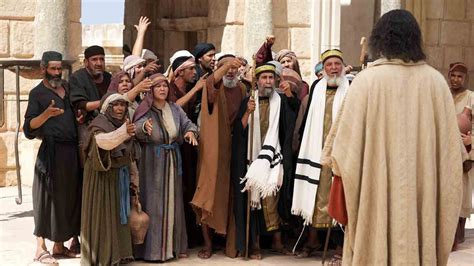
On the way to Jerusalem and during Easter Week, Jesus performed miracles of healing for many. Then, He also drove out the moneychangers and others from the Temple, and He taught there. The chief priests and elders questioned His authority to do so. “Who gave you this authority?” they asked. It is more of an accusation than a curiosity – an accusation that He was acting without their permission. The answer Jesus gave centres on that word “authority”. In essence, He points out that His authority had to be from men in institutional authority or in heaven. He asks them where John the Baptist’s authority to baptize came from – “from heaven or from man”. These religious leaders were smart enough to see that if they answered, “from heaven”, He would challenge them as to why they hadn’t believed and followed John. But, if they answered “from man” the people would reject them because they believed John was a prophet sent from God. As religious leaders they should be able to discern John’s legitimacy, but they avoid any answer, “We do not know.”
The Lord’s answer is, “Neither will I tell you by what authority I do these things.” He is challenging them to think about it, to examine the facts, and to be honest about what drives them. John had pointed to Jesus: “Behold, the lamb of God who takes away the sin of the world! This is He…” (John 1:29-30) To say his ministry of pointing to Jesus was from heaven, would mean that these religious leaders should also be following Jesus. However, that they were not willing to do. Jesus does not need to answer their question any further – they had the answer and refused to accept it.
- Whose Son is the Christ? (Matthew 22:41-46; Mark 12:34-37; Luke 20:41-44)
In one of His teaching sessions in the Temple, Jesus poses a question to the Pharisees. He refers to Psalm 110 – the most quoted Psalm about the Messiah in the New Testament.
Psalm 110:1, “The LORD says to my Lord, ‘Sit at my right hand, until I make your enemies your footstool.’”
The first use of “LORD” is the word Yahweh or God. The second use is a reference to the King (“Lord”) who is in David’s line. So, the sentence can be understood thus, ‘God says the King (or Messiah) descended from David, ‘Sit in the place of honour and rule over your enemies.’ Jesus’ asks the Pharisees, “What do you think about the Christ? Whose son is He? (Matt. 22:42)” They answer, “the son of David”, which is true as far as it goes. But Jesus is making the point that this King is more than a human descendant of David’s. Jesus observes that David, writing these words in Psalm 110, says that the Messiah who would come is the Son of God, not just son of David, and that David himself, as author of Psalm 110, saw it that way, too. The audience needed to learn that Messiah was more than a political or military leader; He was about to accomplish what was of first importance. They needed to understand Him as Saviour.
- Is there a resurrection? (Matthew 22:22-33; Mark 12:18-27; Luke 20:27-40)
The last question for us to consider is the one the Sadducees asked. They propose a situation in which a man dies leaving a widow. By their law, the brother of the deceased should marry the widow (Deuteronomy 25:5-6). The Sadducees then say, what if there were seven brothers and she ended up marrying all seven. Whose wife would she be in the resurrection? They did not believe in a resurrection, so their question is meant to show the absurdity of the idea. Jesus answers the question, saying it is irrelevant since there is no married state in the resurrection. Then he goes on to speak to their real point – is there a resurrection at all? And His answer to that is as follows, “37 But that the dead are raised, even Moses showed, in the passage about the bush, where he calls the Lord the God of Abraham and the God of Isaac and the God of Jacob. 38 Now He is not God of the dead, but of the living, for all live to Him.” 39 Then some of the scribes answered, “Teacher, you have spoken well.” 40 For they no longer dared to ask Him any question.” (Luke 20:37-40) Abraham, Jacob, and Isaac were dead by the time of Moses, yet Moses called God the God of these three. Jesus makes the point that God is God of the living, so Abraham, Jacob, and Isaac must have been alive long after their death. The Sadducees have no retort. Jesus also said to the Sadducees, “You are wrong, because you know neither the Scriptures nor the power of God .” They didn’t know the Scriptures because there are several places in the Old Testament that speak to the resurrection (e.g., Isaiah 26:19; Daniel 12:2; Job 19:25-27). They did not know the power of God, who can raise the dead and provide a resurrected state that is different from the present one. The scribes, who did believe in the resurrection, were impressed with the Lord’s answer and the Sadducees thought better than to ask any other questions.
Your Turn
- Read Matthew 21:23-27; 22:41-46; 22:23-33.
- What answer would you give to those who doubt Jesus’ authority to speak as He did? What answer would you provide for the Lord’s question about the sonship of the Messiah? How would you answer a sceptic who ruled out any concept of a resurrection?
- Think of the consequences of rejecting the authority of Jesus, rejecting the Messiahship of the Lord, and rejecting the Bible’s teaching on a resurrection. Where would that put you in terms of your relationship to Jesus Christ?
- All three incidents are about authority. Are you OK with Jesus having authority over you Or, do you have a problem with accepting God’s authority over your life? Your choices?
DAY 264 – Easter Week: Wednesday
 brothersofthebook.com
“She has done a beautiful thing to me.” Matthew 26:10b
Having a servant wash the feet of a guest was a common courtesy in Palestine in New Testament times. Streets were dusty and dirty and open sandals were regular footwear. The Bible records three foot-washing occasions: Luke 7:36-50 (early in Jesus’ ministry, by a sinful, unnamed woman), Matthew 26:6-13; Mark 14:3-9; & John 12:1-8 (the incident we are examining today), and John 13:1-17 (Jesus washes the feet of the disciples).
Piecing the Mathew, Mark, and John accounts together we get this: we find Jesus in Bethany, just outside Jerusalem, where Jesus spent overnight on the days leading to Good Friday. He is at the home of Simon the Leper (meaning a man named Simon who had been a leper but was now cleared of the disease). Lazarus and his sisters Martha and Mary are present, and it is Mary who pours expensive and fragrant oil on the Lord’s head and wipes His feet with her hair. Jesus says she has done “a beautiful thing”. But not all agreed. Some, including the twelve (and particularly Judas Iscariot), saw the act as a wasteful extravagance – the perfume was costly to say the least (equal in value to about a year’s wages) and could have been sold and the money given to the poor. So, they rebuked Mary.
Jesus defends the woman, “Why are you bothering her?” Hers has been a beautiful act of devotion, foreshadowing the death of Christ and the preparation of His body for burial. She will be remembered wherever the gospel is preached in years to come. Besides, Jesus adds, there is always opportunity to serve the poor, whereas He would not be with them much longer – now was the time for them to honour Him. John notes that the objection of Judas was duplicitous; he had been regularly stealing from the disciples’ money bag.
We might summarize some lessons learned as follows:
- Demonstrating common courtesy to guests should not be forgotten.
- Examine yourself before you point a finger at others.
- Ask yourself, how do I honour Jesus Christ?
- Showing devotion to the Lord is always appropriate.
- Which is important: counting the monetary value of an item or appreciating the depth of a person’s commitment to the Son of God?
Your Turn:
- Read Matthew 26:6-13; Mark 14:3-9, and John 12:1-8.
- Think about how Jesus evaluates the gifts people make to Him and His work. Here, He supports a lavish, expensive gift as appropriate because of its deep meaning. Giving to the support of the poor is also important but one gift did not exclude that the other. Then, there is the sacrificial gift of the widow’s mites (Luke 21:1-4). Her two mites were more in God’s eyes than what others with much more available to them had given. God assesses the heart ahead of the amount. How does God evaluate your giving to Him and other worthy causes?
- Note that Jesus took opportunity to point ahead to His crucifixion, death, and burial. This incident was yet another thing for His followers to remember and meditate on later.
DAY 265 – Easter Week: Thursday

The Garden of Gethsemane – from fascinatewithzea.com
“See, the hour is at hand, and the Son of Man is betrayed into the hands of sinners. Rise, let us be going; see, My betrayer is at hand.” Matthew 26:45-46
We come now to Thursday of Easter Week. In some Christian churches this day is called “Maundy Thursday”. Maundy is from a Latin word meaning “mandate” or “commandment” and is used on this day because it was on Thursday that Jesus said, “A new commandment I give unto you that you love one another just as I have loved you…” (John 13:36). That commandment forms part of the Upper Room Discourse, as found in John chapters 13-17.
The Gospels describe three events as occurring on Thursday:
- Observance of the Passover meal (Matt. 26:17-35; Mark 14:12-26; Luke 22:7-30)
- The Upper Room Discourse (John 13-17)
- Jesus prays in Gethsemane (Matt. 26:36-46; Mark 14:37-42; Luke 22:39-46)
Passover
The Passover observance marked the time when the Israelites in Egypt marked their doorposts with the blood of a sacrificial lamb. God would strike down the firstborn of each household in Egypt that did not have the blood applied. For those with the blood, He would “pass over”, sparing the firstborn. The Passover was part of the Feast of Unleavened Bread. Hence, in Matthew 26:17 we read, “Now on the first day of Unleavened Bread the disciples came to Jesus saying, ‘Where will you have us prepare for you to eat the Passover?’ It was their practice to observe the Passover, as instructed in Exodus 12. Jesus sends two disciples to meet a certain man and follow him to the place they would gather. It was “a large upper room furnished and ready” (Mark 14:12-16). There, as they were eating, the Lord informed them that one of them would betray Him. Jesus took some bread, blessed it, and said, “Take, this is My body.” They also drank from a cup and Jesus said, “This is My blood of the covenant, which is poured out for many.” He was describing His crucifixion, identifying Himself as the substitutionary lamb who would pay for their sins. The bread represented His body, beaten and nailed to a cross, and the cup represented His blood shed. Later, the Apostle Paul would write that believers should regularly remember Jesus’ sacrifice in the same way (I Corinthians 11:23-26). We call our observance the eucharist or communion or the Lord’s Supper.
Upper Room Discourse
While in the upper room, Jesus taught the disciples truths that would help them when He left them. That was a frightening prospect for the disciples. The Lord reassured them in these chapters from the Gospel of John that He would not abandon them; He would give them a Helper in the person of the Holy Spirit.
14:1-14 Jesus says He is going to prepare a new home for them and He will return and take them to be with Him. He answers questions from Thomas and Philip, saying, “I am the Way, the Truth, and the Life; no one comes to the Father except through Me;” and that He and God the Father are one.
14:15-31 He challenges them to keep His commandments. He explains that God the Father will not leave them orphaned; rather, He will send the Holy Spirit as a Helper to be with them forever. He will teach them “all things” and bring to remembrance what Jesus had taught them. Jesus leaves them His peace.
15:1-11 The Lord uses a new analogy. “I am the vine,” He announces. They are branches that bear fruit. They are told to abide in Jesus, as a branch does in a vine. Doing so will result in “much fruit”, including answered prayer.
15:12-17 The commandment to “love one another” is next. We are love one another “as I have loved you”. There is no greater love than to lay down one’s life for one’s friends – which, of course, is what Jesus is about to do for them and us. He invites us into a special relationship with Him as “friends”.
15:18 – 16:4 Jesus wants them to know that persecution is coming. Just as He is facing the hatred of His persecutors, so, too, His followers will experience hatred. “A servant is not greater than his master. If they persecuted Me, they will persecute you also. He is forewarning us.
16:5-27 He again reassures His disciples. It is a good thing that the Spirit is coming. He will convict the world, guide believers to the truth, and glorify Jesus. Not only that, but Jesus Himself will return. They will sorrow at His departure and at the world’s persecution of them, but, He assures them, “I will see you again, and your hearts will rejoice. And no one will take your joy from you.”
16:28-33 Jesus tells them, “…the Father Himself loves you, because you have loved Me, and have believed that I came from God.” Even though they would soon be scattered, but He wants them to know that He has overcome the world and they can have peace as they reflect on what He has been teaching them.
17:1-26 This is the “High Priestly Prayer” of Jesus Christ on behalf of His followers. He is praying for those who have believed in Him – Hs disciples and other followers of that time, plus “those who will believe” – namely, those of us who have believed since He uttered these words. The tenderness of Jesus’ relationship with the Father comes through the words of this chapter, as does His care for us. Jesus emphasizes the oneness that exists between Him and the Father and between the godhead and ourselves.
I wanted to summarize the teaching of the Upper Room Discourse because these are the Lord’s last words before Good Friday – addressed directly to His disciples of then and now, precious words.
Gethsemane
Lastly, some brief comments on the prayer of Jesus Christ in the Garden of Gethsemane. The account is found in Matthew 26:36-46; Mark 14:32-42; and Luke 22:39-46.
There are four steps in this story of Gethsemane. I’m using Matthew 26. (1) Overwhelming sorrow (vv. 36-37). Jesus takes the eleven disciples (Judas Iscariot has left to arrange his betrayal) to a place on Mount Olivet called Gethsemane (meaning “wine press”). Eight stay a distance away as He takes Peter, James, and John a little farther. All the time the Lord is becoming more stressed, troubled, sorrowful. In fact, He is “overwhelmed with sorrow unto death”. He asks the three to “keep watch” with Him – protect His prayer time and join with Him in prayer. We must be aware of how much the cross hurt Him – not just the beatings and nails, but the inner emotional toll that was almost enough to cause Him to die right there.
(2) If possible… (vv. 38, 42, 44). The prayer He expresses to His Father in heaven is brief: “My Father, if it is possible, may this cup be taken from Me. Yet, not as I will, but as You will.” It is short, but it is repeated two more times, showing it is heartfelt and it addresses an urgent need. Also, He is face down on the ground, another sign of intensity. The “cup” refers to His blood being spilt – death – and also to the “cup of God’s wrath” – that is, God’s wrath or judgment against sin. You find it so used several times in the Old Testament (e.g., Jeremiah 25:15-16; Isaiah 51:17, 22; etc.). If there is another way to redeem sinners, Jesus would ask that it be taken, but only if it is within the Father’s will.. The answer, as we know, was ‘No’ – there was no other way.
(3) Arise (vv. 45-46). The three disciples are so weary that they fall asleep rather than “keep watch”. They need the strength of prayer to face what was about to happen, but they lost that opportunity. Jesus is gentle with them, recognizing that the body is weak. Now, after three times in deep communication with His Father, the Lord announces, “The hour is at hand…rise, let us be going…” He has accepted the Father’s will and goes to meet His betrayer and all that follows.
Your Turn:
- Read John 14-17 – the Upper Room Discourse – which the Matthew, Mark, and Luke do not include.
- The next time you observe the Lord’s Supper, reflect on what preceded it in the Exodus account (the initial Passover) and in the New Testament account (the Last Supper).
- The Lord gave guidance to His followers of all times in the teaching found in John 13-17. This scripture offers comfort and guidance for us. As you read it today, imagine Jesus talking straight to you, preparing you for hard times, assuring you of His love, encouraging you with the promise of a place He is preparing and a promise of His return to be with you. These words are for you.
- Meditate on the intensity of Jesus’ suffering for you. Remember that prayer is meant to strengthen us for what is ahead.
Day 266 – Easter Week: Friday
 wallpapersafari.com
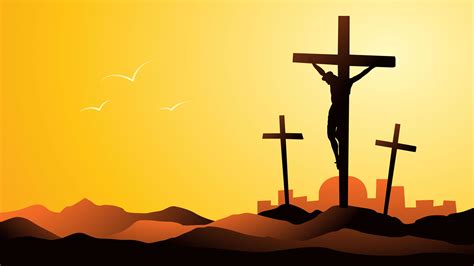
44 It was now about the sixth hour, and there was darkness over the whole land until the ninth hour, 45 while the sun’s light failed. And the curtain of the temple was torn in two.46 Then Jesus, calling out with a loud voice, said, “Father, into your hands I commit my spirit!” And having said this He breathed His last. Luke 23:44-46
Here are the events of Good Friday:
Betrayal & Arrest (after midnight) : Matthew 26:46-66; Mark 14:43-52; Luke 22:7-13; John 18:2-12.
The Jewish Trials
- Before Annas : John 18:13-24.
- Before Caiaphas & part of Sanhedrin – Matt. 57:75; Mark 14:43-52; Luke 22:54-65; John 18:19-24.
- Before full Sanhedrin (after Sunrise) – Matt. 27:1-2; Mark 15:1; Luke 22:66-71.
The Roman Trials
- Before Pilate – Matt. 27:2-14; Mark 15:2-5; Luke 23:1-5
- Before Herod – Luke 23:6-12.
- Before Pilate – Matt. 27:15-26; Mark 15:6-15; Luke 23:13-25; John 18:28-19:16
Crucifixion (approx. 9 AM-3 PM) – Matt. 27:27-54; Mark 15:16-39; Luke 23:26-49; John 19:16-37.
Burial (evening) – Matt. 27:57-61; Mark 15:42-47; Luke 23: 50-54; John 19:38-42.
From “Harmony of the Events of Holy Week”. The ESV Study Bible (2008). Crossway, Wheaton, Illinois 60187. Table found at Matthew 21:20 of the text.
The Trials
Jesus, having been arrested in the Garden of Gethsemane, was first taken to Annas, who had been High Priest from AD 6-15, followed by his sons and son-in-law, Caiaphas. Perhaps it was a courtesy to take Jesus to Annas even though now formally out of office. We don’t know what was said at that trial appearance. It was followed by an appearance before the then current High Priest, Caiaphas, and some members of the Sanhedrin. They said, “If you are the Christ, tell us.” (Luke 22:66) He answered, “If I tell you, you will not believe,” and added, “From now on the Son of Man will be seated at the right hand of the power of God.” They asked, “Are you the son of God, then?” He answered, “You say that I am.” They take that to mean that He is blaspheming God. (Note the use of the terms “the Christ” and “Son of Man”, both referring to the Messiah. Jesus does not refute either term. So, the first questioning is about who He is.
The second question (by Annas) is about Jesus’ disciples and His teaching. The Lord answers that His teaching was in public and lots of people can tell the High Priest the nature of His message. He is saying that there was no secret teaching – no conspiracy – He spoke in private the same thing He had spoken in public. Perhaps Annas was suggesting that Jesus was saying things that were a threat to Rome, things warranting crucifixion.
Next, He is taken to Pilate. The best they can make up about Him is that He accepted the title of “the Christ” (Messiah), a king. So Pilate asks if He is the King of the Jews, to which Jesus replies, “You have said so.” (Luke 22:70) The next verse shows that His accusers take this to mean, ‘Yes, I am King,’ – giving the case political meaning that would interest the Roman authorities.
Pilate recalls that Jesus is from Galilee and tries to rid himself of the matter by sending Jesus to Herod. Herod asked many questions, but makes no decision. He mocks and mistreats Jesus, then returns Him to Pilate. Pilate calls the chief priests and Jewish rulers and says, “You brought me this man as one who was misleading the people [i.e., leading them away from loyalty to Rome]. And after examining Him before you, behold, I do not find this man guilty of any of your charges against Him. Neither did Herod…” (Luke 23:13-16) In 23:32 Pilate asks, “What has He done?” That was Pilate’s third acknowledgment of the Lord’s innocence. Nonetheless, because the people were being stirred up and making a loud noise, Pilate decides that he should quell a possible riot and delivers Jesus to them to be crucified.
The Crucifixion and Burial
- Denial & Betrayal:
While the religious and civil trials were happening, Peter denied three times that he knew Jesus (Luke 22:54-62), becoming sorrowful at his weakness. The accounts show the Judas Iscariot betrayed Him for money (then in shame, hung himself), the disciples as a whole fled when Jesus was arrested, and Peter fearfully denied he even knew Jesus. There is also description of mocking, striking, more mockery, placing of a crown of thorns, spitting on Him, etc.
- Cruelty & Mocking:
Pilate allows the crucifixion to go ahead, again demonstrating his opinion that the accused is not guilty of anything – doing so by washing his hands (Matthew 27:24-26). Crucifixion brought the victim excruciating pain and public shame. Observers make fun of Him – ‘If you can destroy the Temple and rebuild it in three days, get yourself down from the cross!’ “If you are King of Israel, come down and we’ll believe!’ ‘If You are the Son of God, why doesn’t God deliver You?’
- Consideration & Triumph
Several positive things occurred amid the darkness of the trial and crucifixion. A man named Simon helped carry the cross, and perhaps it is one of his two sons, Alexander & Rufus, who later is mentioned as part of the Roman church (Romans 16:13). One thief on the cross becomes a believer and is promised heaven with Jesus. Jesus assigns the apostle John to provide care for Mary, mother of Jesus. Jesus asks the Father to forgive His tormentors. A Roman centurion understands that Jesus is the Son of God. The Temple curtain separating the Holy Place from the Holy of Holies is torn in two, indicating lifting of the separation between God and the people. Nature indicates a momentous event has occurred as darkness comes in mid-afternoon, an earthquake occurs, rocks are split, and tombs are opened, with some saints resurrected. And Joseph of Arimathea, a secret disciple of Jesus and member of the Sanhedrin, declares publicly his love for the Saviour by requesting off Pilate permission to bury the body of Jesus. He was assisted by Nicodemus and some women.
Your Turn:
- Read John 18-19.
- In a time of crisis, followers of Jesus Christ can fail Him or confirm their faith in Him. What is your record when under pressure to hide your faith or stand for it?
NOTE: Week 39, Days 267, 268, and 269 continue the story of Easter with events of Saturday (in the tomb), Sunday (Easter – the resurrection), and some afterthoughts about resurrection.
 Abundant Living