Day 274 – A Parent’s Teaching

Hear, my son, your father’s instruction, and forsake not your mother’s teaching. Proverbs 1:8
The Book of Proverbs has much to say about parents instructing their children. For example, parents are to teach their children about these kinds of things:
Trusting God / Discipline / Friendships
Keeping confidences / Pride / Naivity
For today’s “Short Thought”, let’s focus on Proverbs 1:8-33 and 3:1-4.
The main point in these verses is that children should listen to the input of parents (presumably, trustworthy parents). Proverbs 1:8 and 3:1 says this in four ways:
Hear your father’s instruction.
Forsake not your mother’s teaching.
Do not forget my (the parent’s) teaching.
Keep (in your heart) my commandments.
Several education web sites usually distinguish between teaching and instruction. “Teaching” is a broader concept than instruction. It involves concepts and principles, and ways of thinking through the subject at hand. “Instruction” is more about the process that is to be followed in order to learn how to accomplish a task. Both are necessary, and one parent may be better at one approach and the other parent at the other aspect. “Commandments” encapsules both – principles to live by and specifics about what to do or not do. We are to hear or listen (i.e., pay attention) and we are not to forsake (leave behind, depart from) or forget (a result of carelessness) the teaching and instruction. Such attention is more than outward observance; it is a matter of the heart or inner commitment.
So, we have a choice to make. Choose to give serious attention to sound parental input, or disregard it. Examples of disregard are found in Proverbs 1:11-16. There, we are warned about following along with foolish peers or adults who urge us to join with them in assault, theft, deception, killing, greed – various types of evil. But, there is a consequence to such behaviour: we fall into a trap of self destruction. Our fate becomes the opposite of what these sinful enticements offer (1:10, 18-19). We fall victim to terror, calamity, distress, and anguish (1:27). The applications are easy for us to visualize. For example, we commit a crime and end up in prison, or we indulge in a destructive habit and lose our health. We come to a place of deep regret. We set God aside and lose the insights into beneficial living that He has to help us.
The passage adds many insights into how to live. Wisdom is available to those who look for it (1:20-21). The costliness of the foolish or simple life is obvious. Rescue is available – “If you turn at My reproof, behold, I will pour out my spirit to you; I will make My words known to you”(1:23). But some people refuse God’s call for too long and find it is too late – “They will call upon Me but I will not answer. They will seek for Me diligently but will not find Me” (1:28-29). And, if we refuse to fear the Lord, despising His counsel and reproof, they “shall eat the fruit of their way” (1:31) and be destroyed (1:32). Thus, the writer again urges us to listen: “Whoever listens to Me will dwell secure and will be at ease, without dread of disaster (1:33).
After the main point is repeated in 3:1, a promise is made to those who listen, a promise of length of days, peace, God’s favour, and success in God’s and man’s sight (3:2-4). We are to cherish and hold tightly love of, and faithfulness to, true wisdom (3:3).
Your Turn:
- Read Proverbs 1:1-33 and 3:1-4.
- How do you define wisdom?
- Think of those in your life who have shown wisdom. Thank God for them.
- What foolishness have you fallen victim to in your life? What did that fall cost you?
- Can you identify certain benefits from having listened to a wise parent? If not your own parent, then, someone else’s?
Day 275 – The Benefits of Wisdom

Wisdom will come into your heart, and knowledge will be pleasant to your soul. Proverbs 2:10
Pictured above is an owl. Many cultures view the owl as a symbol of wisdom. Perhaps this is because of its penetrating eyes, and its tremendous nocturnal vision. But, it is interesting that in the Bible the owl is associated with the barrenness and loneliness of the desert (Psalm 102:3-6).
That curiosity aside, Proverbs 2 says nothing specifically about owls but a great deal about wisdom, including its many benefits. Before it gets into those benefits, chapter 2 reminds us of the importance of seeking wisdom, insight and understanding. We are to do so with intensity. Look at the words that suggest intensity: treasure the commandments, listen attentively, incline the heart, call out for insight, do so loudly (raising one’s voice), seek like you are seeking silver.
What comes from intense seeking for wisdom?
2:5-11 -Wisdom is associated with the fear of the Lord.
Remember from two devotionals ago that the fear of the Lord is a desire for holiness and a respect for God that results in choosing to walk in His ways as taught in the Bible, along with a corresponding rejection of the temptations of the world. Such living brings the benefits of wisdom. This wisdom is shown in a life of integrity and justice, a life that treats people with equity. God will watch over us and guard us in such a walk, giving us discretion in our choices, and we will enjoy pleasantness in our inner being.
2:12-15 -Wisdom is a protection from evil in general.
When we act wisely, God delivers us from evil – in including the evil of unhealthy friendships with people of perverted speech and actions. Perversion is deviating from a good path into one that is dark and crooked. It is corrupting something good into something evil. Dictionary definitions of perversion most often associate the term with sexual practices that are outside God’s intention for us. Following God’s wisdom acts as a protection from that common and strong temptation.
2:16-19 -Wisdom is especially helpful as a protection from unfaithfulness.
This stated benefit applies the previous thought to the marriage relationship. Verse 16 speaks of “the forbidden woman” and “the adulteress”. In marriage we make a covenant (v. 17), a promise to forsake all others and cling to only our marriage partner. Anyone else is “forbidden” (v. 16a). To give into the smooth-talking adulteress or adulterer is very dangerous, as verses 18-19 show. There is a better way.
2:20-22- Wisdom shows us how to walk in the way of the Lord.
The better way is to walk in God’s good and righteous way. The upright will inherit the land (v. 21a). That sounds familiar. Remember the third beatitude (Matthew 5:5): “The meek shall inherit the earth.” The same thought is found in Psalm 37:11, “But the meek shall inherit the land and delight themselves in abundant peace.” The ESV Study Bible, commenting on that verse says the Psalmist “is concerned with ultimate outcomes, not simply the benefits of this present world”.
Proverbs 2:22 and Psalm 37:9 conclude with the sad emphasis that evildoers will be cut off and rooted out (while the righteous – those who follow wisdom – have a lasting inheritance). There are excellent, desirable benefits to following God’s paths.
Your Turn :
- Read Proverbs 2.
- Can you recall a time when adhering to God’s wise ways served as a protection for you from some evil temptation?
- Our world is full of corruption in the area of sex. How can you protect yourself from the “smooth-talking” sources of temptations to depart from God’s upright and better way in this area of your life?
- Remember I Corinthians 10:13, “No temptation has overtaken you that is not common to man.God is faithful, and He will not let you be tempted beyond your ability, but with the temptation He will also provide the way of escape, that you may be able to endure it.”
Day 276 – Trust in the Lord

Trust in the Lord with all your heart and lean not on your own understanding. In all your ways acknowledge Him, and He will make straight your paths. Proverbs 3:5-6
Above is one of the most familiar verses in the Bible. Many of us know it by memory. When examined in the context of Proverbs 3, we see that it is one of five commands, each followed by a result or benefit – if obeyed.
Commands 1 & 2: Trust in the Lord with all your heart; in all your ways acknowledge Him.
We are to trust and acknowledge. The Merriam-Webster Dictionary defines “trust” as “assured reliance on the character, ability, strength, or truth of someone or something”.
In this case, the “someone” is the Lord God. To trust God absolutely requires that He is trustworthy. The Bible teaches that God is all-wise, strong and able. Job 9::4, “He is wise in heart, and mighty in strength – who has hardened himself against Him, and succeeded?” He is also caring an righteous: “ The Lord appeared to him from far away. I have loved you with an everlasting love; therefore, I have continued my faithfulness to you.” (Jeremiah 31:3)
The same dictionary defines “acknowledge” this way: “to recognize the rights, authority, or status of [someone]”. So, the command is to recognize that God has the right to rule, the authority to govern our ways.
Benefit for Commands #1-2: “He will make straight your paths.” (Prov. 3:6). If we walk along in our life journey, trusting that God has given us the best direction we could ever desire, He’ll see to it that His good plan for us is worked out. Jeremiah 29:11, “For I know the plans I have for you, declares the Lord, plans for welfare and not for evil, to give you a future and a hope.”
Command #3. Turn away from self-reliance.
“…Do not lean on your own understanding…Be not wise in your own eyes.” (Proverbs 3:5b, 7)
Essentially, self-trust or self-reliance is the opposite of trust in the Lord. It is deceptive to trust n oneself – we lack the knowledge and wisdom of God. We are unable to process all that is needed to make the best decisions. That’s why we seek counsellors and advisors for all kinds of reasons – financial help, medical help, career counselling, etc. We need help. Thus, we place ourselves in a dangerous place when we rely on self. In v. 7, self-trust is likened to following “evil”.
Result/Benefit #3
There is no benefit – only a deficit – when we self-trust. But if we do not trust in self, and instead do what verse 7 says and “turn from evil”, we receive the benefit of healing and refreshment (v. 8).
The next pairing is found in Proverbs 3:9-10.
Command #4: Honour the Lord with your gifts to God’s work (v. 9).
Benefit #4: Fulness of crops (v. 10)
The instruction here is to honour the Lord with the firstfruits of our income. In Old Testament times the people of God were expected to give the first part of their harvests to the temple. Some of these gifts were used in worship offerings and others were for the support the priests and Levites who ministered there. If they were faithful in this giving, God would see to it that they were fully rewarded with plentiful crops. We see this in II Chronicles 31 where King Hezekiah institutes reforms, namely, re-opening the temple, organizing the priests and Levites who would offer the sacrifices and lead worship, and reinstating tithes and offerings. The result is reported in II Chron. 31:10 – “Since they began to bring the contributions into the house of the Lord, we have eaten and had enough and have plenty left, for the Lord has blessed His people, so that we have this large amount left.”
Command #5: Do not despise God’s discipline (v. 11).
Benefit #5: God’s love is shown in His reproofs (v. 12).
God loves us so much that He corrects us with appropriate discipline when we head in the wrong direction. These verses are quoted in Hebrews 12:5-6. As a father disciplines his child, God disciplines us. The Hebrews passage says that some of life’s painful challenges are forms of discipline, meant for our instruction and guidance. Indeed, the word “discipline” is from the Latin word for a pupil, student, or follower. V. Raymond Edmond wrote, “Discipleship means ‘discipline’. The disciple is the one who has been taught or trained by the Master, who has come with his ignorance, superstition, and sin, to find learning truth, and forgiveness from the Saviour. Without discipline we are not disciples…” (found in https://www..cslewisinstitute.org)
Your Turn:
- Read Proverbs 3.
- Notice that there are things we are to do: trust, acknowledge, honour; and things we are to avoid: self-trust, evil, despising God’s discipline.
- It is because God loves us that He directs us in these ways! Thank Him for His trustworthiness and love today.
Day 277 – The Value of Wisdom – Proverbs 3:13-35

Blessed is the one who finds wisdom, and the one who gets understanding. Proverbs 3:13
The previous five “Short Thoughts” has dealt with the following topics (from Proverbs 1-3):
What is Wisdom?
The Fear of the LORD
A Parent’s Teaching
The Benefits of Wisdom
Trust in the Lord
Today, we consider verses 13-35 of Proverbs 3 and discover the value of wisdom.
Introduction – v. 13
The writer is going to talk to us about blessings awaiting the wise.
The Value of Wisdom – vv. 14-18 and 21-26
To introduce the benefits, the writer says that wisdom is better than gold or jewels (v. 15). Wisdom is an adornment better than a necklace made of jewels (v. 22b). We wear “adornments” to compliment our appearance. Wisdom adds to a person’s appearance more than any jewelry can! Wisdom will mean better choices in life and better choices contribute to length of life (v. 16). It may even contribute to financial security and the respect others hold for us (v. 16b). Wisdom guides us in pathways that are pleasant, peaceful, and secure (vv. 17, 23). Choosing the right way protects us from fears that result in sleepless nights and the terrors and ruins that accompany wicked pathways (vv. 24-25). We won’t have to be afraid of being caught in some snare (v. 26) if we wisely put our trust in the Lord.
In verses 18 and 21 there are references to the “tree of life” and “life for your soul”. The tree of life is mentioned in the first and last books of the Bible. In Genesis 2:9 it is revealed that the tree of life was in the middle of the Garden of Eden, along with the tree of the knowledge of good and evil and in Genesis 2:17 that God forbade Adam from eating of the tree of the knowledge of good and evil. Both Adam and Eve succumbed to the temptation of the serpent who said they would “know” good and evil if they ate of the tree. They did come to know evil by experience – the wrong kind of experience that comes from disobeying God. Throughout Proverbs the emphasis is on gaining wisdom by fearing (respecting and obeying) God. You may become “wise” to (i.e., get to know) some things by disobedience, but God wants to protect us from that kind of acquaintance. In Revelation 22:14 we read, “Blessed are those who wash their robes, so that they may have the right to the tree of life…” The washing refers to the cleansing blood of Jesus, the Lamb – which became necessary when sin entered the world, when our ancestors ate of the tree in the first place. Because of Christ’s sacrifice, there is a tree of life awaiting us.
“Blessed” are those who hold fast to the wisdom that comes from God (v. 18).
God’s Wisdom – vv. 19-20
God used His wisdom to establish the earth and the heavens. By His wisdom, He opened the waters (probably a reference to the flood of Noah’s day). All the many details of the structure and operation of the universe show God’s wisdom (see Proverbs 8:22-31).
Applying Wisdom – vv. 27-32
There is a series of “do not’s” in these verses. If you are wise, you will not do these things:
Withhold good from the person who deserves it
Delay giving your neighbour what he needs when you have it in hand
Plan evil against one who is trusting you
Contend / fight someone who has done you no harm
Envy and copy the ways of a person of violence
Stated positively, this means, “Love your neighbour” (Leviticus 19:18).
Conclusion – vv.33-35
If you are truly wise you will live righteously and humbly, thus inheriting God’s blessing and honour.
Your Turn:
- Read Proverbs 3:13-35.
- There are several “do not’s” in this passage. Sometimes, it is helpful for us to pause and consider the ‘do not’s” of scripture. Then, you can turn that around to a positive command, like “love your neighbour.”
Day 278 – The Worst of Times; the Best of Times – An Introduction to Isaiah

The worst of times
The best of times

Zion shall be redeemed by justice, and those in her who repent, by righteousness. Isaiah 1:27
Often the introduction to a letter or a book tells you something about what is coming. Take this famous introduction:
It was the best of times, it was the worst of times, it was the age of wisdom, it was the age of foolishness, it was the epoch of belief, it was the epoch of incredulity, it was the season of Light, it was the season of Darkness, it was the spring of hope, it was the winter of despair, we had everything before us, we had nothing before us, we were all going direct to Heaven, we were all going direct the other way…
That’s the way Charles Dickens caught our attention to the story he was about to open for us in A Tale of Two Cities, a story of changing times that could go one way or the other.
The first chapter of each of the Bible’s sixty-six books introduces a theme or themes that will be developed in succeeding chapters.
Let’s consider Isaiah’s opening chapter. To use Dickens’ wording, we might say that his chapter – and the whole book – can be summarized by the saying:
“The worst of times are coming; the best of times are coming after.”
The Worst (Isaiah 1:1-17, 20-31)
The prophet begins by recounting the sins of the people and nation. The Prophet begins by identifying the sins of the people and the nation. “Ah, sinful nation, a people laden with iniquity…They have forsaken the Lord.” (v. 4) As a result, foreign invaders have come and plundered the land. “Your country lies desolate; your cities are burned with fire…foreigners devour your land…” (v. 7) They are evil like Sodom and Gomorrah of old. Their worship is corrupt (vv. 10-14a). God is “weary” of their religious pretense ((v. 14b). The sad picture continues in verses 21-31. The leadership fail to deliver justice for the widows and orphans. Instead, they accept bribes and even murder (vv. 21b, 23). They pursue false gods in places set aside for idolatry and other evil worship practices (v. 29). God will not allow this to continue indefinitely (v. 24). Continued rebellion against God will only bring the sword (v. 20).
The Best (Isaiah 1: 16-19)
The Lord offers forgiveness and release from their sins. He offers cleansing and restoration of the land and its produce. We see this in verses 16-19 –
- “Wash yourselves”
- “Cease to do evil”
- “Seek justice”
- ”Though your sins be as scarlet, they shall be as white as snow.”
- “If you are willing and obedient, you shall eat the good of the land.”
What follows
This chapter is a pattern for what follows in the long Book of Isaiah.
The “worst” is described over and over in chapters 2-39 – sin and judgment are found in Judah, and also in other nations surrounding her.
The “best” is found here and there throughout those chapters, but especially so in chapters 40-66. Here is a small sample.
–Isaiah 9:6, For to us a child is born, to us a son is given, and the government will be on his shoulders. And he will be called Wonderful Counselor, Mighty God, Everlasting Father, Prince of Peace. NIV
–Isaiah 7:14, Therefore the Lord himself will give you a sign: The virgin will conceive and give birth to a son, and will call him Immanuel. NIV
–Isaiah 61:1 The Spirit of the Sovereign LORD is on me, because the LORD has anointed me to proclaim good news to the poor. He has sent me to bind up the brokenhearted, to proclaim freedom for the captives and release from darkness for the prisoners, NIV
–Isaiah 40:31, But those who hope in the LORD will renew their strength. They will soar on wings like eagles; they will run and not grow weary, they will walk and not be faint. NIV
–Isaiah 53:5, But he was pierced for our transgressions, he was crushed for our iniquities; the punishment that brought us peace was on him, and by his wounds we are healed. NIV
–Isaiah 53:4, Surely he took up our pain and bore our suffering, yet we considered him punished by God, stricken by him, and afflicted. NIV
–Isaiah 6:1, In the year that King Uzziah died, I saw the Lord seated on a throne, high and exalted, and the train of his robe filled the temple. NIV
–Isaiah 64:6, All of us have become like one who is unclean, and all our righteous acts are like filthy rags; we all shrivel up like a leaf, and like the wind our sins sweep us away. NIV
–Isaiah 53:6, We all, like sheep, have gone astray, each of us has turned to our own way; and the LORD has laid on him the iniquity of us all. NIV
–Isaiah 1:18, “Come now, let us reason together,” says the LORD. “Though your sins are like scarlet, they shall be as white as snow; though they are red as crimson, they shall be like wool.” NIV
–Isaiah 40:3, A voice of one calling: “In the wilderness prepare the way for the LORD; make straight in the desert a highway for our God.” NIV
–Isaiah 11:1, A shoot will come up from the stump of Jesse; from his roots a Branch will bear fruit. NIV
–Isaiah 41:10. So do not fear, for I am with you; do not be dismayed, for I am your God. I will strengthen you and help you; I will uphold you with my righteous right hand. NIV
See https://www.topverses.com/Bible/Isaiah .
What does this mean for us?
There are lessons to be learned. For example, individual sins carry national consequences. Individual repentance brings national recovery. God will judge our sins, but will also restore us individually and collectively if we repent. In fact, God has already provided the way this renewal can happen – though the finished work of Jesus Christ, as described in Isaiah 53.
Your Turn:
- Read Isaiah 1. In fact, here’s a goal for this month: read two chapters a day of Isaiah and you will have covered the entire Book in 33 days!
- Examine your own heart. Is there some disobedience to God to be found in your life? Is there failure to minister to the needs of the poor, the widowed, orphans? Is there any form of false worship in your thoughts or actions?
- Have you accepted God’s remedy for sin through Christ? Have you moved from the worst (sin) to the best (salvation)?
Day 279 – A Personal Story: An Introduction to Jeremiah
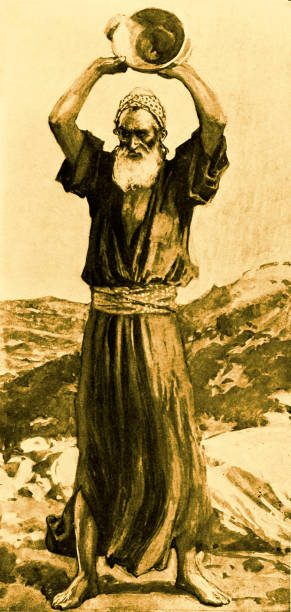
4 Now the word of the LORD came to me, saying,5 “Before I formed you in the womb I knew you, and before you were born I consecrated you; I appointed you a prophet to the nations.” Jeremiah1:4-5
All of us face tough times, but some especially so. Think of these missionaries. Adoniram Judson was imprisoned and tortured in Burma. In China, Mary Slessor and Amy Carmichael had to deal with serious illness, John and Betty Stam were murdered by a mob, and Gladys Aylward escaped the Japanese invasion of World War II but only by leading 100 orphans over mountains to safety. In Ecuador, Jim Elliot was killed while establishing a mission work there. And, in the Old Testament, we have Jeremiah.
Jeremiah (c.650 BC; died c.570 BC) lived in days of upheaval, the fall of Judah to Babylon and destruction of the temple, the exile of many Jews (including Daniel and his friends) to Babylon, and personal threats and sufferings like a plot to kill him, accusations of treason, imprisonment, confinement in a muddy well, and a forced flight to Egypt against his will.
The Book of Jeremiah is a very personal one. It is a personal story. Chapter 1 is typical of what follows in chapters 2-52.
Biographical details in Chapter 1
A – born into a priestly family located in the area of the tribe of Benjamin (v. 1)
B – his ministry worked out against the background of Judah’s kings (vv. 2-3: Josiah to Zedekiah)
C – called before he was born to be a prophet to the nations (vv. 5-8)
D – made use of word pictures to convey God’s message: an almond branch (vv. 11-12 : the first fruit of the season was seen as a sign that God was watching over them), and a boiling pot from the north (vv. 13-16: pictured the judgment coming from that direction)
E – assured of God’s presence and protection: “They will fight against you, but they shall not prevail against you, for I am with you, declares the Lord, to deliver you.” (1:19)
Biographical details in the rest of the Book
A – more personal details are found in succeeding chapters: 16:1-4, God tells Jeremiah not to marry 20:1-6, put in stocks by the chief officer of the Temple 37:11-38:13, falsely accused of deserting to the Chaldeans, he was beaten and imprisoned until King Zedekiah intervened, re-located him and gave him bread; then thrown into a cistern where he sank into the mud before being rescued 43:1-7, taken to Egypt against his will, and most likely died there
B – Jeremiah opposed Judah’s kings (after Josiah, a righteous monarch). See 21:1-23:8; also, chapters 34-45 & 52.
C – Jeremiah questioned his calling in chapter 20:14-18 (“Cursed be the day on which I was born!”…Why did I come out of the womb to see toil and sorrow..?”).
D – The word pictures continue throughout the book. Here are a few: -Judah is likened to an adulterer (3:6) -God tells Jeremiah to take a worn loincloth and hide it in a rocky place, then return and retrieve it. By then, it was rotten and of no use. This pictured the nation of Judah which was supposed to exist for God’s glory but had become of no use -The people are likened to jars of wine that made people drunk and those jars would be broken to pieces (13:12-14) -The sin of Judah is written with a pen of iron and a point of diamond that is engraved on their heart and on their altars (17:1-4). Their hearts had become like the surface on which engravings were made. -the potter and the clay (18:1-11): The nation is the clay and God is the potter. Their sin had led God to break them, but He was willing to re-shape them into a useful vessel if they would repent. See also ch. 19 for a similar image (a broken flask). God would break the sinful people and nation.
E – God’s protection of the prophet is seen more than once in his deliverance from some persecution. See 17:14-18. God was willing to similarly deliver the people. A great promise of return after 70 years of captivity is found in 29:10-14. Generations of believers have laid hold of this promise: “For I know the plans I have for you, declares the Lord, plans for welfare and not for evil, to give you a future and a hope.” (29:11)
Your Turn:
- Read Jeremiah 1.
- Like Isaiah, this Book can be read in a month or less, at a pace of two chapters a day. See if you can find some additional word pictures.
- Only two converts are recorded as fruits of Jeremiah’s ministry: his faithful scribe, Baruch (see ch.45); and Ebed-Melech, who rescued the prophet from the cistern (ch.38:7-14) and was promised he would survive the Babylonian invasion because he had put his trust in God (39:15-18). Sometimes there seems to be few good results to our service, but God asks simply for our trust and faithfulness. We are to leave the results with Him.
- Jeremiah had a hard message to give and suffered for delivering it. Yet, he enjoyed relief from troubles as well, and a long ministry. He is quoted or alluded to in ten New Testament books. His ministry continues!
Day 280 – It’s All About Jesus: Introduction to the Revelation
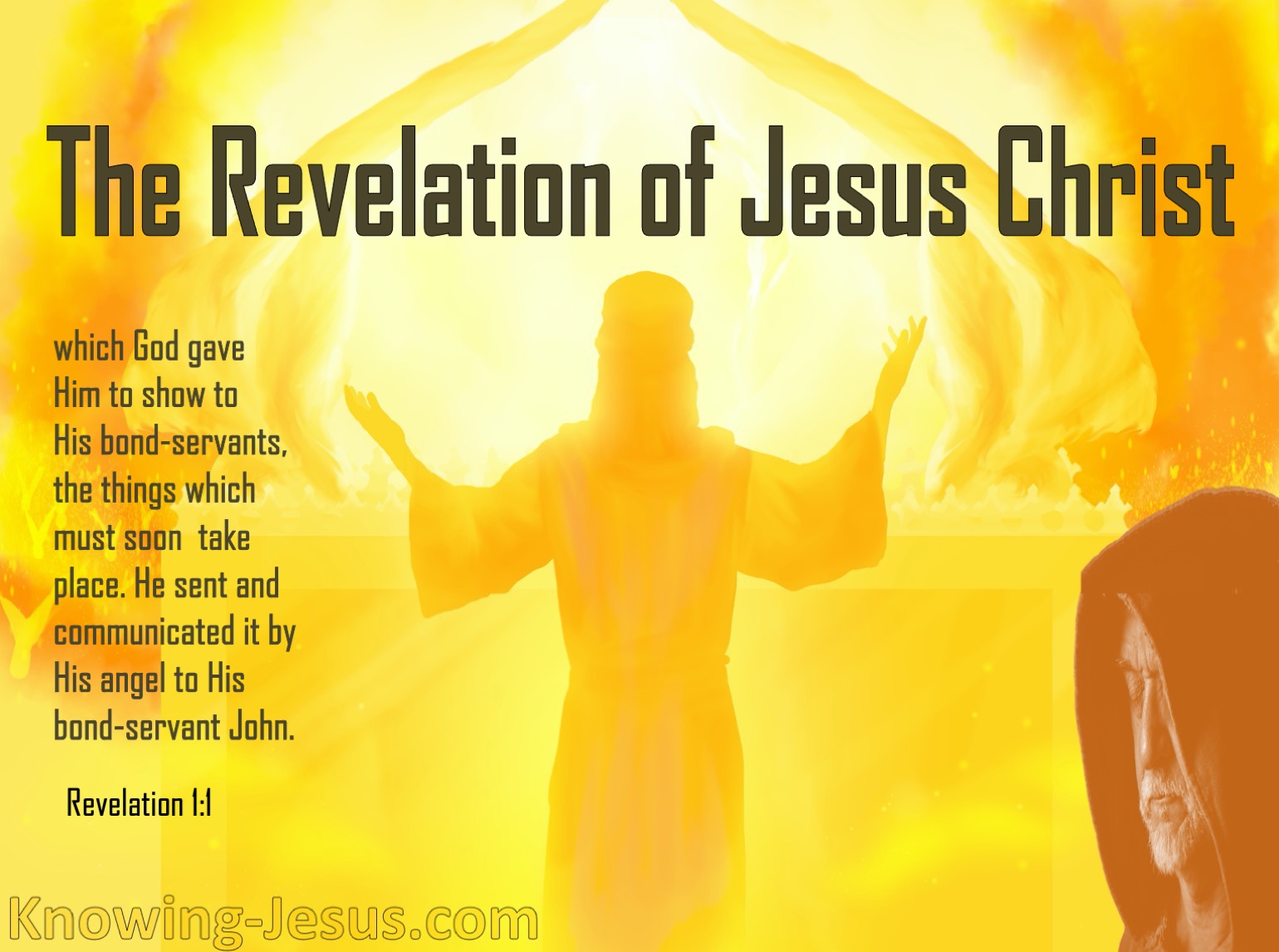
Knowing-Jesus.com
“I am the Alpha and the Omega,” says the Lord God, “who is and who_was and who is to come, the Almighty.” Revelation 1:8
The first chapter of the Book of the Revelation, the last book of the New Testament, indicates much of what follows in chapters 2 through 22. Revelation is a challenging book to read and understand, but we are promised in 1:3 that those who take the time to read and listen to the words of the book are “blessed”. We are told from the start that this is a book of prophecy, meant to show things that will take place in the future. It was written by the Apostle John while he was detained in exile on the island of Patmos in the Aegean Sea (1:9). He received a vision of future things which he then wrote down and sent to seven churches located in Asia Minor (modern day Turkey).
John writes about “things that are” and “those that are to take place after this” (1:19). The “things that are” were those things current in John’s time (probably around 95 AD), things that, of course, are in the past to us in our time. He also wrote about things that would “take place”- future things, some of which, from our perspective, may also have taken place already, and some that are still future to us as well as John.
We are to learn and apply these past, present, and future events. Take the seven churches, for example. The church in Ephesus was commended for doctrinal faithfulness and endurance, but warned about losing some of its love of the Lord. Smyrna was commended for enduring persecution. Pergamum was praised for holding fast its faith, but warned to beware of false teaching. Thyatira was acknowledged for its deeds of service, but cautioned about its lack of discernment; In Sardis there were a few loyal followers of Christ, but the works they did were described as “dead”. Philadelphia did not deny the name of Christ. Laodicea was spiritually blind and lukewarm in its following of Christ. In our churches today, we should note what God praises and be ready to repent of our compromises with the truth.
The number seven appears throughout the book – about 23 times. In chapter 1 we have 7 churches, and among the sevens that follow are lampstands, stars, seals, horns & eyes of the Lamb, angels, trumpets, thunders, heads of the dragon, plagues, bowls of wrath, plagues, beatitudes, and 7 doxologies. Other numbers are important as well: #3 – the holy trinity (Father, Son, Holy Spirit), the evil trinity (Satan, the First Beast, the Second Beast); #12-tribes of Israel; #24 – elders; 42 – months (i.e. 31/2 years) of intense tribulation; #666 – the number of the Beast; etc. Each instance requires analysis, often for the significance of the same numbers used elsewhere in scripture. Some of the numbers are ‘positive’ (e.g., numbers related to the Lamb), and some re ‘negative’ (e.g., judgments, satanic presence and influence). Some refer to human agents (good and bad), and some to spiritual forces (good and evil).
Most important of all, chapter 1 shines light on the person and nature of Jesus Christ.
1:4-8
- “Him who is, and who was, and who is to come”
- “His throne”
- “faithful witness, and first born from the dead” – utterly reliable; first & foremost
- “ruler of kings on earth” – Revelation reveals how this happens in the end
- “Him who loves us and freed us from our sins by His blood and made us a kingdom, priests to His God and Father” – believers are His representatives
- “to Him be glory and dominion forever and ever”
- “He is coming with the clouds and every eye shall see Him…” -including His enemies
- “the Alpha and Omega…” (first and last letters of the Greek alphabet – hence, the beginning and the end) – directing all of human history
1:12-18
- “one like a son of man clothed with a long robe and with a golden sash…” -kingly apparel
- “hairs of His head were white…His eyes like a flame of fire” -pictures of wisdom and perception
- “feet like burnished bronze…” – able to crush His opponents
- “voice like the roar of many waters” – the sound of Almighty God
- “right hand held seven stars” – probably the leaders of local churches
- “from His mouth came a sharp two-edged sword” – the scriptures (Ephesians 6:17)
- “His face was like the sun shining in full strength” – His glory
- “I am the first and the last, the living one”- eternal
- “I died and behold I am alive forevermore- His death on the cross & subsequent resurrection
- “I have the keys of Death and Hades”- Jesus holds Satan’s fate in His hands
Then, in the remainder of the Book, we see Christ again in chapter 4 (His appearance again described), chapter 5 (as the Lamb worthy to sit on the throne; also as Lamb in ch 14), ch. 12 (the child who will rule all nations), ch. 19:6-10) (at the Marriage Supper of the Lamb and His bride, representing true believers), ch. 19:11-21 (the rider of a white horse who defeats Satan and his emissaries), ch. 20 (the 1000 year reign of Christ and final judgement of Satan and all unbelievers), ch. 21 (as creator of the new heavens and new earth, and Lord in the New Jerusalem), and ch. 22 (the Lamb on the throne, and the promise of His return). The revelation is first and foremost about Jesus Christ, the Lamb of God.
Your Turn:
- Read Revelation 1.
- No doubt the promised blessing for those who read this book is there because of what it reveals about the Lord Jesus Christ.
- The story of time cannot come to its ultimate climax until sin and evil are dealt with. In the present day, sometimes people say, ‘Why doesn’t God do something about all the suffering in the world?’ He has (the Lamb of God who died and rose again) and will (the final judgments of Revelation followed by the perfectly beautiful kingdom).
- Reflect on the presentation of Christ in this book.
 Abundant Living