Day 288 : The Rapture

17 Then we who are alive, who are left, will be caught up together with them in the clouds to meet the Lord in the air, and so we will always be_with the Lord. I Thessalonians 4:1
In Paul’s letters to the church in Thessalonica there are four sections that discuss future events: (1) I Thess. 4:13-18, the Rapture; (2) I Thess. 5:1-11, the Day of the Lord; (3) II Thess. 1:5-12; (4) II Thess. 2:1-12, the Man of Lawlessness. We will consider these passages in this and the following three “Short Thoughts”.
Background (I Thess. 4:13, 18)
The Christians in Thessalonica believed that Jesus Christ would return, but wondered if their loved ones who had already died would miss out on that return. Paul answered that he did not want them to be uninformed about this topic, he did not want them to grieve without hope for their deceased friends, and he did want them to be encouraged.
Basis (I Thess. 4:14-15)
Paul had an answer for them. On what did he base his answer? First, there is the vital precedent of Jesus’ resurrection. Our belief is based on the death and resurrection of Christ (4:14). That resurrection makes possible the resurrection of His followers. Secondly, Paul says he had received “a word from the Lord” (4:15). The teaching he offers here is authoritative because it comes from Jesus Himself – either in a direct revelation to Paul or via some teaching Jesus gave while on earth but which is not recorded in scripture.
Order and Result (I Thess. 4:15-17)
The answer to their concern was that both the dead in Christ and those still living at the time of the Lord’s return would go to be with Jesus one day. Here’s how it will work: Jesus descends (v. 16a), even as was made known in Acts 1:11 when the angels said He would return in the same way He ascended to heaven after the resurrection. This coming for His children will be accompanied by the voice of the archangel and the sound of a trumpet (v. 16b). Then, the believers who have died are raised to a new resurrection body (v. 16c), followed by those who are alive at the time (v. 17a). We’ll meet Jesus in the air and be with Him forever (v. 17b).
Therefore I Thess. 4:18)
This promise serves as an encouragement. Knowing this removes the uncertainty and grieving they possessed beforehand.
Your Turn:
- Read I Thessalonians 4:13-18.
- Notice how clearly Paul takes the concerned believers through his explanation. This was indeed good news for them – and is for us, too.
- Note: the word “rapture” comes from a Latin word rapturus which is translated “caught up” in most English translations. The word literally means “snatch, seize, or carry off”. In Genesis 5:24, we read that Enoch walked with God and was not – i.e., did not die because God simply “took him”. In Acts 8:39 Philip is “carried away” from the place at which he met and baptized the Ethiopian eunuch to a completely different spot. In II Corinthians 12:2, Paul refers to an experience he had when he was “caught up” to the third heaven (beyond the earth’s atmosphere and the solar system).
- You might ask, “When, in the full scheme of end-time events, will the rapture occur?”
Here is what the website “gotquestions.org” says, “The three primary views are pre-tribulational (the rapture occurs before the tribulation), mid-tribulational (the rapture occurs at or near the mid-point of the tribulation), and post-tribulational (the rapture occurs at the end of the tribulation). That site goes on to explain the pre-tribulation viewpoint in https://www.gotquestions.org/rapture-tribulation.html .
DAY 289 – THE DAY OF THE LORD

Sydney Opera House – interior – reception area
Now concerning the times and the seasons, brothers, you have no need to have anything written to you. 2 For you yourselves arefully aware that the day of the Lord will come like a thief in the night.3 While people are saying, “There is peace and security,” then sudden_destruction will come upon them as labor pains come upon a pregnant woman, and they will not escape. 4 But you are not in darkness, brothers … I Thessalonians 5:1-4a
Luciano Pavarotti, the renowned Italian operatic tenor, once said, “I am a very superstitious person.” Among his superstitions were carrying a bent nail for good luck and staying in bed on the 17th of each month because the 17th was a day of bad luck. Then, there was his fear of the colour purple. The above photo I took when on a tour of the Sydney Opera House in January 2009. The tour guide explained that in a previous visit a reception was planned for some guests to meet Pavarotti who was there for a concert. When the great tenor entered the area and saw that the theme colour was purple he insisted that the reception be switched to an identical, but red, area nearby because, to him, purple was the colour of death. The staff hurriedly moved everything to the ‘red’ location.
What do you think of when you hear the phrase “the day of the Lord”?
It is a day frequently mentioned in both the Bible’s Old and New Testaments. Sometimes it is associated with death and judgment. Sometimes it is spoken of as a wonderful day of fulfillment for God’s people. It is a day of bad news-good news, depending on how one stands with God.
A Day of Dread
“For the day is near, even the day of the Lord is near” Ezekiel 30:3 “Wail, for the day of the Lord is near!” Isaiah 13:6 “Let all who live in the land tremble, for the day of the Lord is coming. It is close at hand.” Joel 2:1
A Day of Joy
“It shall come to pass in the latter days that the mountain of the house of the Lord shall be established as the highest of the mountains, and it shall be lifted up above the hills; and peoples shall flow to it …” Micah 4:1
“The arrogance of man will be brought low and the pride of men humbled; the Lord alone will be exalted in that day.” Isaiah 2:17
Both these aspects of the Day of the Lord are seen the next I Thessalonians passage that deals with prophecy – I Thessalonians 5:1-11. The verses found at the top of this page speak of a suddenness associated with this Day, plus destruction, pain, and darkness. Then there is a change of tone: “But you are not in darkness, brothers… For you are all children of light, children of the day” (verse 4). We who trust in Christ are “of light” because we belong to Jesus who said, “I am the light of the world” (John 8:12).
Dr. John Walvoord wrote, “The Day of the Lord, as revealed in the Old Testament, indicates first a time of wrath and judgment upon a wicked and Christ-rejecting world which is followed by a time of peace in which Christ shall be in the midst of the earth and will rule over the earth and bring blessing to the nation Israel.” [ https://bible.org/seriespage/chapter-5-day-lord ] Believers are destined for salvation, not for wrath. Thus, because the Day of the Lord is a blessed day for believers, Paul, in I Thessalonians 5:9 can write that believers are to be encouraged:
9 ForGod has not destined us for wrath, but to obtain salvation through our_Lord Jesus Christ, 10 who died for us so that whether we are awake or_asleep we might live with him.
The Apostle also gives some practical ways that Christians can live in anticipation of the Day.
6 So then_let us not sleep, as others do, but let us keep awake and be sober. 7 For_those who sleep, sleep at night, and those who get drunk, are drunk at_night. 8 But since we belong to the day, let us be sober, having put on the_breastplate of faith and love, and for a helmet the hope of salvation.
Let’s think about the terminology he uses.
“keep awake” – live as if the Lord will return at any moment
“be sober” – not intoxicated with the pleasures of this world
“breastplate of faith” and “helmet of salvation” – be ready like a soldier wearing his/her armour – faith to protect us and hope to assure us
With these qualities in place, we can “encourage one another and build up one another” (v. 11). Paul had already stated his confidence that they were a people of faith, hope, and love (chapter 1:3).
Your Turn:
- Read I Thessalonians 5:1-11
- Are you living with superstitious fear of what’s happening in the world today, or with confidence that God is in control and has assured you of ultimate deliverance?
- Isn’t it a wonderful thing that God will take care of all the evil in this world?
- Isn’t it also wonderful that God has a blessed future in store for His children?
- Reflect on how his passage on the Day of the Lord encourages you.
DAY 290 – JUDGMENT

Those who do not obey the gospel of our Lord Jesus. 9 …will suffer the punishment of eternal destruction away from the presence of the Lord and from the glory of His might, 10 when he come on that day to be glorified in His saints, and to be marveled at among all who have believed, because our testimony to you was believed. II Thessalonians 2:8-10
Thus far we have considered Paul’s prophetic teaching in I Thessalonians on the Rapture of the church and the Day of the Lord. There are two additional passages in II Thessalonians: the judgment of God (1:5-12) and the man of lawlessness (2:1-12).
Paul begins his second letter to the church in Thessalonica with mention of the steadfast faith of the believers in the face of persecutions and afflictions. He wants to assure them that those who have brought such sorrows on them will have to face God’s righteous judgment. It was “righteous” (because it was deserving) judgment – the persecutions were unwarranted. God considered it just “to repay those who afflict you,” observes Paul (1:6). He describes the circumstances of the coming judgment in verses 7-9.
The Coming Judgment
This is a judgment for “those who do not know God and those who do not obey the gospel of our Lord Jesus” (v. 8). It will happen at a future time when Jesus “is revealed from heaven with His mighty angels” (v. 7). The judgment consists of “the punishment of eternal destruction, away from the presence of the Lord”. They will miss out on the revelation of Jesus’ glory (v. 9).
The Coming Glory
Believers, on the other hand, will see Jesus Christ in “the glory of His might” and will “marvel” and what they are seeing and experiencing. Verse 10 has interesting wording when it says that this coming day is the one when Jesus is “glorified in His saints”. The word “in” is the part that intrigues me. I can imagine the glory of Jesus Himself. For example there are the scriptures which describe Him in terms of amazing light (Ezekiel 1:26-28 and Revelation 1:12-16). But, in II Thessalonians 2:10 the glory is “in His saints”. Paul is saying that the glory of Jesus is seen in His followers. This is repeated in v. 12, and is also found in Romans 8:17-18, 30. Charles Spurgeon (1834-1892) does a good job imagining that day:
“Those who look upon the saints will feel a sudden wonderment of sacred delight; they will be startled with the surprising glory of the Lord’s work in them; ‘We thought He would do great things, but this! This surpasseth conception!’ Every saint will be a wonder to himself. ‘I thought my bliss would be great, but not like this!’ All his brethren will be a wonder to the perfected believer. He will say, ‘I thought the saints would be perfect, but I never imagined such a transfiguration of excessive glory would be put upon each of them. I could not have imagined my Lord to be so good and gracious.’” [Quoted in https://enduringword.com/bible-commentary/2-thessalonians-1/ ]
Application
If we desire Jesus Christ to be glorified in us, Paul has a final instruction.
To this end we always pray for you, that our God may make you worthy of His calling and may fulfill every resolve for good and every work of faith by His power. (I Thessalonians 1:11)
So, we are to resolve to do every good work and, in turn, trust that He will provide the grace and power for the good works to be fulfilled.
So that the name of our Lord Jesus may be glorified in you,and you in Him, according to the grace of our God and the Lord Jesus Christ. (v.12)
Your Turn:
- Read II Thessalonians 1:5-12.
- Note that the timing of these events in relation to other prophecies is not the focus in this passage. What Paul is saying is that there is coming a day when Christ will return to judge unbelievers and to share His glory with believers.
- In some ways we may wish for the ungodly to be punished, but in other ways it is hard to be comfortable with the thought of judgment. How do you react to this teaching? Do you see the fairness or righteousness of God’s judgment?
- Do you understand how to be spared this judgment?
Day 291 – THE MAN OF LAWLESSNESS

https://thenewschronicle.com/wpcontent/uploads/2020/08/lawlessness.jpg
3 Let no one deceive you in any way. For that day will not come, unless the rebellion comes first, and the man of lawlessness is revealed, the son of destruction, 4 who opposes and exalts himself against every so called god or object of worship, so that he takes his seat in the temple of God, proclaiming himself to be God. II Thessalonians 2:3-4
The final prophetic segment in the Apostle Paul’s letters to the Thessalonians is centred on a particular man, called in II Thessalonians 2:3 “the man of lawlessness” and “the son of destruction”.
The passage begins somewhat like the one in I Thessalonians 4. There, the people, believing the Lord’s return near, were concerned that their believing friends who had died would miss out on that reunion. Paul cautioned them not to be uninformed and not to be as others who died without hope. He sought to encourage them with the teaching he gave about the rapture. In II Thessalonians 2, the Apostle again expresses concern that they be alarmed. Such alarm might set in because of some fraudulent letter that claimed to be from him, a letter that proposed that the Day of the Lord had already come. He went on to explain what needed to take place before the Day.
Paul had written in the first letter (5:1-11) about that day – a day that would come suddenly, and a day of darkness for unbelievers, a day of light for believers. In II Thessalonians he adds to our understanding of that day.
It would be preceded by the appearance on the scene of a man of lawlessness (or sin) and a man of destruction (worded ‘perdition’ in some translations). He would lead a rebellion against established religion and would desecrate the temple in Jerusalem, going so far as to claim to be God (2:4). Several other scriptures refer to this person: Daniel 8:23, 9:26,and 11:36-45 uses terms like ‘prince’, or ‘a fierce and willful king’; Jesus spoke of him in John 5:43 as acting ‘in his own name’; I John 4:2-3 refers to him as ‘Antichrist’. His public appearance is a sign of the Great Tribulation.
The man of lawlessness had not yet been exposed, so the believers in Thessalonica were not yet in the Tribulation period. Thankfully, they would not experience the satanic power, false signs and wonders, wicked deception, and strong delusion that the passage says are characteristic of the end times. They had believed in Christ and God would provide protection by restraining this most evil of actors for a while (verses 5, 9-11). Also, Jesus would one day rid the world of this man (v. 9).
There is much that is evil in today’s world, and an even worse time is coming. But God knows how to protect His own and God is able o destroy evil entirely in His time.
Your Turn:
- Read Thessalonians 2:1-12.
- Paul writes about letters being sent to Thessalonica that were made to appear to be from him but were deceptive. In the first century, as today, the church was subject to false information. The information could be mistakenly wrong or deliberately so. “Misinformation” is false information that is a mistake, not intended to be false, while “disinformation” is deliberately falsified information, sometimes called fake news. Whether it be social or spiritual, we need to be careful and verify information and check our sources.
- The four passages of I and II Thessalonians about future things must be studied together and alongside the many other scriptures that address future events. It’s OK for us to do as the Thessalonian church did, namely ask questions and seek answers from reliable people and sources, while considering the relationship of scripture with scripture.
- God is in control of the future!
3 Let no one deceive you in any way. For that day will not_come, unless the rebellion comes first, and the man of_lawlessness is_revealed, the son of destruction, 4 who opposes and exalts himself_
against every so_called god or object of worship, so that he takes his seat_in the temple of God,
proclaiming himself to be God. II Thessalonians 2:3-4
DAY 292 – Gospel of John – Chapter 1
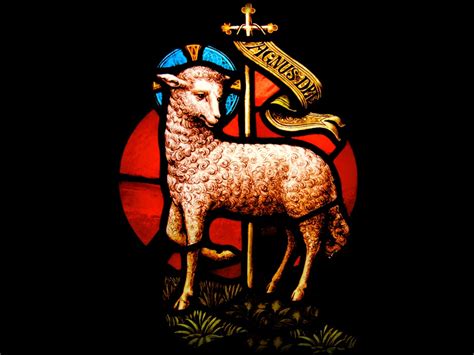
The next day he saw Jesus coming toward him, and said, “Behold, the Lamb of God, who takes away the sin of the world!” John 1:29
We are about to begin several days in the Gospel of John. Earlier in these “Short Thoughts”, I took a sixteen-day journey through the sixteen chapters of Romans (see Days 169-184). Now, I’d like to spend twenty-one days in the Gospel of John. I’ll do seven chapters, take a break and do a different topic, then return to John, take another break, then finish John.
John 1 has 51 verses – a lot! But the idea is not to exposit each verse, but rather to choose one thought to contemplate from the chapter. Besides, other devotionals presented in this collection already have focused on some parts of this gospel.
In John 1, there are sections on Jesus Christ (verses 1-5, 9-18), John the Baptist (vv. 6-8, 19-34), and the disciples (vv. 35-51). Jesus is presented as the Word, the Light, God in the flesh, the Lamb of God, the Messiah, the Son of God, Rabbi, and the King of Israel. John is seen as a prophet, sent from God, and a witness to Jesus Christ. The disciples introduced to Jesus are Andrew, Simon Peter, Philip, and Nathaniel.
Our focus today is on the disciples and what we can learn from them in John 1:35-51.
Take note of who these men were and the several ways they can be understood.
- Disciples of John: Many of the disciples of Jesus were first of all followers of John the Baptist. (v. 35). John had come as a prophet “sent from God” and a “witness” to Jesus (v. 6). He deflected attention away from himself and toward the Lord. He connected the Old Testament prophecies about Messiah with Jesus Christ. He was a reliable pointer to Jesus who did not mind that his followers became followers of someone else greater than himself. The disciples were in good hands with John the Baptist.
- Seekers: Jesus asked John’s disciples, “Who are you seeking?” (v. 38) It is good to ask who or what we are seeking. Jesus said, “Ask, and it will be given to you; seek, and you will find; knock, and it will be opened to you.” (Matt. 7:7) I think this applies not only to ‘good’ things, but also to ‘dangerous’ or ‘evil’ things. We have a choice about what to seek in life, and if we seek fame, riches, pleasures, and other such things, we actually get some but find ourselves in trouble. But, if we seek Jesus, we are on the right track!
- Followers (v. 40): Nowadays people “follow” celebrities on social media platforms like Facebook or Instagram or Twitter. The singer Taylor Swift has an estimated 58.23 million adult fans (https://metro.co.uk/2024/06/06/many-fans-taylor-swift-20986907/ ) If you are on one of these sites, you also have ‘followers’ and there are many websites that will teach you how to gain your first 1000 followers and 11 or 17 or 101 ways to increase them! Jesus did not have social media but He did (and does) have followers – and you and I need to be among them. What does a follower do? Probably, she or he reads as much as he or she can find about the person, pays attention to what the individual says and even memorizes sayings or songs, and passes that on to others. This, too, we should do with Jesus.
- Understood Jesus to be the Messiah, Rabbi, Son of God, King of Israel: We notice in verses 38, 41,, and 49 that the first disciples quickly came to understand important things about Jesus: Jesus was their Rabbi (Teacher), Messiah, Son of God, and King of Israel four ways. The web site https://bibleresources.org/names-of-jesus/lists 102 titles or names of Jesus that are found in the Bible. This shows us that the disciples were just barely beginning to understand who Jesus is when they saw Him in the four ways identified in John 1:38, 41, and 49 (Note: John also had seen Him as the Word, Light, and Lamb.)
- Introduced others to Jesus: We read that John introduced Jesus to these disciples and that Andrew, in turn, introduced Him to Peter, and Phillip to Nathanael. A pattern was being set: when we come to know Jesus, our natural goal should be to introduce Him to others.
- Spent time with Jesus: In v. 39, Jesus invites two disciples to “come and see”, and they spent time with Him (“and they stayed with Him”). This is the key to knowing the Lord. It would become the main calling of the twelve disciples in the three years that followed. They covered a lot of territory, following Him around Galilee, Samaria, and Judah.
- Would see greater things: Nathanael exclaimed, Rabbi, You are the Son of God! You are the King of Israel!” (v. 49), and Jesus promised, “You will see greater htings than these…Truly, truly, I say to you, you will see heaven opened and the angels of God ascending and descending on the Son of Man.” (vv. 50-51). With the ministry of the Holy Spirit in believers’ lives since then, we are privileged to get to know Jesus better and better, and see greater things than we presently know.
Your Turn:
- Read John 1:35-51.
- Are you careful about which teachers you give attention to?
- Is there evidence in your life that you are seeking Jesus?
- Does your life really show that you are a follower of Jesus?
- Of the 102 names/titles of Jesus, what have you learned recently? What about Him are you meditating on today?
- Who are you praying will become open to having you introduce them to Jesus soon?
- How has Jesus fit into your schedule today? Are you giving him quality time?
- Praise God that He is making known to you greater and greater truths about His Son!
DAY 293 – JOHN 2
 freepik.com
His mother said to the servants, “Do whatever he tells you.” John 2:5 ESV
John chapter 2 can be viewed in two sections:
- Jesus’ first public miracle at the wedding in Cana, 2:1-12
- The holy (observance of Passover) and the unholy (activity of merchants & money changers – thrown out of the Temple), 2:13-17
Throughout the chapter there is a connection made between “signs” and “belief”. This theme is seen inv. 11, v. 17, and verses 18-25. The centrality and authority of Jesus is also part of the discussion in all three parts and is summed up in Mary’s direction to the servants are the wedding, “Do whatever He tells you.” (v. 5)
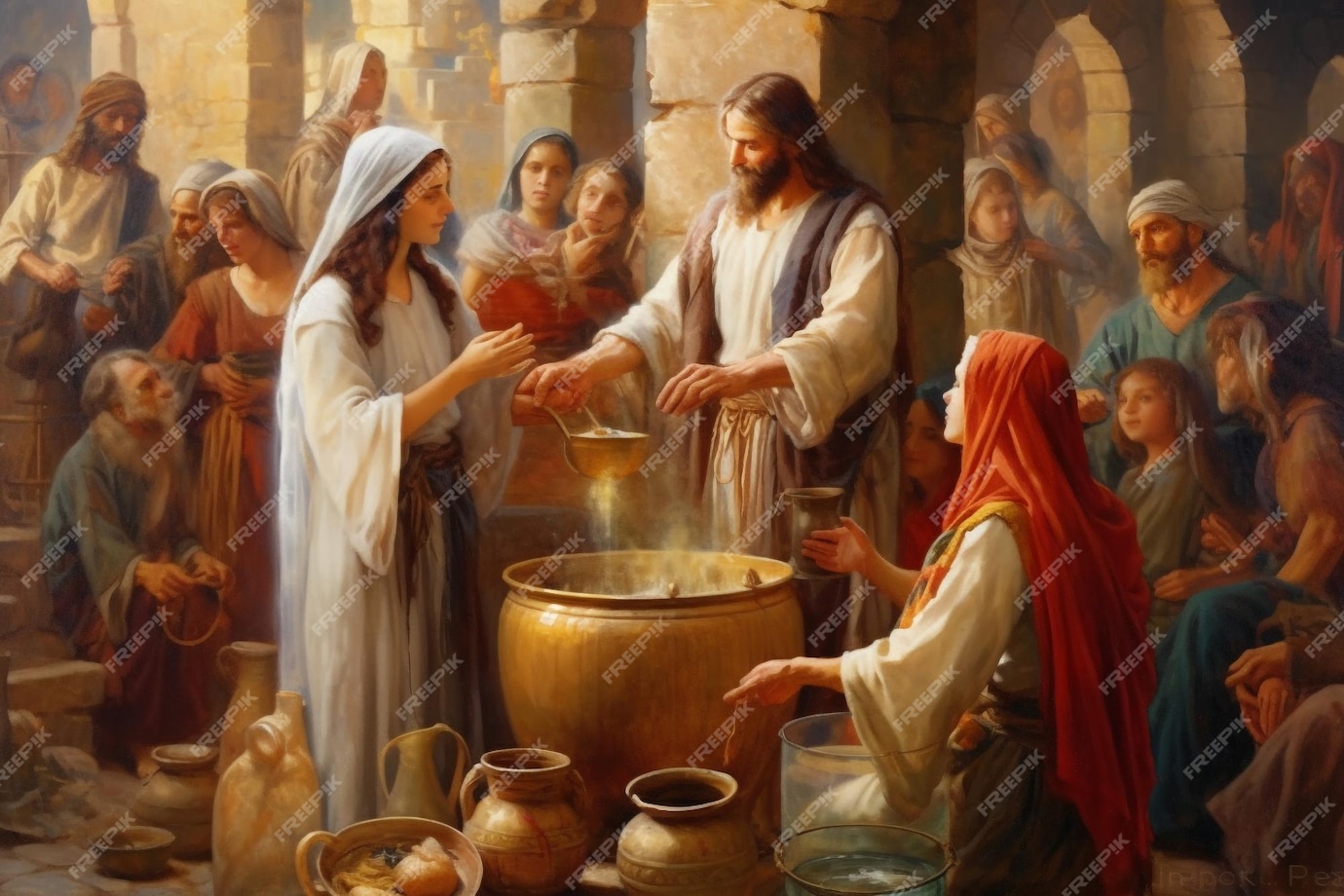
What does Jesus tell the servants? (vv. 8-10) Jesus and His disciples are among the guests at a wedding. His mother, Mary, seems to be involved in the arrangements. The wine runs out – a socially embarrassing happening – and Mary tells this to Jesus. He responds, “Woman [i.e., ‘Dear woman’], what does that have to do with Me. My hour has not yet come [see 13:1 and 17:1 for when His ‘hour’ came].” And Mary then instructs the servants to do whatever He tells them to do, which is this: – Fill the jars with water. – Draw some out and take it to the master of the feasts.
The servants knew they had just filled the jars with water, not wine. The master tastes the “water” (which is now wine) and compliments the bridegroom on saving the best wine for the last. The servants perceive that a miracle has taken place – water into wine! John concludes, “This, the first of His signs, Jesus did at Cana in Galilee, and manifested His glory.” (v.11) A “sign” points to something or identifies something. For the disciples who were there, this sign pointed to the person of Jesus as the Messiah. They “believed in Him”.Following Jesus Christ’s instructions to us meets immediate needs (the wine, the social obligation) and meets the essential, life-changing, and eternal need to trust in Jesus Christ (they believed).
What does Jesus say to the merchants & money changers? (vv. 13-24)
In verse 13, the scene is now Jerusalem at Passover season. Jesus goes to the Temple, which is supposed to be a holy, sacred place. Instead, He finds noisy sales and money-changing going on. Pilgrims to Jerusalem at Passover were buying oxen, sheep, and pigeons for sacrifice. Merchants were exchanging money. Jesus strongly takes action, driving the merchants out of the Temple, overturning their tables and spewing coins about. He says,
“Take these things away; do not make My Father’s house a house of trade.” (v. 16)
There was a place for needed sales, but this wasn’t it! The disciples, either right then or later, recalled Psalm 69:9 and saw that it applied to Jesus the Messiah: “Zeal for Your house will consume Me.” This leads to an exchange with the religious authorities, who question the authority Jesus thinks is His – to send out the merchants and speak of the Temple as “My Father’s house”. They, in essence, ask for a “sign” of His authority. His answer is, “Destroy this temple, and in three days I will raise it up.” (v. 19) They take that as a reference to the physical building that took 46 years to build. But the Apostle John, writing years later, understands that Jesus was referring to His death (“the temple of His body”) and resurrection. Verse 23 states that the disciples came to understand this only after His resurrection. That’s when they put Psalm 69:9 and this incident together. “They believed the scripture and the word that Jesus had spoken.”
Others believed in Him at the time and as He did further miracles, but the Lord knew that their belief was shallow (v 24). Donald Carson, in his commentary on John (1991) observes that Jesus is willing to entrust Himself to those who truly trust Him (see 10:14-15).
Your Turn:
- Read John chapter 2.
- You might be interested in checking out the other “signs” in the Gospel of John. There are seven, found in chapters 2-11. Look for how each one glorifies Jesus.
Turning Water into Wine (John 2:1–11)
Healing the Nobleman’s Son (John 4:46–54)
Healing the Lame Man (John 5:1–15)
Feeding the Multitude (John 6:1–15)
Walking on water (John 6:16-21)
Healing the Blind Man (John 9)
Raising Lazarus (John 11)
- How much do you depend on supernatural evidence and other ‘proofs’ for your faith? Yes, there is such evidence, but when there seems to be no intervention of God in a situation, are the words of Jesus and His giving of Himself for you enough? Do you truly trust Him?
- Mary said, “Do what He tells you.” Are you obeying the Lord in your life today?
DAY 294 – John 3
“For God so loved the world, that he gave his only Son, that whoever believes in him should not perish but have eternal life.” John 3:16
John 3:16 is perhaps the most well-known of the 31,1102 verses in the Bible. Martin Luther called it “the gospel in miniature”. In the middle of the verse is the word “believes”. That word (and believe, believed) occurs 8 times in John chapter 3. Believing is the focus of the chapter. For an outline to the chapter, three ‘B’s” can be followed:
Part 1: Born Again, vv. 1-15
Part 2: Believe, vv. 16-21
Part 3: Baptizing, vv. 22-36
Yet, believing is there in all three parts. With that in mind, I suggest we think about how believing is defined, how it is explained, and how it is testified.
Believing Defined
To believe is to receive, or to place your trust in, the Son of God with a view to gaining eternal life. The subject is introduced by the visit of Nicodemus, a Pharisee, to Jesus. He acknowledges that Jesus is a special person – “a teacher come from God” – one who is able to perform signs (i.e., miracles). Jesus directs Nicodemus’ thoughts from the miracles to how to gain entrance into “the kingdom of God”. Perhaps it was the miracles that had convinced Nicodemus that Jesus was a special, God-sent teacher. Jesus also says no one can see the kingdom of God apart from being “born again” – more on that in a moment.
To enter the kingdom, one must believe what Jesus is saying about “heavenly things” (v. 12). Jesus is about to emphasize that He Himself is the greatest “heavenly” gift, having descended to earth from heaven. This belief is trust in the very “Son of Man” (vv. 13-14), the “only Son” of God, sent into the world (vv. 16, 18).
Believing Explained
The Lord explains the nature of belief in two ways:
- being “born again” (vv. 3-8): This new birth is not a physical birth such as Nicodemus immediately thought of; no, it is a spiritual and heavenly birth (vv. 5, 6, 8). The teaching of Jesus echoes that of the prophet Ezekiel in Ezekiel 36:25-27,
I will sprinkle clean water on you, and you shall be clean from all your uncleannesses, and from all your idols I will cleanse you. And I will give you a new heart, and a new spirit I will put within you. And I will remove the heart of stone from your flesh and give you a heart of flesh. And I will put my Spirit within you, and cause you to walk in my statutes and be careful to obey my rules.
This is a tremendous tansformation! Some translations read “born from above” instead of “again” and the ESV I am using says in verse 31, “He who comes from above is above all.” Throughout the passage there are references to above and below, heaven and earth. This is a birth made possible by the coming from heaven of the Son of God.
- Believing is receiving (vv. 11, 27, 32, 33): Jesus says we must “receive” His testimony about Himself, our need, and His provision. Receiving means agreeing with what Jesus states. The record so far for Nicodemus was one of not yet having received – Jesus stated, “You do not receive our testimony” (v. 11). Later, John the Baptist added, “Whoever receives His testimony sets his seal to this, that God is true.” (v. 33). Of course, the Apostle John had begun his gospel with this, “11 He came to his own, and His own people did not receive Him. 12 But to all who did receive Him, who believed in His name, He gave the right to become children of God, 13 who were born, not of blood nor of the will of the flesh nor of the will of man, but of God.” (John 1:11-13)
Baptizing
In verses 22-36, John records that both John and Baptist and Jesus were baptizing. Baptism is an outward sign of repentance and identification with the message preached – the message of Jesus Christ coming to provide salvation and a new life. So, those being baptized were bearing testimony to the person of Christ and their belief in Him.
Your Turn:
- Read John 3.
- Notice the negatives in this chapter associated with not believing in Christ: perishing, condemnation, not seeing life, being a subject of God’s wrath.
- John the Baptist was concerned that his audience get it right. Read verses 28-30. The message he preaches is not about himself; it is about the one “who comes from above” (v. 31).
- If you are a believer in Jesus, have you been baptized to testify to that?
 Abundant Living
