Day 323 MINOR PROPHETS: BOOK of NAHUM
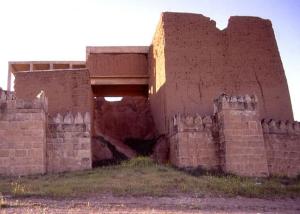
Ancient walls of Nineveh https://ar.inspiredpencil.com/pictures-2023/ancient-nineveh-ruins
The Lord is slow to anger and great in power, and the Lord will by no means clear the guilty. Nahum 1:3 ESV
Ask a Christian what she or he knows about Nineveh, that person is likely to say, ‘Isn’t that where Jonah was told to go?’ And that would be correct – but the book of Jonah is not the only place where we learn about Nineveh. It is also the focus of attention in another of the Minor Prophets, the Book of Nahum.
Nineveh was once the biggest city in the world – just prior to the invasion and sacking of the city in 612 BC by the Babylonians, Medes, and Scythians. It is located in northern Iraq, across the Tigris River from the city of Mosul. Nineveh has experienced various attacks, even as recently as 2014-17 when it was occupied by ISIL (i.e., Islamic State; also known as ISIS or Daesh). If a nearby dam (currently in very poor condition) fails, the site could end up under 14 meters (45 feet) of water.
In the prophet Nahum’s day (sometime between 650-630 BC), the city was the capital of the Assyrian Empire and was a centre of evil, violence, and idolatry. The previous reformation that followed Jonah’s ministry there had faded and the city had returned to its dishonourable lifestyle. In the Book of Nahum, all three chapters speak of God’s pending thorough judgment on the city of Nineveh. Here are a few examples:
- 1:3, the Lord takes vengeance on His adversaries
- 1:6, who can stand before His indignation?
- 2:1, The scatterer has come up against you…dress for battle
- 2:10, Desolate? Desolation and ruin!
- 2:13, Behold, I am against you, declares the Lord of hosts…
- 3:1, Woe to the bloody city, full of lies and plunder…
- 3:7, And all who look at you will shrink from you and say, ‘Wasted is Nineveh; who will grieve for her? …’
- 3:19, All who hear the news about you clap their hands over you…
Even in as dark a book as Nahum, there are some rays of light that intrude into this message. These are words of encouragement for God’s people:
- 1:7, The Lord is good, a stronghold in a day of trouble; He knows those who take refuge in Him
- 1:15, Behold upon the mountains, the feet of him who brings good news, who publishes peace! (Similar words are found in Isaiah 52:7 & Romans 10:15). Keep your feasts, O Judah; fulfill your vows, for never again shall the worthless pass through you; he is utterly cast off.
- 2:2, For the Lord is restoring the majesty of Jacob…
We are reminded in these excerpts that God knows His own, those who trust in Him. He will put an end to the Assyrian raids on Judah. Thus, a messenger runs along telling this good news of a coming peace. The feasts mentioned are occasions for worship of God, reminders of past deliverance, and a forecast of the coming Messiah whose sacrifice will bring ultimate salvation.
Your Turn:
- Read Nahum 1-3.
- The fall of Assyria is but one example of times when empires/nations and their despotic rulers have fallen. 20th century examples include Germany in WW II (Hitler), the USSR (Stalin & his successors), Italy (Mussolini), Uganda (Idi Amin), Iraq (Saddam Hussein), Libya (Muammar Gaddafi), Cambodia (Pol Pot), etc. Even nations/empires we would look more favourably upon have a limit – consider the British Empire (late 16thcentury to mid-20th century). Other empires have had 800 years (Byzantine), 790 years (Holy Roman), 624 years (Ottoman), 508 years (Roman)- though some students of history say the average length of an empire is 250 years. With all these numbers in mind, how do you view the empires of today? Is God watching and assessing? Will not He one day pronounce the end of cruelty, shallow and selfish materialism, and lack of care for suffering peoples?
- Remember to pray for those in authority over you. See I Timothy 2:1-2.
- Remember the poor and oppressed. See Psalm 82:3; Isaiah 58:10; Matthew 25:40; Isaiah 1:17; James 1:27.
DAY 324 – MINOR PROPHETS – BOOK OF ZEPHANIAH

How merciful is God?
We often think of the Old Testament prophets as pronouncing doom on the northern kingdom of Israel or the southern kingdom of Judah. And they did. But they also promised forgiveness and blessing in the relatively near time and in the longer time frame foretelling the Messiah’s coming and reign
Take Zephaniah, for example. His name means ‘God has protected’. He lived in the reign of King Josiah, who is remembered as a great reformer, restoring the Temple and God-directed worship, while destroying false worship practices. Zephaniah saw a coming time when the nation had faltered again and God would move to get His people’s attention through various judgments (crop failure, foreign invasion, fall of the economy, etc.). We see this in chapters 1 and 2. However, we also see forgiveness and restoration.
God is very merciful, indeed. Over a century and a half, He sent five prophets to Israel (Jonah, Amos, Hosea, Micah, & Isaiah) and five more to Judah (Nahum, Zephaniah, Habakkuk, Jeremiah, & Ezekiel), giving the people opportunity to repent and avoid disaster.
God has great patience with us.
Here are some portions of Zephaniah’s book that show this mercy:
- A call to seek righteousness
2:3 Seek the Lord, all you humble of the land, who do his just commands. Seek righteousness; seek humility; perhaps you may be hidden on the day of the anger of the Lord.
- 2:1-15 God will destroy the enemy nations (Gaza, Ashkelon, Ashdod, Ekron, Cherethites, Canaan, Philistines, Moab, Ammonites, Cushites, Assyria) and give the people of Judah the land to live in and graze their flocks.
- Chapter 3 begins with a condemnation of Judah, but then turns to announce a future restoration not only of Judah but also of people from other nations. Here are just a few of these promises:
3:10 From beyond the rivers of Cush my worshipers, the daughter of my dispersed ones, shall bring my offering. They shall seek refuge in the name of the Lord, 13 those who are left in Israel;
they shall do no injustice and speak no lies, nor shall there be found in their mouth a deceitful tongue.
For they shall graze and lie down, and none shall make them afraid.”…17 The Lord your God is in your midst, a mighty one who will save; he will rejoice over you with gladness; he will quiet you by his love; he will exult over you with loud singing…And I will save the lame and gather the outcast and I will change their shame into praise and renown in all the earth. 20 At that time I will bring you in, at the time when I gather you together; for I will make you renowned and praised among all the peoples of the earth, when I restore your fortunes before your eyes,” says the Lord.
Your Turn:
- Read Zephaniah (it’s only 3 chapters).
- I’ve empathized God’s mercy. Even His judgment is mercy because it stops abuse of all sorts, making a way for renewal, peace, and security.
- How do you think God views our world today? It’s easy to see cases of modern cruelty, abuses, and total disregard of God and His righteous ways. Will He do nothing about these things? What has e done in previous eras when tyrants abused their power, attempts were made to wipe out people groups, and false worship abounded?
- Thank God for His mercy in bringing evil to account, restoring the righteous, healing war-torn lands, etc. Surely, He hears our prayers for relief from cruelty today.
DAY 325 – JOHN 15: THE TRUE VINE

7 If you abide in me, and my words abide in you, ask whatever you wish, and it will be done for you. 8 By this my Father is glorified, that you bear much fruit and so prove to be my disciples. John 15:7-8
John 15 contains some very recognizable words and phrases:
- Abide in Me.
- Whoever abides in me and I in him, he it is that bears much fruit.
- Apart from Me you can do nothing.
- These things I have spoken to you, that my joy may be in you, and that your joy may be full.
The Lord presents an agricultural picture – a picture of a vineyard. Verse 4 commands us to “abide” in Jesus Christ and lists several results that follow. To “abide” means to “remain” or simply to “be”. The picture is of a believer (the branch) being connected with Jesus Christ (the vine), dependent on Him for life and nourishment as a grape branch is dependent on the vine. The branch has no life in itself; it must remain attached to the vine.
So, what happens when we abide in Christ?
- We bear much fruit (vv. 4-5).
- We receive answers to prayer.
- We experience God’s love.
- We obtain full joy.
Donald Carson, in his commentary on John (Eerdmans, 1991, p.516) clarifies the nature of this abiding:. by describing it as “continuous dependence on the vine, constant reliance upon him, persistent spiritual imbibing of his life”. The fruit of abiding, Carson concludes, is “everything that is the product of effective prayer in Jesus’ name, including obedience to his commands (v.10), experience of Jesus’ joy (v.11…), love for one another (v. 12), and witness to the world (vv. 16, 27).”
In addition to these fruits, abiding in Christ beings us these additional results:
- We enjoy God’s friendship (vv. 12-15a – “you are my friends”).
- We learn about God (v. 15b- “all that I have heard from my Father I have made known to you”).
- We become objects of hatred from the world (vv. 18-25 – “because you are not of the world, but I chose you out of the world, therefore the world hates you”. This last point is the only negative in the list. There is a price to be paid for following Jesus, but it is worth it! Also, almost in the same breath as Jesus’ word about facing hatred, is the closing section consisting of just two verses in which faithful followers are assured of help along the way:
“26 “But when the Helper comes, whom I will send to you from the Father, the Spirit of truth, who proceeds from the Father, he will bear witness about me. 27 And you also will bear witness, because you have been with me from the beginning.”
Your Turn:
- Read John 15.
- Notice that the passage begins and ends with mention of two persons of the Trinity – 1, the vinedresser (God the Father) and the true vine (Jesus, the Son), and ends in vv. 26-27 with mention of all three persons: the Father, the Son, and the Spirit of truth.
- How has the “hatred” of the world been experienced in your life? How have you dealt with that rejection? How have you honoured God in the process?
- Other mentions of “fruit” are found in the Bible: Galatians 5:22-23, Psalm 92:14, Matthew 3:8, I John 2:15-17, Hebrews 12:11, James 3:18, Matthew 7: 16-20, Romans 6:22, etc. Check out some of these verses.
- In John 15:2-6 these is discussion about pruning and cutting off of branches. Another passage about discipline is Hebrews 12:4-11. Consider how these passages relate to one another.
DAY 326 – JOHN 16: ADVANTAGE

7 Nevertheless, I tell you the truth: it is to your advantage that I go away, for if I do not go away, the Helper will not come to you. But if I go, I will send him to you. John 16:7
In His final teaching of the disciples, Jesus had some things to say about the difficulties they would experience.
2 They will put you out of the synagogues. Indeed, the hour is coming when whoever kills you will think he is offering service to God. 3 And they will do these things because they have not known the Father, nor me. 4 But I have said these things to you, that when their hour comes you may remember that I told them to you. John 16:2-4
Today, it is estimated that there are 380 million Christians in the world facing high levels of persecution & discrimination because of their faith in Christ (https://www.opendoorscanada.org). The message He left for His first century followers still speaks to us today.
In John 16 we find the impotus for the Lord’s teaching directed at believers who suffer. There were three areas of concern that Jesus saw and in each case He supplied a comforting message. Here are those three concerns:
- He wanted to keep them from falling away (16:1). They would face expulsion from the place of worship they had been used to. They might even be killed for their belief in Jesus Christ. These pressures might lead some to stop identifying with Jesus.
- He wanted to comfort them in times of sorrow (vv. 6,20) – in particular, the sadness they felt when He talked about going away (see vv.5-6, 16).
- He wanted to assure them that things which they found hard to understand would one day be clarified (v. 18, “we do not know what He is talking about”; v. 25, “(I) will tell you plainly about the Father”).
So, what was His answer to these three areas of concern?
- The answer to the temptation to fall away is to remember what Jesus has told us (16:4). The things Jesus refers to in verse 1 are things Jesus had been saying to them up to this point in time: “I have said all these things,,,” What had He been saying? Of course, there are many, many things He had already taught them, but the immediate context is John 15:18-27 where He warns them that they will face persecution from the world and, then, that God would give them the Holy Spirit to “bear witness” about Jesus. He continues the theme of persecution in the following verses found at the beginning of chapter 16. Being expelled from the synagogue was a very hard thing for these Jewish disciples to experience. He is preparing them for something hard that is coming. Remembering Jesus’ teaching helps us through hard times.
- The answer to the sorrow of missing Jesus’ presence is the ministry of the Holy Spirit (16:7-15) and the eventual return of Christ to be with His own in person (16:16-24). This answer forms the longest section of the chapter. The Holy Spirit’s coming fills the hole left by Jesus’ departure (capped by His ascension). They will not be left alone. In fact, they would be in an advantageous position with the Spirit’s presence (“it is to your advantage”). Jesus must suffer, die, be buried, rise again, and ascend to the Father. If He did not go through all those stages of departure, there would be no reign of God. So, the Holy Spirit’s presence means that the kingdom has been established and made available to all who believe. The Spirit would continue the teaching ministry Jesus Himself had begun, guiding us into all truth (16:13). Furthermore, Jesus will return (vv. 26-24) and turn the sorrow they feel into joy v. 20), and as we wait that day, we are encouraged to ask the Father for what we need (vv. 23-24).
- The answer to confusion over the meaning of His last words is Jesus’ assurance that He will make plain His plan (16:25-33). Before His death and resurrection, some of Jesus’ teaching was difficult to make sense of (v. 25). They soon would see things more clearly, and appreciate the love of God the Father (“the Father Himself loves you”).
The instruction of this chapter has been given “that you may have peace” (v. 33).
Your Turn:
- Read John 16.
- I have not yet said anything about verses 8-11 where Jesus says that the Spirit would come and convict the world of sin, righteousness, and judgment. Briefly, here are a few thoughts on this aspect of the work of the Holy Spirit: (a) SIN – God the Spirit graciously brings conviction to unbelievers (“because they do not believe in Me”). (b) RIGHTOUSNESS- This refers to the “righteousness” religious people think they have. The pharisees thought, for example, that their rules and regulations formed a righteousness and blamed Jesus for breaking it when, in their view, He broke the sabbath by healing. The Spirit shows that their righteousness was misguided and insufficient -as the prophet said in Isaiah 64:6, “…all our righteous deeds are like a polluted garment”. Jesus is soon going to the Father and thus the Spirit would press home conviction (v. 10). (c) JUDGMENT – The Spirit rightly convicts the world of judgment. The world’s form of judgment is false and comes from Satan, the “ruler of this world”.
- Have you ever been tempted to fall away from the truth Jesus proclaims? Remember Jesus’ teaching – review His words in the Gospels to find strength in pressured times.
- Have you felt like God has left you alone? The simple truth is that believers ae not alone. God is present in our lives in the form of the Holy Spirit.
- Have you had trouble figuring out some of the Lord’s teachings? Ask the Father to help you understand. This, too, is a reason the Spirit lives within us.
DAY 327 – JOHN 17: JESUS PRAYS
Father, I desire that they also, whom You have given Me, may be with Me where I am, to see My glory that you have given Me because You loved Me before the foundation of the world. John 17:24
There are many places in the gospels where you find Jesus praying or teaching about prayer. In the Gospel of Luke, for example, there are at least 11 times when we see Jesus praying and nine times when He teaches about prayer. Two of the most well-known instances of His prayer life are found in the teaching we call “the Lord’s prayer” (Matthew 6:9-13 & Luke 11:2-4) and in John 17, which is often labelled “Jesus’ High Priestly Prayer”.
We can outline the John 17 passage as follows:
- Jesus prays for God the Father and Himself
- Jesus prays for believers of His own time on earth
- Jesus prays for believers to follow and for the world
- Prayer for God the Father and Son, 17:1-5
The Lord’s desire was the Father be properly glorified through the Son’s life, death, and resurrection. Glory had been His when in the presence of the Father before His incarnation and would be again after the ascension. He brought glory to the Father through accomplishing the work He had been sent to do. This “glory” Jesus speaks about can be defined as the recognition of who He is and what He has done in His provision of eternal life. Isaiah 42:8 and 48:11 say that God gives His glory to no other. Thus, Jesus is making a claim to deity and the accompanying honour associated with the person of God.
- Prayer for Believers of His own time on Earth, 17:6-19
In the next section Jesus is praying for the people whom the Father had given Him. The Lord says that the Father had also given Him “words” – a message about Himself and why He had been sent. They had received this message as truth and had believed that Jesus was sent by the Father. So, now, Jesus is praying for them (v. 9). Their transformed lives would further glorify Jesus. How and why does He pray for them?
- That they may be one as Jesus and the Father are one
- That they may be guarded from the world’s hatred and from the “evil one”
- That they may have the joy Jesus had
- That they be sanctified (made holy) through the agency of the “word” which is truth
- Prayer for believers who would follow later and for the world, 17:20-26
Lastly, Jesus prays “for those who will believe in Me (Jesus) through their word”. This request is for future generations of believers, meaning any of us since the first century who believe in Jesus as Saviour. What does He ask for these?
- That they be one with the godhead
- That the world may see this oneness and believe that God the Father sent Jesus
- That the world may see understand that Jesus is loved by the Father who loves them also
- That they may see and share in share in God’s glory and in the joy of Jesus
- That those given the Son be with Him, experiencing His love
Your Turn:
- Read John 17.
- How do you respond to the words of Jesus in 17:1, “I do not ask for these only, but for those also who will believe in Me.”?
- The chapter uses words like one, glory, love, joy. Think about these things – amazing, overwhelming things that Jesus wants us to experience.
DAY 328 – JOHN 18 : SELF-DEFENSE
Jesus answered, “You say that I am a king. For this purpose I was born and for this purpose I have come into the world—to bear witness to the truth. Everyone who is of the truth listens to My voice.” John 18:36
John 18 contains the apostle’s account of the arrest of Jesus, followed by the trials before Annas, Caiaphas, and Pilate. It is interesting to notice the responses of Jesus to these judges. He had no lawyer; He represented Himself. In a person acts as his/her own attorney this is called “proceeding pro se” and the individual is called a “pro se litigant”.
Here are the questions Jesus was asked:
Questioned by Annas (father-in-law of the High Priest)): “about his disciples and his teaching” (v. 19)
Questioned by Caiaphas (High Priest- vv.24, 28): No questions are recorded by John, just that Jesus was led to Caiaphas and then from him to Pilate. Luke tells us that this appearance was before the Sanhedrin (the “elders;) and that false witnesses spoke accusing Jesus of saying He would destroy the Temple and rebuilt it in three days. Caiaphas then asked Jesus to answer the accusations.
Questioned by Pilate (the Roman Governor, vv. 34-38) Pilate asked four questions – see the questions in bold blacklettering below. Jesus’ answers are in red below:
“Are you the King of the Jews?” 34 Jesus answered, “Do you say this of your own accord, or did others say it to you about me?”35 Pilate answered, “Am I a Jew? Your own nation and the chief priests have delivered you over to me. What have you done?” 36 Jesus answered, “My kingdom is not of this world. If my kingdom were of this world, my servants would have been fighting, that I might not be delivered over to the Jews. But my kingdom is not from the world.”37 Then Pilate said to him, “So you are a king?” Jesus answered, “You say that I am a king. For this purpose I was born and for this purpose I have come into the world—to bear witness to the truth. Everyone who is of the truth listens to my voice.” 38 Pilate said to him, “What is truth?”
How Jesus answered
Let’s think about the Lord’s statements. The charge against Him was that He claimed to be a king. This would be of concern to Pilate who represented Caesar, the ruler of the day. Jesus answers in a way that encourages Pilate to do his own thinking on the matter, not to just accept what the religious leaders were saying. When it comes right down to it, we each must come to our own conclusion about Jesus.
Next, Pilate’s comment is that the Jewish authorities were the ones who make this accusation, so what had Jesus done to arouse their antipathy? Jesus does not deny that He is a King – but emphasizes that His kingdom is not of this world. This implies that Caesar has nothing to worry about (thus, nor does Pilate). Pilate seems to get at least this point- Jesus is a King. And Jesus continues to accept that He is indeed King – both by birth and by purpose or mission. Those who accept this can be said to belong on the side of truth. Pilate wants further clarification of what truth they are discussing. The “truth” is all that Jesus says about Himself, His mission, and the gospel of salvation.
Your Turn:
- Read John 18.
- How have you defended yourself when accused of something? Note that Jesus simply spoke the truth about who He was, a King, yes, but in a different way than what the Jewish leaders meant and a different world than which Pilate was worried about.
- Notice verse 4 where it says, “knowing all that would happen to Him,” Jesus stepped forward to face the soldiers and accusers. This was behaviour along the lines of what He had accepted in the Garden of Gethsemane as the Father’s will. The “all things” included the trials and false accusations, etc. shortly to happen.
- The religious trial depended on false testimony. This weakness of the case against Jesus was something Pilate saw through (see v. 38). It is sometimes helpful to ask what we would be doing in the same environment. Would you be in the throng led by the religious authorities? Among the disciples whose courage was lacking? In Pilate’s shoes trying to maintain a politically safe position? Or speaking the simple truth while allowing God to work things out?
DAY 329 – JOHN 19 – AUTHORITY
DAY 329 – JOHN 19: AUTHORITY
Jesus answered him, “You would have no authority over Me at all unless it had been given yo from above.” John 19:11a
The Cambridge Dictionary defines “authority” as “the moral or legal right or ability to control”; also, “the power to control or demand obedience from others”. Often people who achieve or are placed in a ‘position of authority’ delude themselves into thinking that ‘authority’ is absolute, or, at least without conditions. A pastor may think he can ‘run’ the church or can act without consulting the board or denominational supervision. A teacher may take action beyond what the school board or government laws allow when it comes to treatment of minors.
In John 19, the governor, Pilate, found himself in a place where people were asking him to sentence Jesus to a gruesome death. When Jesus did not answer Pilate’s question, he spoke trickly to Jesus, “Do you not know that I have authority…?” (19:10). Then, Jesus replied, “You would have no authority over Me at all unless it had been given you from above” (19:10).
The Lord’s words are consistent with scripture elsewhere:
Romans 13:1 Let every person be subject to the governing authorities. For there is no authority except from God, and those that exist have been instituted by God.
Psalm 22:28 For kingship belongs to the Lord, and he rules over the nations.
Daniel 2:21 He changes times and seasons; he removes kings and sets up kings; he gives wisdom to the wise and knowledge to those who have understanding;
Job 12:23 He makes nations great, and he destroys them; he enlarges nations, and leads them away.
Psalm 82:8 Arise, O God, judge the earth; for you shall inherit all the nations!
Psalm 47:8 God reigns over the nations; God sits on his holy throne.
Psalm 33:10 The Lord brings the counsel of the nations to nothing; he frustrates the plans of the peoples.
Isaiah 40:15 Behold, the nations are like a drop from a bucket, and are accounted as the dust on the scales; behold, he takes up the coastlands like fine dust.
It would be good for anyone in some position of leadership to take heed to these reminders that God is in control. Jesus said that Pilate’s authority was limited to what God would allow. Why, then, does God allow people to abuse power –To override court orders? To act with cruelty? To assume the role of a dictator? To allow a crucifixion? In other words, ‘Why does God allow evil?’
Even God’s Son was subject to injustice. He suffered the evil actions of others, including the religious leaders and mob demanding His crucifixion and the evil action of the Roman governor who allowed the beatings of Jesus and His eventual death on a cross.
Here how one commentator explains the ‘why’ of the problem of evil:
Apologists argue that the temporary existence of suffering does not negate God’s goodness or power, as He has promised a future restoration. C.S. Lewis describes earthly suffering as a reminder that humanity was made for something greater—a redeemed and restored relationship with God. … In summary, Christians believe that God allows suffering because it is part of a world with free will and the opportunity for growth. Suffering, while often painful and difficult to understand, can deepen faith, foster empathy, and bring people closer to God. Moreover, Christianity offers the unique hope of a future without suffering, where God will bring ultimate justice and restoration. https://walkwithscripture.com/2024/10/29/why-does-god-allow-so-much-evil-and-suffering-in-the-world/
Your Turn:
- Read John 19.
- Besides the issue of authority, chapter 19 also points to the fulfillment of scriptures. See verses 24, 28, 36-37. In each case some detail of what happened to Jesus occurred “that the Scripture might be fulfilled”. Reflect on the plan of God and how it existed long before the events of crucifixion week.
- Take note of the personal mentions in this chapter (vv. 25-27). In His moments of great spiritual and physical assault, Jesus thought of His mother’s care and the writer made a point of mentioning the women who stood by Jesus.
 Abundant Living