DAY 267 – EASTER WEEK: SATURDAY
wwwrealdiscoveriesorg-simon.blogspot.com
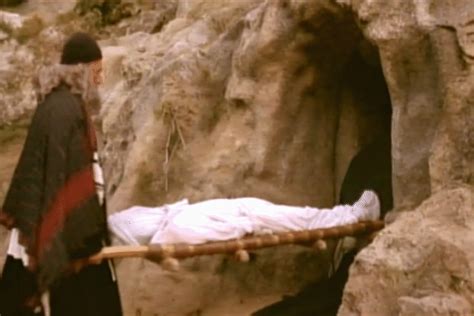
“Now in the place where He was crucified there was a garden, and in the garden a new tomb in which no one had ever been laid. So, because of the Jewish day of preparation, since the tomb was close at hand, they laid Jesus there.” John 19:41-42
The Saturday of Easter Week was the Sabbath Day. Many people cite texts in Ephesians 4 and I Peter 3 to say that Jesus was proclaiming the gospel to beings (either human or angelic) in the place of the dead (Hades). But there are other interpretations of those passages that show that they may have nothing to do with easter Saturday. I’m leaving them aside for this “Short Thought”. Instead, let’s consider what the Bible does tells us about late on Good Friday and early on Easter Sunday. Where was Jesus? Certainly, His body was buried in a tomb and there is another certainty mentioned in Jesus’ last words to the repentant thief on the cross beside Him
The Tomb
All four gospels tell us what took place immediately after the death of Christ on the cross. See Matthew 27:57-62; Mark 15:42-47; Luke 23:44-49; and John 19:38-42. Here we have the final minutes of Friday.
Joseph of Arimathea (described as rich, a respected member of the Sanhedrin, looking for the Kingdom of God, and a secret disciple of Jesus) summons up courage to ask Pilate for permission to arrange the burial of Jesus. This is granted, and he – probably with some servants) manages to get the body own from the cross and carried to the tomb. Also present is Nicodemas (whose story is told in John 3 where Jesus said, “You must be born again”), has gathered together 75 pounds of spices with which to anoint Jesus’ body. At least two Marys are there as well, with other women joining them the next morning. The body is wrapped and placed in the tomb and a stone rolled at the entrance. This was all done before the Sabbath began at 6 PM.
Then, we have the first minutes of Sunday. The women want to conclude the traditional burial customs (Mark 16:1-2) so go to the tomb as the Sabbath ends and Sunday begins at 6 AM. They find the stone rolled away and the body no longer there!
Paradise
One thing for sure that we know about the hours between is what Jesus Himself said while on the Cross: “Today, you will be with Me in paradise.” (Luke 23:43) Consider these three parts to the statement:
- “in paradise” – The word comes from the Persian, meaning a place of beauty, like a park or garden. It referred to Eden. Isaiah 51:3 says, “The Lord comforts Zion… and makes her desert like the garden of God.” Paul speaks of being caught up into “paradise” in a vision (II Corinthians 12:3).
- “with Me” – Jesus is saying that He would be present in heaven once He died on the cross, and the thief who trust in Him would be there, too. Between the death on Friday and the rising on Sunday, His body would be in the tomb but His spirit would be in paradise with the Father.
- “Today” – This movement from earth to heaven would be immediate.
Your Turn:
- Read Luke 23:32-56.
- What qualities are shown by those who took care of the Lord’s body?
- Paul wrestled between, on the one hand, a desire to stay in this life and be of help to the church and, on the other hand, to face death and be with Jesus. Can you affirm with the Apostle Paul, “My desire is to depart and be with Christ for that is far better.” Philippians 1:22-24)
DAY 268 – EASTER WEEK: SUNDAY
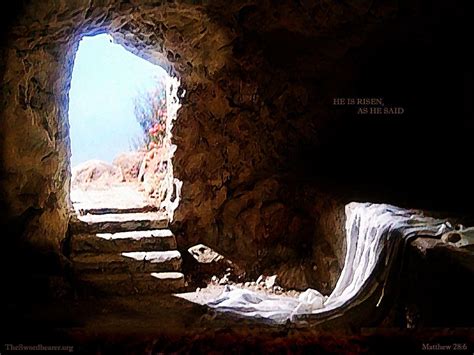
“He is not here but has risen.” Luke 24:6
“The foundation of all Christian doctrine hinges on the truth of the resurrection. Jesus said, “I am the resurrection and the life. He who believes in Me, though he may die, he shall live. And whoever lives and believes in Me shall never die.” (John 11:25-26, NKJV)”
Mary Fairchild, “Relive the Resurrection Story of Jesus Christ,” Learn Religions. https://www.learnreligions.com/the-resurrection-story-700218
Easter Sunday falls between March 22 and April 25 – the first Sunday after the full Moon on or following the spring equinox. This is often said to be the most important day on the Christian calendar. It’s essential importance is summarized in I Corinthians 15 In verses 3-5a, “3 For I delivered to you as of first importance what I also received: that Christ died forour sins in accordance with the Scriptures, 4 that He was buried, that He was raised on the third day in accordance with the_Scriptures, 5 and that He appeared to …” Then, the passage goes on to list several of those who saw Him after the resurrection (Peter, the disciples, over 500 at one time, James the brother of Jesus, all the apostles, and after His ascension, to Paul, and we could also add Stephen and John).
For today’s devotional, we will focus on those who saw the risen Christ on that first Easter Sunday. Here is a list of those appearances. You will notice that there were five recorded appearances on Resurrection Sunday, followed by another six or seven in the forty days leading to Jesus’ ascension, then at least three after that.
Resurrection Day Appearances
· Early Sunday morning (April 9) to Mary Magdalene near the sepulchre at Jerusalem (Mark 16:9, John 20:11-18)
· To the women returning from the sepulchre (Matthew 28:9-10)
· To Peter (Cephas) near Jerusalem later that day (Luke 24:34,1Corinthians 15:5)
· To two disciples going to Emmaus that day (Mark 16:12, Luke 24:13-31)
· That evening at Jerusalem to the apostles except Thomas (Mark 16:14, John 20:19-25)
Appearances in the 40 days prior to Ascension
- Sunday evening (April 16) at Jerusalem to all the apostles especially Thomas(John 20:26-29)
- End of April to seven disciples fishing on Sea of Galilee(John 21:1-13)
- To eleven disciples on a mountain in Galilee(Matthew 28:16-18)
- Over 500 disciples at once –location uncertain(1Corinthians 15:6)
- To James –location uncertain(1Corinthians 15:7)
- To the apostles (and probably others) during forty days prior to his ascension(Acts 1:2-3)
- At the Mount of Olives near Bethany at his ascension(Luke 24:50-51,Acts 1:6-12)
Post- Ascension Appearances
- After his ascension, to Stephen the martyr(Acts 7:55-56)
- To Saul on road to Damascus(Acts 9:3-6,1Corinthians 15:8-9)
- To John on the island of Patmos(Revelation 1:9-19)
https ://www.simplybible.com/f40a-bilis-resurrection-appearances.htm
Without going over the details of each appearance, what can we say that they teach us?
- The many appearances of Christ after His death and burial testify to the reality of His resurrection.
- There were not only individual appearances to individuals, but also to multiple people at one time.
- The variety of people who saw Him testifies to His reality in the lives of people of all walks – to women and men, to the 11 disciples and other believers, to rich and poor, to old and young, etc.
- His resurrection was to a new body (but with old scars), recognizable to those who knew Him, physical, able to eat, yet capable of appearing and disappearing and moving about supernaturally.
- Christ’s message to these witnesses was consistent with previous teaching – including Old Testament scriptures and teaching Jesus had given them before the cross.
- Jesus showed compassion and patience with those who found it difficult to process a resurrection.
- Jesus was concerned with what His followers would do now that they would need to rely on the inner working of the Holy Spirit to teach them, comfort, correct, and lead them.
- The post-ascension appearances show Jesus alive and involved in His people today.
Your Turn:
- Read John 20-21.
- The fact that His enemies had to concoct a story to explain away His resurrection is yet another proof of the reality of it. See Matthew 28:11-16.
- In the resurrection passages, note the range of feeling the followers of Jesus displayed: fear, great joy, worship, unbelief, belief, marvel, lost hope turned to amazement, alarm, astonishment, weeping, no understanding, eyes opened, hearts burned within them. Can you identify with any of these feelings? Have there been times when your eyes were opened to God’s truth, and when disbelief became belief?
- You might want to read I Corinthians 15:1-28 where Paul talks about the evidence for Jesus’ resurrection and the necessity of it. Without the resurrection we have nothing; we have no future beyond this life; and any meetings or efforts in His name are useless. He concludes, “If in Christ we have hope in this life only, we are of all people most to be pitied.”
- I have included eight lessons from the resurrection. What additional ones would you offer?
DAY 268 – EASTER MONDAY: AFTERTHOUGHTS
28 And though they found in Him no guilt_worthy of death, they asked Pilate to have Him executed. 29 And when they had carried out all that was written of Him, they took Him down from the_tree and laid Him in a tomb. 30 But God raised Him from the dead, 31 and for_many days He appeared to those who had come up with Him from Galilee to_ Jerusalem, who are now His witnesses to the people. 32 And we bring you the good news that what God promised to the fathers, 33 this He has fulfilled to_us their children by raising Jesus … Acts 13:28-33
We have been considering what the four gospels that we learn about the day of resurrection. I’ve also alluded to I Corinthians 15. We could add many such references found in the New Testament letters. But there is more: there are the Old Testament teachings on resurrection, the teachings oof Jesus as found in the New Testament, and also the New Testament cases where someone was raised from the dead.
These are our Easter Afterthoughts.
- The Old Testament and the Resurrection
In Genesis 5:24, we read, “Enoch walked with God; then he was no more, because God took him away.” And in II Kings 2:11, “Suddenly, a chariot of fire and horses of fire appeared and separated the two of them and Elijah went up to heaven in a whirlwind.”These two men did not experience death; they simply were ‘taken away’ by God, or “went up” to heaven. In Elijah’s case, it was also prophesied that he would one day return (Malachi 4:5-6). So, this was not a resurrection in one sense, namely neither man died, but it is an indication of a life in God’s presence after this one.
Job experienced many serious afflictions, and asked, “If a man dies, shall he live again?“ (Job 14:14). His very clear and strong answer is in Job 19:25-27, 25 For I know that my Redeemer lives, and at the last He will stand upon the earth.26 And after my skin has been thus destroyed, yet in my flesh I shall see God,27 whom I shall see for myself, and my eyes shall behold, and not another. My heart faints within me!”
Some verses in the Psalms also point to belief in a resurrection.
16:10, “For You will not abandon my soul to Sheol [a reference to the place of the grave], or let Your holy one see corruption.” [This was written by David of his own confidence in life after death. Peter also applied it to Jesus’ resurrection in Acts 2:24.]
49:15, “But God will ransom my soul from the power of Sheol for He will receive me.”
73:24, “You guide me with Your counsel, and afterward You will receive me to glory.”
Then, there are these verses:
Isaiah 25:8a, “He will swallow up death forever; and the Lord God will wipe away tears from all faces…”
Isaiah 26:16a, “Your dead shall live; their bodies shall rise. You who dwell in the dust, awake and sing for joy. …”
Daniel 12:1-2, “… But at that time your people shall be delivered, everyone whose name shall be found written in the boo. And many of those who sleep in the dust of the earth shall awake, some to everlasting life, and some to shame and everlasting contem
- Jesus’ Teaching on the Resurrection
a. Encountering the Sadducees
Much of what Jesus taught on this subject was in His confrontations with the Sadducees. They disputed the belief in a resurrection. Sadducees controlled the Sanhedrin and the Temple, with the High Priest usually a Sadducee. They were religious but rejected the supernatural. They enjoyed position and money, and strongly opposed Jesus. In contrast to them, the Lord showed that the resurrection was in keeping with the power of God and the teaching of the scriptures – where Abraham, for example, is said to be alive long after his death (Mark 12:24-27). Jesus spoke of “those worthy to attain to that [future] age and to the resurrection from the dead” (Luke 20:35). Jesus also informed the disciples of a “new world” where He and the twelve would sit as judges, and where His followers would receive “a hundredfold and will inherit eternal life” (Matthew 19:28-29). He also assured them of the place He was preparing for them (John 14:1-6).
b. Forecasting His own resurrection
Then, of course, Jesus also predicted His own resurrection (Mark 8:31; 9:321; 19:33 – “and after three days rise again”). There can be no doubt that the Lord was convinced of His rising after His death and burial.
2. Jesus’ Miracles in Raising the Dead
Jesus Christ, in His earthly ministry, raised three individuals. These are sometimes called ‘miracles of resuscitation’ since the three still faced death later on. But they signal a resurrection and tell of God’s power to raise the dead. He raised Jairus’ daughter (Luke 8:40-42, 49-56), the widow’s son (Luke 7:11-17), and Lazarus (John 11:1-44). And, along the same line, there is a fourth account of the resurrection of several people in Matthew 27:51-53.
Aligned to this is the Bible’s teaching on heaven and hell as future dwelling places. Jesus Himself had much to say on the afterlife.
Your Turn:
- Read Mark 12:18-34.
- How much did the resurrection of Jesus play in the development of the early church? See Acts 1:21-22; 10:34-43; 13:28-39.
- How can those who question Jesus Christ’s resurrection and promises of life after death for His followers face the reality and prospects of their own death?
- What’s left of the Bible if you deny the supernatural and the resurrection in particular?
- [Note:some parts above are found and developed much more fully in eds., Joel Green, Scott McKnight, & Howard Marshall, Dictionary of Jesus and the Gospels. Downers Grove, Ill. Intervarsity Press, 1992. pages 673-688.]
Day 270 – What Creation Teaches

“And God saw everything that He had made, and behold, it was very good.” Genesis 1:31
In my reading of the Bible, I frequently notice a reference to the subject of creation. For this “Short Thought” I will focus on what we learn by studying the creation. I have examined about 100 verses from the Bible. According to David Platte in his web site “The Gospel Way”, that is about a third of the scriptures that directly mention creation. See https://gospelway.com/creation/creation_list.php for the complete list of 307 verses (found in 20 Old Testament books and 15 New Testament books)! And, of course, there are many, many verses that use words or phrases that talk about creation without using that specific word (e.g., God founded, made, brought about, established, formed, etc.).
What lessons or meaning can we derive from studying what the Bible says about creation?
- Who God is
From studying the creation, we learn who God is.
Romans 1:20-22 says, “For His invisible attributes, namely, His eternal power and divine nature, have been clearly perceived, ever since the creation of the world, in the things that have been made. So, they are without excuse. For although they knew God, they did not honour Him as God or give thanks to Him, for they became futile in their thinking, and their hearts were darkened. Claiming to be wise, they became fools.”
The apostle Paul talks about “they”– defined as the ungodly and unrighteous who have ignored God’s revelation in nature and instead have built idols in the form of animals or birds, and have lived immorally and disrespectfully (Romans 1:23-32). These people have failed to see in nature that there is a God who is eternal and powerful – creation shows that! They could see this but chose not to honour God and as a result became fools in the way they lived.
Here is how one commentator explains this:
“We must not tone down the teaching of the apostle in this passage, It is a clear declaration to the effect that the visible creation as God’s handiwork, makes manifest the invisible perfections of God as its Creator, that from the things that are perceptible to the senses cognition of these invisible perfections may be gained from His observable handiwork.”
[John Murray. The Epistle to the Romans. One volume Edition. Grand Rapids, Mich. ,Wm. B. Eerdmanns Pub. Co., 1968, p. 40]
- Our Purpose
Why we are here is also taught us by the creation. First, we see the greatness of God, His wisdom and understanding, and understand our smallness in comparison. This leads us to worship the Creator.
Jeremiah 10:12, “It is He who made the earth by His power, who established the world by His wisdom, and by His understanding stretched out the heavens.” Also see Jer. 32:17.
Nehemiah 9:6, “You are the Lord, You alone. You have made heaven, the heaven of heavens, with all their host, the earth and all that is on it, the seas and all that is in them; and You preserve all of them; and the host of heaven worships You.”
Psalm 139:13-14, “For You formed my inward parts; You knitted me together in my mother’s womb. I praise You, for I am fearfully and wonderfully made. Wonderful are your works; my soul knows it very well.”
See also Psalm 19:1; 24:1-2; 95:1-96:13; 104:24-25 – many others!
- Creation teaching also shows that God assigned us responsibility to take care of what He made. Genesis 1:26, “…Let them have dominion over the fish of the sea and over the birds of the heavens and over the livestock and over all the earth and over every creeping thing that creeps on the earth.”
- We also learn that God created more than the physical things we can see. For example, He created within us a longing for Himself and eternity. And He made the structure of government and the institution of marriage with its duty of care between the man and the woman, and their offspring.
Ecclesiastes 2:12, “He has made everything beautiful in its time. Also, He has put eternity in man’s heart…”
Colossians 1:15-16, “…For by Him all things were created, in heaven and on earth, visible and invisible, whether thrones or dominions or rulers or authorities – all things were created through Him and for Him.”
Genesis 22-24, “And the rib that the Lord God had taken from the man He made into a woman and brought her to the man…Therefore, a man shall leave his father and his mother and hold fast to his wife, and they shall become one flesh.”
Ephesians 5:31-33, 31 “Therefore a man shall leave his father and mother and hold fast to his wife, and the two shall become one flesh. 32 This mystery is profound, and I am saying that it refers to Christ and the church. 33 However, let each one of you love his wife as himself, and let the wife see that she respects her husband.
Ephesians 6:1-4, “Children, obey your parents in the Lord, for this is right. “Honor your father and mother” (this is the first commandment with a promise), “that it may go well with you and that you may live long in the land.” Fathers, do not provoke your children to anger, but bring them up in the discipline and instruction of the Lord.”
- The creation account in Genesis also teaches us to take a day of rest and use it properly.
Genesis 2:2-3, “2 And on the seventh day God finished His work that He had done, and He rested on the seventh day from all His work that He had done. 3 So God blessed the seventh day and made it holy, because on it God rested from all His work that He had done in creation.
Hebrews 4:9-11, “9 There remains, then, a Sabbath-rest for the people of God; 10 for anyone who enters God’s rest also rests from their works, just as God did from his. 11 Let us, therefore, make every effort to enter that rest, so that no one will perish by following their example of disobedience.
- New Creation The creation of heaven and earth foreshadows the new creation. We see in the original creation the making of something only God could do and see its beauty. Then He speaks of regeneration as a “new” creation. In the physical creation, God gives breath to the man and woman, making them “living creatures”. In the new creation, He breathes into us eternal life. In the one, He made humankind “in His image” but still a creature of the flesh who made a choice that resulted in death; in the other, He makes a new creation “born of the Spirit” and enjoying eternal life and fellowship with God.
II Corinthians 5:17, “Therefore, if anyone is in Christ he is a new creation. The old has passed away; behold, the new has come.”
John 3:6, 16, “That which is born of the flesh is flesh, and that which is born of the Spirit is spirit…For God so loved the world that He gave His only Son, that whoever believes in Him should not perish but have everlasting life.”
- A new heaven and earth
The teaching on the original creation leads naturally to consideration of the coming of a “new” heavens and earth. God is not finished creating! The present universe “groans” because of the entry of sin into the world, but God has plans for anew heavens and earth where everything is in harmony with Himself.
Revelation 21:1-27, Then I saw a new heaven and a new earth, for the first heaven and the first earth had passed away, and the sea was no more. And I saw the holy city, new Jerusalem, coming down out of heaven from God, prepared as a bride adorned for her husband. And I heard a loud voice from the throne saying, “Behold, the dwelling place of God is with man. He will dwell with them, and they will be his people, and God himself will be with them as their God. He will wipe away every tear from their eyes, and death shall be no more, neither shall there be mourning, nor crying, nor pain anymore, for the former things have passed away.” And He who was seated on the throne said, “Behold, I am making all things new.” Also, He said, “Write this down, for these words are trustworthy and true.” …
Romans 8:19-21, “For the creation waits with eager longing for the revealing of the sons of God. For the creation was subjected to futility, not willingly, but because of Him who subjected it, in hope the creation itself will be set free from its bondage to corruption and obtain the freedom of the glory of the children of God.”
Each of these lessons the creation teaches us can and must be expanded to appreciate their full meaning. There are other lessons as well that can come from thinking of creation.
Your Turn:
- Read Genesis 1 and Revelation 21.
- What does creation tell you about God and His attributes?
- How is God’s creating activity instruct you about your purpose in life?
- God created and said it was “good”. How can you show respect for the heavens and the earth and the living things in the earth?
- Do you have a longing for eternity? Remember who put that longing within you.
- How are you doing in respect to your attitude towards governing authorities?
- Reflect on your duty of care for family and neighbours and humankind in general.
- There is much importance placed in the Bible on the availability of a new life in Christ. Have you trusted in Him and His work on the cross and in the resurrection?
- How do you make use of your day of rest?
- When you think of God’s promises for a new heavens and earth, what is your response?
DAY 271 – BELIEVE

And without faith it is impossible to please Him, for whoever would draw near to God must believe that He exists and that he rewards those who seek Him. Hebrews 11:6
The words ‘believe’ or faith’ are heard in all kinds of conversations. We might want to encourage someone and say, “I have faith in you to accomplish …” or we might want something to be rue so we say, “I really believe it’s going to happen this time.” Such statements suggest confidence in another person or in the coming to fruition of some desirable end.
The Bible also uses these terms, urging us to believe in God for a reason. Why should we believe Him?
- We believe God in order to establish a relationship with Him.
This begins, of course, with trusting Him for salvation from sin and its consequences. The way to please God is by placing faith in Him. As the verse at the top says, “Without faith it is impossible to please Him.” We please Him by accepting what He has done for us in the gift of His Son, Jesus Christ. Believing in the sacrificial death on our behalf and in the following resurrection of Christ leads to eternal life. “For God so loved the world that He gave His only Son, that whoever believes in Him should not perish but have eternal life.” (John 3:16) Also, we read, “Believe in the Lord Jesus, and you will be saved…” (Acts 16:31). Romans 10:10 adds that belief makes it possible to be declared in right relationship with God – “For with the heart one believes and is justified, and with the mouth one confesses and is saved.” Through faith in Him, we enjoy the relationship of child to Father – “But to all who did receive Him, who believed in His name, he gave the right to become children of God.”
With this relationship in place, we are able to see God in His glory- “Did I not tell you that if you believed you would see the glory of God?” (John 11:40).
2. We place faith in God to enable us to live as He intended.
Romans 10:10 shows that believing results in justification (being declared right before God) – “For with the heart one believes and is justified, and with the mouth one confesses and is saved.” And Genesis 15:6 builds on this thought when it says of Abraham, “He believed the Lord, and He counted it to him as righteousness.” Living in a righteous way should be our goal. Faith makes that possible.
For example, it makes possible the fulfillment of a spiritual hunger within us. Jesus said, “I am the bread of life; whoever comes to Me shall not hunger, and whoever believes in Me shall never thirst” (John 6:35). Exercising faith in God along the journey of life produces a life of steadfastness – James 1:3, “For you know that the testing of your faith produces steadfastness.”
3. Faith is necessary for answers to our prayers.
Consider these verses: Mark 11:24, “Therefore I tell you, whatever you ask in prayer, believe that you have received it, and it will be yours.”
Matthew 17:20, “He said to them, “… For truly, I say to you, if you have faith like a grain of mustard seed, you will say to this mountain, ‘Move from here to there,’ and it will move, and nothing will be impossible for you.”
James 1:5-6, “If any of you lacks wisdom, let him ask God, who gives generously to all without reproach, and it will be given him. But let him ask in faith, with no doubting, for the one who doubts is like a wave of the sea that is driven and tossed by the wind.
Matthew 21:22, “And whatever you ask in prayer, you will receive, if you have faith.”
4. Faith in God’s loving and powerful care for His children will enable us to overcome difficult situations and evil forces.
We see this in Mark 5:35 where Jesus reassures Jairus after people had told him it was too late to save his sick daughter, “Do not fear; only believe.” Later, approaching the tough days leading to Calvary, the disciples are troubled and the Lord says, “Let not your hearts be troubled. Believe in God; believe also in Me.” We may despair at the forces of evil in a world that rejects Christ, but faith again directs us in how to handle this: I John 5:4, “For everyone who has been born of God overcomes the world. And this is the victory that has overcome the world—our faith.” Add to this Ephesians 6:16, “In all circumstances take up the shield of faith, with which you can extinguish all the flaming darts of the evil one.”
5. Faith is the path to true knowledge and understanding.
Here are two examples of where faith makes it possible for us to understand something important. First, through faith we understand the nature of the Godhead, and in particular the oneness that exists between father and Son. In John 10:38, Jesus invites some unbelievers to examine the works He has been doing among them. He says, “If I am not doing the works of My Father, then do not believe Me, but if I do them, even though you do not believe Me, believe the works, that you may know and understand that the Father is in Me and I am in the Father.” We cannot understand the oneness of Jesus and God the Father without faith. Similarly, we will never understand the creation without faith; “Now faith is the assurance of things hoped for, the conviction of things not seen. For by it the people of old received their commendation. By faith we understand that the universe was created by the word of God, so that what is seen was not made out of things that are visible” (Hebrews 11:1-3).
6. It is only by believing that we have assurance of a future full of hope.
Romans 15:13, “May the God of hope fill you with all joy and peace in believing, so that by the power of the Holy Spirit you may abound in hope.
Ephesians 1:18-19, “Having the eyes of your hearts enlightened, that you may know what is the hope to which He has called you, what are the riches of His glorious inheritance in the saints, and what is the immeasurable greatness of His power toward us who believe, according to the working of His great might.
Your Turn:
- Read Hebrews 11.
- Notice how believing is always tied to the character and person of God, and to His work of salvation through Christ.
- We have briefly considered six reasons why we need to believe – belief is linked to eternal life, living successfully now, answers to prayer, overcoming problems we face, understanding, and hope for the future. Is one of these things more of a challenge for you than the others?
- Thank God for giving you the power to believe!
Day 272 – What Is Wisdom?
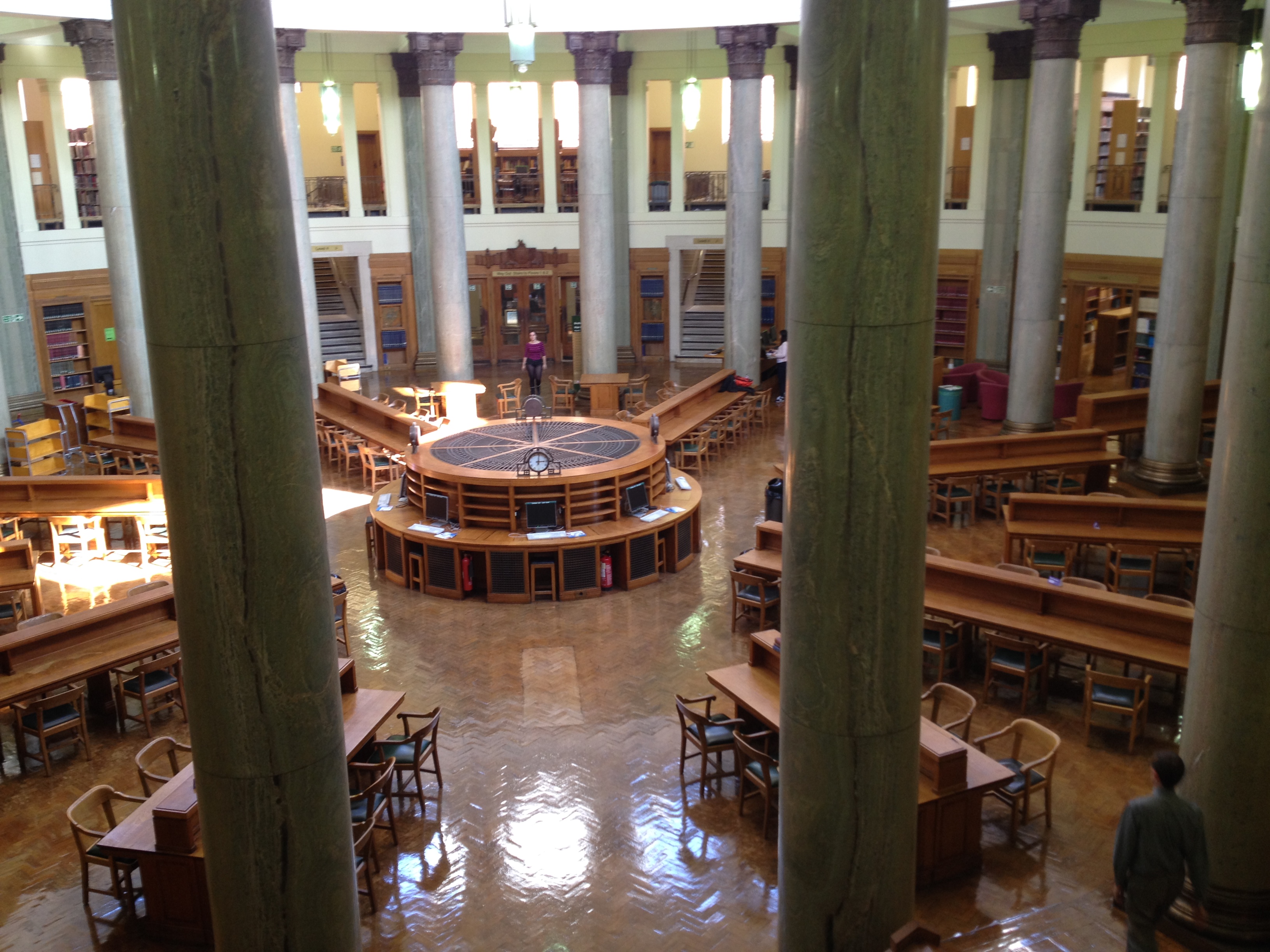
Brotherton Library, University of Leeds, Leeds, England
Let the wise hear and increase in learning,and the one who understands obtain guidance… Proverbs 1:5
“Wisdom is found only in truth.” Johann Wolfgang von Goethe
“Wisdom is the power to put our time and our knowledge to the proper use.” Thomas J. Watson
“Wisdom is the right use of knowledge. To know is not to be wise. Many men know a great deal, and are all the greater fools for it. There is no fool so great a fool as a knowing fool. But to know how to use knowledge is to have wisdom.” Charles Spurgeon
“The fear of the Lord is the beginning of wisdom, and the knowledge of the Holy One is insight.” Proverbs 10:9 ESV
We could go on and on with provocative quotations about wisdom. The last one given above is the most important definition and the one which the writers of the Book of Proverbs subscribe to.
Proverbs is a hard book to outline. Its chapters are full of pithy statements, simple statements about what to avoid, what to seek, and how to live. Most of the Book was written by Solomon (reigned circa 971-931 BC). Here’s what is reported about Solomon in I Kings 4:29-34,
29 And God gave Solomon wisdom and understanding beyond measure, and breadth of mind like the sand on the seashore, 30 so that Solomon’s wisdom surpassed the wisdom of all the people of the east and all the wisdom of Egypt. 31 For he was wiser than all other men, wiser than Ethan the Ezrahite,and Heman, Calcol, and Darda, the sons of Mahol, and his fame was in all the_surrounding nations. 32 He also spoke 3,000 proverbs, and his songs were 1,005. 33 He spoke of trees, from the cedar that is in Lebanon to the hyssop that grows out of the wall. He spoke also of beasts, and of birds, and of reptiles, and of fish. 34 And people of all nations came to hear the wisdom of Solomon, and from all the kings of the earth, who had heard of his wisdom.
In this Short Thought we will consider Proverbs 1:1-6. Then, in five devotionals that follow, we look at some lessons from the remainder of Proverbs 1 & chapters 2 & 3.
Solomon begins by stating his purpose in sharing his thoughts: namely, to know what wisdom is. It says it involves “instruction”, “insight”, and “wise dealing”. All of life we are required to pick up knowledge – from how to brush our teeth, to how to tie our shoes (my right-handed parents had difficulty teaching my left-handed mind how to do that), to later lessons in how to drive a car, write an essay, add and subtract, and on and on. Now, as an older man, there is still more for me to be diligent about: keeping my mind alert, being available to family and friends, and more. Knowledge or instruction is part of the process. But wisdom is more than knowledge. As Solomon says is that plus “insight”- defined by the Collins Dictionary as “the ability to perceive clearly or deeply”, “sudden understanding”, the capacity for understanding one’s own or another’s mental processes”, and “the immediate understanding of the significance of an event or action”. So, wisdom has an element of knowledge, plus insight, and it also consists of “instruction in wise dealing” (1:3 ESV and RSV). What is that? Other translations have “wise behaviour” (NASB), or “prudent behaviour” (NIV). We do not just learn something; we must go on to apply it to how we behave and how we make choices that are “prudent” (i.e., careful, circumspect, sensible, showing good judgment).
These three elements of wisdom are further characterized in verse 3b. The choices we make must be righteous just, and equitable. These are terms we use to describe God.
righteousness = carries the idea of being holy or pure
justice = being moral, living in agreement with God’s laws
equity = involves giving fair, upright, and just treatment
All these terms can be used to describe the nature of God. When we treat one another with righteousness, justice, and equity, we treat them the way God would do so. That is the way of wisdom.
Verse 4 adds that a wise person aims to give prudence to the simple, and knowledge and discretion to the youth. If a “simple” person gains wisdom, he or she will act prudently (as described above). “Simple” means naïve, someone easily misled. Wisdom is a protection for all of us – act uprightly, with justice, and with fairness – and we will not be misled. This is important because, as the writer of Proverbs will show in later verses, there are lots of unprincipled people out to mislead us! Then, there is the reward of discretion for the youth. Youth is sadly a time of life when we easily go to extremes, when we get into excesses of conduct. Wisdom will help protect us from that dangerous behaviour.
In verses 5-6, Solomon challenges and encourages us to grow by learning and coming to understand the best ways to wisdom. By thinking through the proverbial sayings that this book is full of, we will obtain guidance in life.
Your Turn:
- Read Proverbs 1:1-6.
- In the next devotional, we’ll consider how to get started on the path to wisdom, and after that, the benefits of wisdom. These first six verses get our attention and emphasize the desirability of wisdom.
- If you are a “youth”, what ways do you sense you might be easily misled?
- When you think of your youth (assuming you are past that stage of life), how did you get off course by failing to exercise prudence? Can you see improvement since then?
- How can you take a step forward today in learning and understanding the scriptures?
Day 273 – The Fear of the Lord

The Lion ‘Aslan’ from The Chronicles of Narnia – source: simplywallpaper.net
The fear of the Lord is the beginning of knowledge; fools despise wisdom and instruction. Proverbs 1:7
How do we obtain the wisdom and knowledge spoken of in Proverbs? We read in Proverbs 1:7; 9:10; and Psalm 111:10 that knowledge and wisdom begin with fearing God. “The fear of the Lord is the beginning of wisdom; and the knowledge of the Holy One is insight.” (Prov. 9:110). If the fear of the Lord is so important, we had better find out what that means.
- Defining “the fear of the Lord”
First, it means that we choose to walk in His ways, which ways are discovered in His Word – the Bible. Our adherence to the teaching of scripture shows fear of the Lord.
“And now, Israel, what does the Lord your God require of you, but to fear the Lord your God, to walk in all His ways, to love him, to serve the Lord your God with all your heart and with all your soul (Deut:10:12);
“Assemble the people, men, women, and little ones, and the sojourner within your towns, that they may hear and learn to fear the Lord your God, and be careful to do all the words of this law” (Deut. 31:12).
“And it shall be with him, and he shall read in it all the days of his life, that he may learn to fear the Lord his God by keeping all the words of this law and these statutes, and doing them (Deut. 17:19)
Secondly, we reject evil – the temptations of this world. Joshua emphasized this.
“Now therefore fear the Lord and serve Him in sincerity and in faithfulness. Put away the gods that your fathers served beyond the River and in Egypt, and serve the Lord. (Joshua 24:14)
These two principles, if followed, show a desire for holiness and a reverence for God.
“By faith Noah, being warned by God concerning events as yet unseen, in reverent fear constructed an ark for the saving of his household. By this he condemned the world and became an heir of the righteousness that comes by faith.” (Hebrews 11:7)
“Since we have these promises, beloved, let us cleanse ourselves from every defilement of body and spirit, bringing holiness to completion in the fear of God.” (II Corinthians 7:11)
Benefits
There are multiple benefits that come with fearing the Lord. Here are seven:
- Wellness: There are several places where the fear of the Lord is linked to general well-being, enjoying the goodness of God, abundance, etc. Here are a few:
I Sam. 12:14, “If you will fear the Lord and serve him and obey his voice and not rebel against the commandment of the Lord, and if both you and the king who reigns over you will follow the Lord your God, it will be well.”
Deut. 6:24; 8:6, “And the Lord commanded us to do all these statutes, to fear the Lord our God, for our good always, that he might preserve us alive, as we are this day.”
Isaiah 33:6. “And he will be the stability of your times, abundance of salvation, wisdom, and knowledge; the fear of the Lord is Zion’s treasure.”
Psalm 3:19, “Oh, how abundant is your goodness, which you have stored up for those who fear you and worked for those who take refuge in you, in the sight of the children of mankind!
- Protection: Better to be in the Lord’s camp than in the enemy’s. For those who fear the Lord there is protection largely because the ways of evil are dangerous and lead into all sorts of trouble, some troubles are even life-shortening.
II Chronicles 17:10, “ And the fear of the Lord fell upon all the kingdoms of the lands that were around Judah, and they made no war against Jehoshaphat.”
Deuteronomy 31:6, “Be strong and courageous. Do not fear or be in dread of them [the Canaanites Joshua and the nation would soon face], for it is the Lord your God who goes with you. He will not leave you or forsake you.”
Proverbs 28:14, “Blessed is the one who fears the Lord always, but whoever hardens his heart will fall into calamity.”
Psalm 115:11, “You who fear the Lord, trust in the Lord! He is their help and their shield.”
- Peace: Living in the fear of the Lord yields comfort, compassion, and peace. How desirable it is to place trust in a loving Lord and His ways.
Acts 9:31, So the church throughout all Judea and Galilee and Samaria had peace and was being built up. And walking in the fear of the Lord and in the comfort of the Holy Spirit, it multiplied.
Psalm 103:13, “As a father shows compassion to his children, so the Lord shows compassion to those who fear Him.”
- Stability: Our times are full of uncertainty, lacking stability. It helps us face life if we have confidence in where we are going and how we are to walk. God delivers the help we need.
Isaiah 33:6, “And he will be the stability of your times, abundance of salvation, wisdom, and knowledge; the fear of the Lord is Zion’s treasure.”
Isaiah 41:10, “Fear not, for I am with you; be not dismayed, for I am your God; I will strengthen you, I will help you, I will uphold you with my righteous right hand.”
Isaiah 41:13, “For I, the Lord your God, hold your right hand; it is I who say to you, “Fear not, I am the one who helps you.”
- Belonging: Accepting Jesus’ death and resurrection on our behalf, redeems us from our sins. This is an essential aspect of living in the fear of the Lord. We can enjoy His holy presence in or lives, and His friendship.
Isaiah 43:1, “But now thus says the Lord, He who created you, O Jacob, He who formed you, O Israel: ‘Fear not, for I have redeemed you; I have called you by name, you are mine.’ “
Psalm 25:14, “The friendship of the Lord is for those who fear Him, and He makes known to them His covenant.”
- Influence: When we choose to fear the Lord, it benefits succeeding generation.
Luke 1:50, “And his mercy is for those who fear him from generation to generation.”
- Honour: The fear of the Lord brings honour as others see godly qualities in our lives.
Proverbs 22:4, “The reward for humility and fear of the Lord is riches and honor and life.”
Proverbs 31:30, “Charm is deceitful, and beauty is vain, but a woman who fears the Lord is to be praised.”
Your Turn:
- Read Psalm 33.
- Normally, when we use the word “fear” we think of something threatening and unpleasant. The Bible usage includes that thought – e.g., Jesus said, “I tell you My friends, do not fear those who kill the body, and after that have nothing more that they can do. But I will warn you whom to fear; Fear him who after he has killed has authority to cast into hell. Yes, I tell you, fear him!” (Luke 12:4-5) So, God is to be feared if a person has rejected Him and the salvation He has accomplished through His Son, Jesus Christ. But, the opposite is true for those who have trusted in Christ. Hence, “There is no fear in love, but perfect love casts out fear. For fear has to do with punishment, and whoever fears has not been perfected in love.” (I John 4:18). That is how the biblical use of the term “the fear of the Lord” moves away from punishment to the meanings given above: walking in the ways of the Lord, and rejecting evil. Have you moved from being afraid of the Lord to loving the Lord?
 Abundant Living