Day 295 – JOHN 4 – The Harvest

35 Do you not say, ‘There are yet four months, then comes the harvest’? Look, I tell you, lift up your eyes, and see that the fields are white for harvest. 36 Already the one who reaps is receiving wages and gathering fruit for eternal life, so that sower and reaper may rejoice together. John 4:35-36
Jesus says the above just after He has had an extended conversation with the woman He met at a well in Sychar, Samaria. This woman believed in Him, as did many of her neighbours (v. 39). In John 4 it is not only these Samaritans who believe, but also a Galilean official and his household (v. 53). This chapter is characterized by spiritual harvest.
Here is one way of seeing the arrangement of this chapter in terms of certain people:
a. the Samaritan woman and the Samaritan villagers, vv. 1-26 & 39-42 b. the disciples, vv. 27-38 c. the Galileans and the Galilean official, vv. 43-45 and vv. 46-54
We will focus on part a.
John is careful to describe the physical and cultural setting. Jesus and some disciples are walking north from Judea to Galilee (a three-day journey). The most direct route is to go through Samaria. They arrive at a town named Sychar, at a well, built on property given centuries earlier by Jacob to Joseph’s family (Genesis 48:22). Jesus is tired and thirsty. The disciples have gone into town to buy food. A Samaritan woman comes to draw water and Jesus asks for a drink. Jesus’ approach is somewhat unusual in that Jews and Samaritans had some fundamental differences (“For Jews have no dealings with Samaritans.” v. 9b) and it was considered unacceptable for Him to speak with a woman. (“How is it that you, a Jew, ask for a drink from me, a woman of Samaria?” – v. 9a).
The setting described, a conversation on “living water”, who Jesus is, and true worship follows in verses 7-26.
Living Water – vv. 10-15 The Lord says to her that she is the one who should be asking for water – “living water” (v. 10) Observing that He has nothing with which to draw water from the well (v. 11), she asks where He’ll get this water. Is He greater than the patriarch Jacob (v. 12)? Again, Jesus refers to a different type of water than is found in the well. “Whoever drinks of the water that I will give him will never be thirsty again. His water leads to eternal life (v. 14). She still doesn’t get it, saying she’d like not to have to come to this place to draw water (v. 16).
Who Jesus is – vv. 10a, 16-19, 25-26, 29 At different places in the dialog, we see Jesus challenging the woman to recognize her real need is for more than water, and He wants her to think about who He is. It begins in v.10: “ If you knew the gift of God, and who it is that is saying to you, ‘Give me a drink,’ you would have asked him, and he would have given you living water.” What does He mean by “the gift of God”? It could carry one of three meanings: (1) Jesus Himself is the Father’s gift. (2) the Torah or scriptures are God’s gift; if she knew the Torah and who was speaking to her, she would have responded differently to Him. (3) The gift is eternal life, which Jesus alone can give. In any case, Jesus wants her (and us) to recognize who He is – the provider of life eternal. And the final expression of who He is even more direct:
25 The woman said to him, “I know that Messiah is coming (he who is called Christ). When he comes, he will tell us all things.” 26 Jesus said to her, “I who speak to you am he.”27 Just then his disciples came back. They marveled that he was talking with a woman, but no one said, “What do you seek?” or, “Why are you talking with her?” 28 So the woman left her water jar and went away into town and said to the people, 29 “Come, see a man who told me all that I ever did. Can this be the Christ?”
The Lord declares openly that He is the Messiah. The woman is beginning to see this – she left her water jar and went to town to tell others – her real need wasn’t the water, it was Jesus.
True Worship – vv. 16-26 The conversation turns away from water to worship in v. 16. First, Jesus tests the woman’s honesty. “Go, call your husband, and come here.,” the Lord says. She admits she has no husband and Jesus commends her: “You are right…for you have had five husbands, and the one you have is not your husband. What you have said is true.” (vv. 17-18) She has a morally compromised past – and present. Her five husbands have either died or been divorced, and she is not married to her present partner. She perceives He is either “a” prophet or “the” prophet (meaning a greater prophet than Moses, Deuteronomy 34:10) and changes the subject to where the proper worship site is, Mount Gerizim where Samaritans built a temple or the mount in Jerusalem where Solomon had built the temple. If Jesus us a prophet, He might have some words of wisdom on the subject.
Jesus answers that neither site will last as the definitive worship site (v. 21) and adds that salvation (via the Messiah) comes from the Jews (v. 22). In fact, He makes clear, true worship is found not in a place but in God the Father (v. 23). God is spirit and our worship of Him must also be “in spirit and in truth” (v. 24).
“Woman, believe me, the hour is coming when neither on this mountain nor in Jerusalem will you worship the Father. 22 You worship what you do not know; we worship what we know, for salvation is from the Jews. 23 But the hour is coming, and is now here, when the true worshipers will worship the Father in spirit and truth, for the Father is seeking such people to worship him. 24 God is spirit, and those who worship him must worship in spirit and truth.”
Here is how Carson explains this kind of worship: “…[Worship] must be essentially God-centred, made possible by the gift of the Holy Spirit, and in personal knowledge of and conformity to God’s Word-made-flesh, the one who is God’s ‘truth’, the faithful exposition and fulfilment of God and His saving purposes.” (D. A. Carson, 1991).
Your Turn:
- Read John 4.
- The disciples return with food and are focused on it (as the woman had been on water). Jesus turns their attention to the spiritual food of doing the Father’s work (v. 34) The Samaritans who believed are part of the harvest of souls Jesus mentions (vv. 35-36), as are those in Galilee who believe (vv. 46-54). We are to be busy harvesting all peoples, not just our favourites.
- Jesus turned conversations away from surface issues to what was really important. In your life, what would He really like to talk about?
DAY 296 – JOHN 5 – Witness

You search the Scriptures because you think that in them you have eternal life; and it is they that bear witness about Me. John 5:30
How would you define the word “witness”?
The Bridgeway Bible Dictionary says this, “The word ‘witness’ had many usages and meanings in the Bible. It was commonly used to refer to people who saw, knew or experienced something … to their open declaration of what they saw, knew or experienced. Their witness was their testimony. ‘Witness’ was also used to denote a person who guaranteed, or swore to, the truth of something …; or it may have denoted that person’s oath or guarantee of the truth …” …. https://www.studylight.org/dictionaries/eng/bbd/w/witness.html
In John 5:30-46 Jesus Christ talks about the three witnesses to His person as the Son of God.
The chapter has three parts:
- The healing of a lame man on the Sabbath, vv. 1-18
- The presentation of Jesus as the Son of God, vv. 18-29
- The witnesses to Him as God, vv. 30-46
Our focus is on the last section.
The chapter begins with the healing by Jesus of a lame man at the pool of Bethesda in Jerusalem. The Lord tells the man to “take up [his] bed and walk”. The problem to some observers is not the healing so much as it is the carrying of the bed roll.
Now that day was the Sabbath. 10 So the Jews said to the man who had been healed, “It is the Sabbath, and it is not lawful for you to take up your bed.”
The gospels often show Jesus at odds with the religious authorities over Sabbath observance. The Old Testament law forbade work on the Sabbath- it was to be a day of rest: “This is what the Lord says: Be careful not to carry a load on the Sabbath day or bring it through the gates of Jerusalem. Do not bring a load out of your houses or do any work on the Sabbath, but keep the Sabbath day holy …” (Jer. 17:21-22) The Torah went beyond this general teaching to list thirty-nine ways the Sabbath might be broken. The religious leaders of Jesus’ day saw this man’s carrying of a simple bed roll as “work” and persecuted Jesus for performing a healing that resulted in “work” on the Sabbath (v. 16). So, that sets the scene.
Then, in verses 18-29, they added the charge that He was “making Himself equal with God,” to which Jesus replies that He simply does what He sees the Father doing, including greater works than anyone has seen thus far. Those “greater” things are raising the dead and giving them life. “Whosoever does not honour the Son does not honour the Father who sent Him” (vv. 23). He adds that He is the source of eternal life.
This takes us to the last section on the three witnesses to the person of Jesus as Son of God. This discussion of witnesses adds authority to His earlier claims. He says that if all they had were His own claims, someone might question the legitimacy of His self-attestation. Thus, he brings forth three witnesses.
The first one is John the Baptist (5:33-35).
32 There is another who bears witness about me, and I know that the testimony that he bears about Me is true. 33 You sent to John, and he has borne witness to the truth. 34 Not that the testimony that I receive is from man, but I say these things so that you may be saved. 35 He was a burning and shining lamp, and you were willing to rejoice for a while in his light.
These religious leaders had heard John the Baptist preach and seen him pointing to Jesus as the Lamb of God. John was “a burning and shining lamp”. This is the same identification of John and his mission as is found in John 1:6-7 (6 There was a man sent from God, whose name was John.7 He came as a witness, to bear witness about the light, that all might believe through Him.)
The second witness is God the Father (5:36-38),
36 But the testimony that I have is greater than that of John. For the works that the Father has given me to accomplish, the very works that I am doing, bear witness about me that the Father has sent me. 37 And the Father who sent me has himself borne witness about me. His voice you have never heard, his form you have never seen, 38 and you do not have his word abiding in you, for you do not believe the one whom he has sent.
The Father testified to Jesus’ deity through the “works” Jesus did – including the healing of the paralyzed man described at the beginning of the chapter. Since they failed to believe because of that evidence, they showed that they would not be able to hear the Father either inwardly or audibly. They were not like Moses who heard God speak (Exodus 33:11) or Jacob who saw God’s form (Gen. 32:30, 31) or Joshua and the Psalmist who hid God’s word in their hearts (Josh. 1:8-9; Psalm 119:11). They rejected the Word (Jesus) and His teaching, so missed out on that witness to the Lord’s person.
The third witness is the holy scripture (5:39-40)
You search the Scriptures because you think that in them you have eternal life; and it is they that bear witness about me, 40 yet you refuse to come to me that you may have life.
They were right to search the scriptures. The scriptures were pointing to Jesus as the Messiah. But there was no benefit to their approach because they were studying these scriptures for the wrong reasons and without faith. They sought “glory from one another”(v.44) and missed the glory that the Father gave to Jesus. Instead, they accepted false messiahs (v. 43).
Your Turn:
- Read John 5
- Have you been searching the scriptures to see and know Jesus?
- The more we know Jesus, the better witnesses to Him we become.
DAY 297 – JOHN 6: STORMS

20 But he said to them, “It is I; don’t be afraid.” John 6:20
Wherever we live in on this planet, there seem to be storms. In fact, scientists warn that storms are increasing. In my part of the world, there are floods and tornados – and also snow storms like the one pictured above. I recall a drive a few years ago when I picked up three grandchildren from a gymnastics lesson. The winds were blowing, with snow falling, and it was evening and therefore, dark. It was hard to tell which side of the highway I was on, or how close I was to the ditch. I asked the kids to not distract me so I could concentrate on driving. One asked what would happen if we got stuck. I assured her that I could call for help on my cell phone, or we might be able to walk up a lane to the safety of a farmhouse. It was a scary time. Thankfully, we made it home safely.
In Matthew 8 and Luke 8, the gospel writers describe a time when the disciples and Jesus were on a boat when a storm came up. They were afraid but Jesus was asleep. They woke Him and He rebuked the wind and the sea resulting in “a great calm” (Matthew 8:27).
In our reading of John’s gospel we have come to chapter 6. We know this chapter primarily because of the amazing story of the feeding of the 5,000 and the subsequent teaching on Jesus as the Bread of Life. I really like this chapter and the lessons learned from the miracle of changing of five small rolls and two small fish into more than enough for the great crowd, but for today, let’s focus on the brief section where Jesus walks on water (verses 16-21).
In verse 19 we read that the disciples were frightened. Why?
- It was dark. Evening had come (vv. 16-17), the evening following the teaching by the Sea of Galilee and the miracle meal. Darkness can easily make for a frightening time as a strange noise or shadows happen.
- Jesus wasn’t there (v. 17). He was expected but “had not yet joined them”. We might be going through an anxious time but cannot sense the Lord’s presence and feel alone.
- A strong wind came up (v. 18). Wind sounds frightening and its effects can be disastrous. It simply adds to the fear within.
- The waters became rough (v. 18b). I was once on a ferry travelling between Nova Scotia and Newfoundland on Canada’s east coast. A storm made for high waves; many were seasick; all of us eagerly waited for land to appear. In retrospect, it doesn’t comfort me to know that some years later that very ferry sank on a different journey!
- The disciples were frightened even more when, three or four miles out, they saw what looked like a man walking on the water! (v. 19 – see Mark 6:49 and Matt. 14:26 where they thought they were seeing a “ghost”) They then recognized the person as Jesus, and He assured them, “It is I; don’t be afraid.” (v. 20) Imagine the relief when they heard His voice! How would you feel if on a dark and stormy night, Jesus showed up and spoke calming words!
The appearance of Jesus was calming, I’m sure, but there was one more step needed: “Then they were willing to take Him into the boat.” (v. 21) When He was onboard, “immediately the boat reached the shore where they were heading.” His presence brought more than just relief from the waves and wind, it brought them on shore. Jesus gives peace in life’s storms, and more than we would have asked for or thought possible.
Now to him who is able to do far more abundantly than all that we ask or think, according to the power at work within us. Ephesians 3:20
Your Turn:
- Read John 6.
- How we respond to Jesus Christ’s presence makes all the difference in the world. In this case, the disciples “were willing to take Him into the boat”. At the end of the chapter, after His teaching on the bread of life, some people observed that His teaching was “hard” and then we observe that “from this time many of His disciples turned back and no longer followed Him.” (v. 66) Jesus asked the 12, “You do not want to leave too, do you?” (v. 67) to which Peter replied, “Lord, to whom shall we go? You have the words of eternal life.” So, we observe some who left Him and others who willingly took Him in. In which category are you?
- He disciples in the boat had several fears: darkness, feeling alone, wind, waves, ghostly figures. They were wrong about being alone and seeing a ghost. They were not equal to the fierceness of the winds and waves, and could not do anything about the darkness. Sometimes it is our inability that makes us afraid; other times it’s a mistaken impression. What fears do you tend to experience? Can Jesus do anything about them?
DAY 298 – JOHN 7: OPINIONS
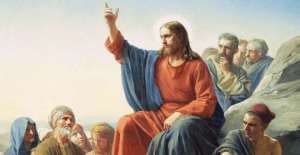
And there was much muttering about him among the people. While some said, “He is a good man,” others said, “No, he is leading the people astray.” John 7:12
Ask someone on the street whom they think Jesus was or is and you will get a variety of opinions. A March 2022 poll of Americans showed that 84% believe Jesus is an important spiritual figure and 76% believe in the historical existence of Jesus of Nazareth [ https://www.episcopalchurch.org/publicaffairs/new-poll-confirms-jesus-remains-important-spiritual-figure-but-pandemic-had-effect-on-religious-activity/ ]
A 2015 poll by the Barna group yielded these findings;
- 92% believe Jesus existed as a real person
- 56% believe Jesus was God
- 52% say Jesus committed sins like other people
-
Roughly two out of five say they have confessed their sinfulness and professed faith in Christ and 63% of these people believe that, because of this, they will go to heaven after death (compared to other reasons such as obedience to the 10 commandments, thinking they are basically good, thinking God loves all and won’t let them perish). [ https://www.barna.com/research/what-do-americans-believe-about-jesus-5-popular-beliefs/ ]
In John 7 Jesus goes to Jerusalem for the Feast of Booths, where the harvest was celebrated as well as the provision of God to the Israelites during their 40 years in the wilderness. There He encounters many people, some who believed in Him, others who did not – and even wanted to kill Him. These interactions brought to the fore several opinions of who Jesus actually was. Let’s consider these opinions.
Negative responses to and opinions of Jesus
- He was leading people astray – verse 12b, While some said, “He is a good man,” others said, “No, he is leading the people astray.” (i.e., away from the spiritual teaching they claimed to be true)
- He was uneducated – verse 15, “The Jews therefore marveled, saying, “How is it that this man has learning, when he has never studied?”
- He was from Galilee (an unimportant place- no prophet ever came from there) – verse 52, “They replied, “Are you from Galilee too? Search and see that no prophet arises from Galilee.”
- They questioned His claims – v5-27, 25 Some of the people of Jerusalem therefore said, “Is not this the man whom they seek to kill? 26 And here he is, speaking openly, and they say nothing to him! Can it be that the authorities really know that this is the Christ? 27 But we know where this man comes from, and when the Christ appears, no one will know where he comes from.”
- Some hated Him and even His brothers did not believe in Him – verses 5, 7, “For not even his brothers believed in him…The world cannot hate you, but it hates Me…”
Positive responses to and opinions of Jesus
- He was a good man – verse 12, While some said, “He is a good man,” others said, “No, he is leading the people astray.”
- He spoke with God’s authority – verses 16-18, 16 So Jesus answered them, “My teaching is not mine, but his who sent me. 17 If anyone’s will is to do God’s will, he will know whether the teaching is from God or whether I am speaking on my own authority. 18 The one who speaks on his own authority seeks his own glory; but the one who seeks the glory of him who sent him is true, and in him there is no falsehood.
- He spoke persuasively and with power – verse 46, 46 The officers answered, “No one ever spoke like this man!”
- He was born in Bethlehem, in David’s line, and He was the promised Prophet, the Christ – verses 40-42, .” 40 When they heard these words, some of the people said, “This really is the Prophet.” 41 Others said, “This is the Christ.” But some said, “Is the Christ to come from Galilee? 42 Has not the Scripture said that the Christ comes from the offspring of David, and comes from Bethlehem, the village where David was?”
- Many believed in Him – verse 31, 31 Yet many of the people believed in him. They said, “When the Christ appears, will he do more signs than this man has done?”
Your Turn:
- Read John 7.
- Are you still questioning who Jesus is?
- Eventually, a choice or decision has to be made about Jesus. For he says, “In a favourable time I listened to you, and in a day of salvation I have helped you.” Behold, now is the favourable time; behold, now is the day of salvation. II Corinthians 6:2
14 Now therefore fear the LORD and serve him in sincerity and in_faithfulness … choose this day whom you will serve, whether the gods your_fathers served in the region beyond the River, or the gods of the Amorites_in whose land you. But as for me and my house, we will serve the_LORD.” Joshua 24:14 - God is still asking of all people the same thing He asked the disciples in Matthew 16:15, “15 He said to them, “But who do you say that I am?”16 Simon Peter replied, “You are the Christ, the Son of the living ”
DAY 299 – Women in the Old Testament: Eve
Note: this is the first in a series of 13 segments on women in the Bible. The Old Testament women studied are Eve, Sarah, Rachel +Leah +Rebekah, victimized women (Dinah, Tamar), Miriam + Zipporah, Rahab, Deborah, Naomi +Orpah +Ruth, Hannah, Abigail, David’s wives (Michal, Bathsheba, Abishag), wicked women (Deliah, Athaliah, Jezebel), Esther.

So God created man(kind) in His own image, in the image of God He created him; male and female He created them. And God blessed them…Genesis 1:27-28a
Eve (meaning life, living) is the first woman identified in the Bible. Her story can be told in four parts: Eve’s creation, Eve’s marriage, Eve’s fall, the consequences of Eve’s fall.
- Eve’s Creation, Gen. 1:1-30
The story of Eve begins in Genesis 1:26 where God says, “Let us make man(kind) in our image, after our likeness. And let them have dominion over [fish, birds, livestock, creeping things].” Then, more specifically, it is written that God created humans: “male and female”. God says three things about human beings:
- They were created in the image of God: we have a relationship with God.
- They were created distinctly as male or female: we have a special relationship with another person of the opposite sex.
- They were told to multiply and subdue the earth, to exercise dominion over animals, and are given plants to eat. We have a relationship with the rest of creation.
- Eve’s Marriage, Gen. 2:20-25
Adam saw that the animals had partners but he did not. He was lonely, needing someone quite different; there was no one fit for him (v. 20). So, God created Eve from Adam’s rib. They were tied together by a deep relationship. What did Adam observe about Eve?
- There was a recognition of unity: “bone of my bones, flesh of my flesh” (v. 23)
- She was to be called “woman” (v. 23b) – an inherent connection. In Hebrew “man” is “ish” and “woman” is “ishshaw”.
- He was to leave parents for her (v. 24) A new unity was established – “they shall become one flesh”.
- Theirs was an exclusive and permanent union – “hold fast to his wife” (vv. 24) – “hold fast” means to adhere firmly, as if with glue. This speaks to faithfulness and permanence.
- They were not ashamed (v. 25)- they were meant to enjoy an open and relaxed relationship.
- Eve’s Fall, 3:1-6
Sadly, a big part of her story is the Fall. The Devil sows in Eve seeds of doubts about God and distrust in God. He suggests that God couldn’t possibly have meant what He said about refraining from eating the fruit. She understands that she should not expose herself to the temptation – not even to touch the tree (v. 3). Satan directly contradicts God (“You will not surely die”) and also distorts God’s prohibition (“… you will be like God, knowing good and evil”). They would know good and evil but in a destructive, not uplifting, way.
Temptation increases in intensity the deeper we go. Eve sees the fruit would be good for food, looks desirable, and increase her knowledge. Logically and emotionally, the fruit would satisfy her hunger, is aesthetically pleasing (appeals to the lust of the eyes and flesh – I John 2:16), and would add wisdom (but unspiritual and devilish wisdom – James 3:15). Temptations also lead us to involve others – she gives some to Adam (Gen. 3:6). The New Testament says the woman was deceived, but not Adam (I Timothy 2:4). In other words, she was tricked, but Adam went into sin with eyes wide open.
2. Consequences of Eve’s Fall, 3:7-24
Eve had to deal with the consequences of the fall. There were several:
- Self-consciousness – both became aware of their nakedness (3:7)
- Guilt – both hid from God (3:8)
- Passing the buck – she blamed the serpent, implying that since God made the serpent, so He was to blame (3:13)
- Enmity between Eve and the serpent, and between her offspring and Satan’s – This became a good consequence when Eve’s ultimate offspring, Jesus Christ, defeated Satan (3:15)
- Pain in childbirth – physical pain and also the pain a mother often feels when a child breaks her heart (3:16). In Eve’s case, Cain fell away from God and killed Able (Gen. 4).
- Desire for, and sometimes contrary to, her husband – “Desire” here means “to run after”. She will desire his approval, to be important to him, and sometimes to seek to rule him (3:16b)
- Expulsion from Eden (3:24)
- Death
The New Testament passage links Eve’s failure to the limiting of a woman’s role in the church (she is under male authority) – I Timothy 2:4 – and v. 5 also adds a positive affirmation by indicating that she will find a sense of achievement in her children and in a life of faith, love, and holiness, and self-control.
Eve was created, I assume, a mature woman. Let’s say she was twenty. She had no childhood recollections. After the fall she was removed from the Garden of Eden and experienced a world quite different from what she had come to know. She had no one to teach her about having children, doing even the basic chores of a household, etc. She experienced terrible loss and great joy, especially the promise of her seed being triumphant.
Your Turn:
- Read Genesis 1, 2, 3.
- The creation story also chronicles Adam’s appreciation of Eve (Gen. 1:23), and his subsequent fall. She may have been more susceptible to beguilement and deceit, but he acted willfully and defiantly of God’s command.
- Think about your own responsibility before God. The Bible says, “All we like sheep have gone astray…” (Isaiah 53:6) and “All have sinned and fall short of the glory of God” (Rom. 3:23). Thus, we are no different than Eve in that respect.
- Think of the characteristics of marriage as it was established by God: a deep relationship characterized by unity, exclusivity, faithfulness, permanence, and openness. If you are married, is there evidence of these qualities present in your relationship?
DAY 300 – Women of the Old Testament – Sarah

11 By faith Sarah herself received power to conceive, even when she was past the age, since she considered him faithful who had promised. Hebrews 11:11
- Introducing Sarah
When the story begins, Sarah is called “Sarai” and Abraham, “Abram”.
Terah, the father of Sarai, moved his family from Ur in Mesopotamia to Haran (about half-way between the Mediterranean and Caspian Seas). It was a commercial centre where moon-god worship was dominant. Sarai married Abram, one of Terah’s sons. And they had no children, but God promised them that they would have offspring which would become a great nation (Genesis 12:2-3) and directed them to re-locate to Canaan. Clearly, their faith was not in the pagan gods of Haran, nor were they tied to the attractions of the civilization they left behind for a tent in a foreign land.
- Sarah Mistreated
There are two instances in their relationship where Abram mistreated Sarai, in insisting she identify as his sister. In Genesis 121-13, the family moves again, this time because of a famine in Canaan. They go to Egypt and Abram says to Sarai:
“I know that you are a woman beautiful in appearance, 12 and when the Egyptians see you, they will say, ‘This is his wife.’ Then they will kill me, but they will let you live. 13 Say you are my sister, that it may go well with me because of you, and that my life may be spared for your sake.”
Sarai ends up in Pharoah’s palace as another would-be wife for Pharoah – and Abram is treated generously. When illness besets Pharoah’s household, he figures out that Sarai is Abram’s wife and sends them away.
The second instance is described in chapter 20 where they are living in Gerar. God again promises Abraham to be the father of many and changes his and his wife’s names: Abram (=Noble Father) to Abraham (=Father of many), and Sarai (=Princess) to Sarah (= Mother of Nations). The king, Abimelech, takes Sarah into his harem, but in a dream God warns the king of death unless he dismisses Abraham’s wife. Abimelech asks Abraham why he said Sarah was his sister. Abraham’s excuse is two-fold: first, he feared for his life; second, she was his half-sister, so he had told a half-truth. Abraham and his household are sent away with money and livestock and told to select a different place to live – and Ahimelech’s people are healed.
Sometimes, the world sees the right way clearer than we do. In both cases Abram was trying to save his own skin while putting his wife in danger. In both cases, God protected Sarah when her husband failed her.
- Sarah Mistreats Hagar, 16:1-9; 21:8-12
Sarah was mistreated, but, sadly, she also failed someone she should have protected. Sarah suggested that Abraham have a child by her maid, Hagar. He agreed, but when a son was born, Hagar began to despise Sarah and Sarah mistreated Hagar, who ran away (Gen. 16:6). Though she returned, the boy mocked Sarah who made Abraham send Hagar and her son away (Gen. 21:8-12). The whole tragic series of events greatly distressed Abraham.
We see in these passages that Sarah tried to help God by suggesting that her husband have a child by her maidservant. This was accepted in the society of the time, but showed lack of trust in God’s promise and a defiance of God’s moral code. Sarah also blamed Abraham for agreeing to her plan. She displayed wounded pride, jealousy, and cruelty. Several people were hurt: Sarah herself, Abraham, Hagar, Ishmael.
- God’s Promise to Sarah and Abraham Fulfilled, 17:18-19; 18:9-15; 21:1-3
God twice promised Sarah that she would bear a son from whom would come nations and kings of nations. God would make with her son an everlasting covenant. Though she (and Abraham) both laughed at the idea of a child being born to elderly parents, they in time believed God’s promise and welcomed their son – the son “born as a result of a promise” (Galatians 4:23).
16 I will bless her, and moreover, I will give you a son by her. I will bless her, and she shall become nations; kings of peoples shall come from her . , , 19 Sarah your wife shall bear you a son, and you shall call his name Isaac. I will establish my covenant with him as an everlasting covenant for his offspring after him. (Gen. 17:16,19)
10 Then one of them said, “I will surely return to you about this time next year, and Sarah your wife will have a son.” (Gen. 18:10)
11 By faith Sarah herself received power to conceive, even when she was past the age, since she considered him faithful who had promised. (Hebrews 11:11)
Sarah laughed at the promise of a baby, then at the joy of giving birth, as God has promised. Isaac (meaning “he will laugh, he will rejoice”) was born:
The Lord visited Sarah as he had said, and the Lord did to Sarah as he had promised. 2 And Sarah conceived and bore Abraham a son in his old age at the time of which God had spoken to him. 3 Abraham called the name of his son who was born to him, whom Sarah bore him, Isaac. (Genesis 21:1-3)
“Sing, O barren one, who did not bear; break forth into singing and cry aloud, you who have not been in labor! For the children of the desolate one will be more than the children of her who is married,” says the Lord. (Isaiah:54:1; also quoted in Galatians 4:27)
Sarah was 91 when Isaac was born and 127 when she died. She had thirty-six years to enjoy her son. She is mentioned in five chapters in the New Testament – Romans 4:19; 9:9; Galatians 4:21-5:1; Hebrews 11:11; and I Peter 3:6.
Your Turn:
- Read Genesis 11:27 through 23:4.
- When is it necessary to separate from family and friends, and even one’s homeland for the sake of Christ?
- How much distance should we put between ourselves and the world, while also keeping an opportunity for a witness?
- Do you ever try to manipulate a matter? Abraham did: “if you love me” (Gen. 12:13), he says to his wife, then leaves her in a dangerous situation.
- How has God protected you from mistreatment of some kind? Notice how God directly intervened on Sarah’s behalf (Gen. 12:17; 20:6-7).
- Notice God’s patience with Sarah in light of her initial disbelief.
DAY 301 – Women of the Old Testament: Rebekah, Rachel, Leah
 Pinterest.com.mx
64 And Rebekah lifted up her eyes, and when she saw Isaac, she dismounted from the camel 65 and said to the servant, “Who is that man, walking in the field to meet us?” The servant said, “It is my master.” So she took her veil and covered herself. 66 And the servant told Isaac all the things that he had done. 67 Then Isaac brought her into the tent of Sarah his mother and took Rebekah, and she became his wife, and he loved her. So Isaac was comforted after his mother’s death. Genesis 24:64-67
The stories of Rebekah (Sarah’s daughter-in-law), and Rachel & Leah (Rebekah’s daughters-in-law) are told in Genesis 25-27, 29-30, and 35.
Rebekah
There are three parts to her story.
- Married – chapter 24
This is the good part! It’s a beautiful love story that begins with a promise and a prayer. Abraham has been blessed by God (Gen. 24:1) and wants his son, Isaac, to have a wife from among his own people and not from the Canaanites, but he does not want Isaac to return to the place from which Abraham had come. God had promised Abraham an offspring who would settle in the new land (24:2-8). Abraham’s servant swears loyalty to Abraham’s instructions and travels the 900 km (550 miles) where he prays for success in finding the right woman (24:12-14).
Rebekah is the answer to his prayer: “Before he had finished speaking, behold Rebekah…came out with her water jar on her shoulder” – just like the picture above (24:15)! She is described as the granddaughter of Abraham’ brother, attractive, single, with an attitude of service who watered all the man’s camels, hospitable, and the answer to the servant’s prayer –
“The man gazed at her in silence to learn whether the Lord had prospered his journey or not…The man bowed his head and worshipped the Lord and said, ‘Blessed be the Lord, the God of my master, Abraham, who has not forsaken His steadfast love and faithfulness toward my master. As for me, the Lord has led me in the way…’” ((24:21, 26-27)
The negotiation with the family goes well and Rebekah accepts the invitation to become Isaac’s wife (24:58., “I will go”). This requires her to leave her birthplace and family. At the end of the journey, the couple see one another and we read that they were married and, ”he loved her” (24:66).
It is a beautiful love story, with much detail about the participants, and the generous workings of God in bringing Isaac and Rebekah together. Later, Rebekah has twin sons, Jacob and Esau.
- Mistreated, 26:6-11
Sadly, Rebekah had to endure the same lack of protection her mother-in-law, Sarah, had faced. Isaac was afraid the local king would kill him in order to take Rebekah, so he tells the Philistines that she is his sister (26:7). Thankfully, the king, Abimelech, provides the protection Isaac failed to give her: “So, Abimelech warned all the people saying, ‘Whoever touches this man or his wife shall surely be put to death.’” (26:11)
- Manipulative – chapter 27
Lastly, Rebekah failed to trust God when it came time for the dying Isaac to give his sons his blessing. Rebekah loved Jacob more than Esau and came up with a plan to trick her husband into giving the blessing designated for the firstborn son to the ‘younger’ of the twins, Jacob. This results in Jacob having to flee from Esau and go to his uncle, Laban’s property in Haran. She ends her days this way, “I loathe my life”, fearing that Jacob might marry a Hittite woman (27:46), but this time Isaac does the right thing and instructs Jacob to marry only within Laban’s family. He then blesses Jacob (“God Almighty bless you…” 28:3).
Perhaps Rebekah lived long enough to see Jacob on his return to Canaan 20 years later. We do know she was buried in the same tomb as Abraham, Sarah, and Isaac (Gen. 49:31).
Leah and Rachel – chapters 29-31, 34-35
Briefly, Jacob married Leah and her sister Rachel (Gen. 35). The account of these two women is plagued by jealousy and rivalry. Leah gave birth to six sons and one daughter. She also arranged for Jacob to have two children by her maidservant. Rachel gave birth to two sons and arranged for her maidservant to bear two additional boys by Jacob. The 12 sons of Jacob became heads of the twelve tribes of the nation Israel. Leah faced distress with Rachel being the favoured wife of Jacob. Both women followed the manipulative pattern of their mother-in-law, Rebekah.
Your Turn:
- Read Genesis 25-35.
- There is a lot of drama in these stories. The women made mistakes and used poor judgment. Rebekah was distressed by bad choices her son Esau made and by the separation she experienced from the son, Jacob (27:45-46). Leah longed for her husband’s love (29:31-35) and also endured learning of the defilement of her one daughter, Dinah (34:1-4). Rachel longed for children of her own and ultimately had Joseph and Benjamin, but died in giving birth to Benjamin (30:33; 35:16-21).
- The three women also were blessed with children who play an important role in God’s story. Rebekah and Leah also formed part of the lineage of Jesus, the Messiah.
- Have you ever tried to ‘make things happen’ instead of waiting on God to sort it out?
- What do you learn about God’s promises in these stories?
- What do you learn about prayer in these stories?
 Abundant Living