DAY 316 – JOHN 13 – WHAT JESUS KNEW
 stockadobe.com
Now before the Feast of the Passover, when Jesus knew that His hour had come to depart out of this world to the Father, having loved His own who were in the world, He loved them to the end. John 13:1
This chapter gives us an account of Jesus washing he feet of the disciples, followed by His dealing with Judas about the upcoming betrayal, which is followed by the command to love one another, and the concluding warning to Peter about his soon denial of Jesus.
What grabbed my attention this time as I read chapter 13 was the phrase in the opening sentence, “when Jesus knew…” So, let’s ask, ‘What did Jesus know?’ Here are my answers.
- Jesus knew the time of His “departure” was near (13:1a).
Verse 1 says Jesus knew “the hour of His departure had come”. He would “depart out of this world” and go to the Father. His earthly days were coming to an end. He knew the costly nature of this end (the gross treatment He would receive and the death on the cross), but also the delightful re-uniting with His Father in heaven (paradise).
- Jesus knew that He loved His own (13:1b).
The departure He spoke of would involve the supreme act of love for His followers. He would show His love for them “to the end”. Being willing to go to such lengths showed the depth of that love.
- Jesus knew the devil was active (13:2; 21-30, 36-38).
Verse 2 refers to the devil’s being at work in the heart of Judas. We have more on this in verses 21-30, where Judas is identified. This brought great trouble to Jesus’ heart (v. 21). Also, He was bearing this weight alone – “No one at the table knew why” He had spoken to Judas the way He did. Then, in vv. 36-38 there is the forecast of Peter’s denial.
- Jesus knew that the Father had control of the situation (13:3, 31).
Nonetheless, there was also the assurance in the Lord’s being that God the Father had control. We read, “The Father had given all things into His hands” and He was going back to God as He had come years before. The horror of the coming days would accomplish none other than the glorification of Jesus as the Son of God (v. 31)!
In light of what He knew, what did Jesus do?
- His service for us is necessary for “cleansing”, and He washed their feet in order to set an example of humble service (13:4-20).
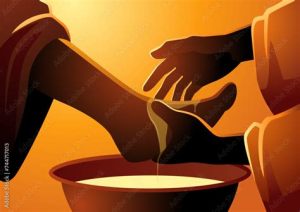
Jesus washed the feet of the disciples. Foot washing was a task for the most lowly of servants. Jesus not only does this but also takes on the dress of a menial servant when he takes off his outer garment and wraps a towel around his waist. Peter objects (vv. 6-8): “You shall never wash my feet.” He knew it should be the other way around. But Jesus is using the foot washing as a sign of His soon and subsequent death on behalf of Peter and all of us (vv. 7-10), and, then, also as an example of service to others (vv. 13-17).
- He taught us important life lessons (13:6-11, 31-35, 38).
Lesson 1 – One of these lessons was a caution: the devil is active in tempting us to go away from and against God. Peter, thus, is taught that there is weakness in his loyalty (v. 38). This is a lesson for all of us.
Lesson 2 – Then there is the positive, teaching in verses 34-35:
34 A new commandment I give to you, that you love one another: just as I have loved you, you also are to love one another. 35 By this all people will know that you are my disciples, if you have love for one another.”
How is the commandment to love one another “new”? There are two Greek words for “new”. One suggests original, recent, or different. The other, used in John 13, suggests fresh – in a fresh way. Thus, in Leviticus 19:18 & Matthew 22:39 (also in Mark 12:41), it says, “Love your neighbour as yourself.” The ‘new’ or fresh way stated in John 13 is, “Love one another, just as I have loved you.” The new way is deeper – as Christ loves.
Your Turn:
- Read John 13.
- How can you humbly serve others – family, co-workers, friends, brothers & sisters in Christ – this week?
- Is there some way you have pledged to follow Christ completely but have subsequently failed Him?
- Think about the depth of love believers are to show one another
DAY 317 – JOHN 14 – PEACE FOR TROUBLED HEARTS

“Let not your hearts be troubled. Believe in God.” John 14:1
John 14 begins and ends with this phrase: “Let not your hearts be troubled.” (verses 1 & 27) This chapter is Jesus’ answer to our troubled hearts.
The Frist ‘Believe’
We find help in our troubles when we believe in God: “Believe in God; believe also in Me.. ” And why should we believe in the Father and the Son? First, because Jesus is preparing a place in heaven for those who believe in Him (v. 2). Second, because He will return and take His children with Him to heaven (v. 3). With this wonderful future in view, we should make sure we are identified with Him by trust in Jesus, the only way to God the Father (vv. 4-7).
The Second ‘Believe’
We are to believe that Jesus and God the Father are one. To see Jesus in action is to see God. To hear God’s authoritative word we are to listen to Jesus. To see the miraculous works of Jesus is to see Father and Son acting in agreement (vv. 8-11).
The Third ‘Believe’
When we believe in Christ, He enables us to do His work. Trusting in Him leads to answered prayer (vv. 12-14). All that is said in this chapter is a source of peace and especially so as we see what Jesus said coming into fruition (v. 27).
The remainder of John 14 basically expands on some of these thoughts.
– We show our love for Jesus by keeping His commandments (v. 15).
– The godhead is working together on our behalf. Jesus asks the Father who send the Spirit (“Helper”). The Spirit of God lives within believers (v. 16).
– This Helper will be our teacher – teaching us about Jesus and what He has done for us (vv. 25-26).
– The actions of Satan (the “ruler of this world”) who was out to get Jesus was no match for the Lord: “He has no claim on Me” (v. 30).
– Jesus tells the disciples that He will soon leave them, but He will not leave them on their own. He will live in us (vv. 18-20, 28-30).
– We show our love for the Lord by obedience to His commandments. This love is reciprocated to us by both the Father and the Son (vv. 21-24). Jesus would continue to show His love of God the Father through His obedience to God’s plan – “He humbled Himself and became obedient to the point of death—even death on a cross.(Philippians 2:8).
So, the assurances of God’s great love for us are there for us to believe and make our own when we face troubled hearts.
Your Turn:
- Read John 14.
- What is troubling you today?
- How can this passage help you through your troubles?
- Do you actually believe Jesus Christ cares for you?
Humble yourselves, therefore, under the mighty hand of God so that at the proper time He may exalt you, casting all your anxieties on Him, because He cares for you. I Peter 5:6-7
NOTE: We will return to the Gospel of John on Day 325 (in about a week). First, we have one Short Thought on the Book of Leviticus, then six meditations on the Minor Prophets.
DAY 318 – VALUING LEVITICUS
… love your neighbour as yourself: I am the Lord. Leviticus 19:18b
 dreamstime.com
The third book of the Bible is Leviticus. If asked what book of the Bible is their favourite, people are apt to say the Psalms or the Gospel of John, or Philippians – but not Leviticus. Book of Leviticus contains rules governing Jewish life and worship. When you think about these regulations, lessons emerge about the holiness of God and our love for Him and for our neighbours.
Here is a topical outline of the book:
- Sacrifices – chapters 1, 17, 22
- Offerings – chapters 2, 3, 6, 9, 22, 27
- Sin and Guilt – chapters 4, 5 (both unintentional and intentional)
- Laws and regulations governing various areas of life – chapters 7 (food), 11 (animal sacrifices), 12 (childbirth), 13-14 (leprosy), 15 (bodily discharges), 18 (sexual sins), moral & ethical behaviour), 20 (penalties), 24 (lampstand in Tabernacle; blasphemy), 26 (blessings & curses)
- Special days – chapters 16 (Day of Atonement), 23 (Sabbath, Passover, Feast of Weeks), 25 (the Sabbath year or Year of Jubilee)
- The priests – chapters 8, 10, 21
There is a lot said about purity and cleanliness, both physical and ceremonial. Often the context is being right with God, with some ceremonial cleaning of the worshipper and the sacrifice that is offered. Other times, the context is communal. For example, having those showing symptoms of leprosy live apart from the main camp until they could be declared free of the disease and then return.
These two relationships – with God and with the community – illustrate the basic commands to love God sincerely and to love our neighbour as ourselves (Lev. 19:18). Loving our neighbour is behind the directions found in chapter 19, which include (a) leaving some pickings from the harvest for the poor in the community to reap, (b) avoiding theft, false dealing, lying, (c) paying a fair wage, (d) showing consideration for persons with a disability, (e) meeting out justice in court, without prejudice towards the poor, (f) no slander, no hatred, no vengeance. In other words, “Love your neighbour.”
Loving God meant that their sins had to be faced and forgiven. In Leviticus 17:11 we read, “For the life of a creature is in the blood and I have given it to you to make atonement on the altar; it is the blood that makes atonement for one’s life.” The sacrifice of animals without blemish pointed to the New Testament revelation of Jesus Christ as the one who died for our sins – His blood being shed.
Hebrews 10:1-10 speaks to this directly when it says,
For since the law has but a shadow of the good things to come instead of the true form of these realities, it can never, by the same sacrifices that are continually offered every year, make perfect those who draw near. … 3 But in these sacrifices there is a reminder of sins every year. 4 For it is impossible for the blood of bulls and goats to take away sins.
5 Consequently, when Christ came into the world, he said,
“Sacrifices and offerings you have not desired,
but a body have you prepared for me;
6 in burnt offerings and sin offerings
you have taken no pleasure.
7 Then I said, ‘Behold, I have come to do your will, O God,
as it is written of me in the scroll of the book.’” [Psalm 40:6-8]
… He does away with the first in order to establish the second. 10 And by that will we have been sanctified through the offering of the body of Jesus Christ once for all.
The Book of Leviticus, then, is about loving God and loving your neighbour.
Your Turn:
- Read the whole book of Leviticus with this understanding in mind. If not the whole book, read, at least, chapters 16 and 19.
- You might also read Hebrews 8, 9, and 10.
- You might be wondering what the difference is between an offering and a sacrifice. The terms are sometimes used similarly, especially in the New Testament. A “sacrifice” is most often a gift of an animal in which its life is exchanged for the person giving it (Exodus 34:24), with a view to atonement. Essentially, an “offering” is a “gift to God” (e.g., animal, grain, bird, money) which is sometimes a required sacrifice and sometimes an expression of thanksgiving that is in addition to what is required. In other words, all sacrifices are offerings, but not all offerings are sacrifices. In the New Testament, we are commanded to offer our bodies as “living sacrifices” to God” (Romans 12:1) and to offer “sacrifices” that include praise to God, good deeds to others, and the sharing of what we have with others, and these things are called “sacrifices (Hebrews 13:15). Think about what that might mean in your circumstances.
DAY 319 – The Minor Prophets: JONAH
 learnreligions.com
But it displeased Jonah exceedingly, and he was angry.2 And he prayed to the Lord and said, “O Lord, is not this what I said when I was yet in my country? That is why I made haste to flee to Tarshish; for I knew that you are a gracious God and merciful, slow to anger and abounding in steadfast love, and relenting from disaster. 3 Therefore now, O Lord, please take my life from me, for it is better for me to die than to live.” 4 And the Lord said, “Do you do well to be angry?” Jonah 4:1-4
The story of Jonah is one of the most well-known stories in the Bible. Jonah lived in the 8th century B.C. He was a God-appointed prophet during the reign of the second Jeroboam, King of the northern kingdom of Israel from 782-753 BC (II Kings 14:23-28). The four chapters of Jonah’s book tell us a lot about him, and about his God.
About Jonah
- Jonah was an angry man, who initially disobeyed God (1:1; 4:9). He was angry at God for giving the people of the wicked city of Nineveh an opportunity to repent (4:1-3), then angry at God again when God took away a shady plant (4:6-9) that had given him relief from the oppressive heat. When called to go to Nineveh and preach the way of repentance and faith, Jonah disobeyed and went the other direction (1:3). Sometimes we do not want God to act mercifully towards others. Knowing God is gracious, merciful, slow to anger, and abounding in love, Jonah ran away from God’s plan and even after large numbers repented and turned to God, Jonah remained angry enough to want to die (4:3).
- Nonetheless, Jonah was a believer in the one true God (1:9; 2:9- “I fear the Lord, the God of heaven…Salvation belongs to the Lord”). Throughout this whole adventure, nothing shakes the prophet’s faith in God and His character of love. It is possible to believe the right things but at the same time be angry at God. Why? Because we do not want what God wants.
- Jonah was an honest man. On the ship heading west when God wanted him to go east, a storm beset the ship and its crew. When awakened, Jonah discerned that this was God’s way of getting Jonah’s attention and honestly confessed to the sailors, “…I know it is because of me that this great tempest has come upon you.” (1:12). He was also honest with God when he confessed his displeasure with God for forgiving the people of Nineveh and for taking away the shade (4:1-4, 9).
- Jonah was a man of prayer. The main place we see this is in chapter 2. The shipmen throw Jonah into the raging waters and in that chapter, Jonah tells what happened to him and what he was thinking at the time. He summarizes it, “I called out to the Lord, out of my distress, and He answered me.” (2:2) He thought he was about to die (“the waters closed over me to take my life” – v.5) Weeds wrapped around him and “bars closed around me forever” (v. 6). His life was “fainting away” (v. 7). Then, he remembered the Lord and called out for help. It was here that he vowed to obey God and go to Nineveh: “What I have vowed I will repay” (v.9). He gives God the credit and praise for his rescue: “I with the voice of thanksgiving will sacrifice to You…Salvation belongs to the Lord (v. 9).” Jonah prayed again as recorded in 4:2 & 8. In these verses the prophet acknowledges God’s love and mercy towards the Ninevites, but adds that this was not what he wanted God to be! He wanted these people to be punished and when hey were forgiven instead, he asked God to let him die.
- Jonah was an obedient In 3:2, God re-commissions Jonah, calling on him to go to Nineveh and proclaim the message “that I tell you”. The message is that they had 40 days to repent or they would be destroyed. Jonah obeys and goes, but much to his displeasure, they repent! See 3:5-9. Jonah still did not want to give these people God’s gracious message, but this time he obeyed and did so. It is better to obey even when we’d rather not, than it is to disobey. Jesus taught this in Matthew 21:28-32 in the parable of the two sons. The father asks them to go to work in the field. One says, “I won’t go” but does; the other says, “I will,” but doesn’t. Jesus asks, “Which of the two did the will of his father?” Of course, it was the first son who did the father’s will by his obedience.
- Jonah was an unhappy and angry man – again! The story ends as it had begun with Jonah unhappy with God for sparing the Ninevites.
About God
- God is compassionate. See 1:2; 3:1,10; 4:2, 11.
- God is a sending God – sending His message to needy hearers. See 1:2; 3:2.
- God is the sovereign creator. He creates then calms a storm. He commissions a great fish to be there at the right moment to swallow Jonah – then to vomit Jonah onto dry land. He appointed a plant to grow and give shade to Jonah, then to wither, and a scorching wind to make Jonah uncomfortable. See 1:4, 15, 17; 2:10; 4:6-8.
- God answers prayer when it is in agreement with His person and will. See 2:1-2, 7. God answered Jonah’s prayer for deliverance from the fish, but not his prayer for deliverance from the heat by death.
Your Turn:
- Read the Book of Jonah.
- Why did Jonah not want the same thing God wanted? Jonah allowed his hatred of the people of Nineveh to rule his choice and emotion. He knew Go’s grace but did not want it for these ‘foreigners’. Have you ever allowed prejudice, racism, political differences, or personal dislike to govern your attitude to another person, when God says, “Love your enemies and pray for those who persecute you”?
- Think of all the people in the world who need to hear God’s message. Jonah 4:11 says there were 120,000 persons in Nineveh who “did not know their right hand from their left” (4:11). That expression may mean that the population of Nineveh at that time was 120,000. Or it may mean that there were that many young children, plus adults. Or it may be an expression describing people who were spiritually and morally ignorant. In any case, God loved them and Jonah did not. God even loved the “cattle” while Jonah loved a plant that gave him shade. Jonah had to agree that animals and people are more valuable than plants.
- What do you think of the ending of the Book? It seems like it just stops with no explanation of how Jonah responded to God. Yet, it is unlikely Jonah would have written his book that paints him in such a bad light if he had not ultimately repented of his anger and associated sins. Also, the ending (and, also the question in 4:9) is the application God leaves with us at the end of the ‘sermon’. He leaves us with a question about our own attitude and actions towards others. Each of us must answer it for ourselves.
- In my rural community there are only 6,352 people – nowhere near Nineveh’s population, yet those six thousand are my ‘Nineveh’, the responsibility of my church family and myself. They, too, need to hear the message of God’s grace, mercy, patience, and abundant love. The greatest demonstration of God’s love was in Jesus Christ’s death, burial and resurrection. Jesus referred to that in connection with Jonah in Matthew 12:40, “For just as Jonah was three days and three nights in the belly of the great fish, so will the Son of Man be three days and three nights in the heart of the earth.” That is our message.
DAY 320 – The Minor Prophets: HOSEA
 https://i.ytimg.com/vi/PywaHFsEmzY/maxresdefault.jpg
“Come, let us return to the Lord;
for He has torn us, that He may heal us;
He has struck us down, and He will bind us up. Hosea 6:1 ESV
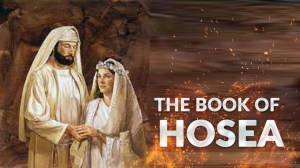
The Old Testament book of Hosea (c. 740 BC) tells the story of Hosea’s marriage to an unfaithful wife, which was followed by the prophet’s pursuit of her. This story is used as an illustration of God’s love for, punishment of, and subsequent pursuit of Israel who had forsaken Him for false idols and an unholy lifestyle.
I’d like to focus on some verses from chapters 11 and 14. Notice the way the unfaithful nation is described compared to the faithful God of Israel is described.
ISREAL:
They “went away” and “turned away”.
They worshipped idols.
They fell into subjection to Assyria.
They experienced the destruction of their homeland.
Their cry for help was not immediately answered.
They lied to God and were deceitful.
They stumbled in their sinfulness.
They were guilty of apostacy.
GOD:
God loved them an called them to freedom.
He taught them to walk in His ways.
He healed them.
He showed kindness and love.
He eased their burdens.
He fed them.
He showed tender compassion to them.
He invited them to return to Him.
He showed mercy, healing, and love toward them.
His presence was like dew on the grass.
He promised to restore their beauty, make them a fragrance of His love, and cause the nation to blossom.
He would look after them.
Look through chapters 11 and 14 to find these expressions of condemnation and of forgiveness.
Your Turn:
- Read Hosea, especially chapters 1-3, plus 11, and 14.
- Is there any place in your life that could be described as going from or turning away from God?
- Think about times and places in your life where God showed love, kindness, compassion, mercy, or when God looked after you?
- Imagine how difficult and hurtful it must have been for Hosea when his wife forsook him for another – and how hard it was for him to go out and retrieve her. Yet he did. This helps us know the compassion of God when we dessert Him.
DAY 321 – The Minor Prophets: AMOS
13 “Behold, the days are coming,” declares the Lord,
“when the plowman shall overtake the reaper
and the treader of grapes him who sows the seed;
the mountains shall drip sweet wine,
and all the hills shall flow with it.
14 I will restore the fortunes of my people Israel …” Amos 9:13-14a
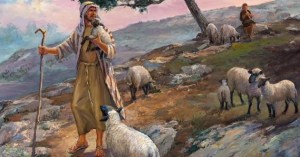
Amos was a herdsman and a trimmer of sycamore trees (1:11; 7:14-15). He cared for sheep and “dressed” sycamores, which were a type of mulberry tree and whose fruit was eaten mainly by the very poor. The priest Amaziah had rebuked Amos for predicting the death of the King. Amos answered, essentially saying, ‘I may not be a professional prophet, but nonetheless, God had called me, “Go, prophesy to My people Israel,” 7:15.
His book then proceeds to announce coming judgments on Israel’s neighbours (1:3 to 2:5) and Israel itself (2:6 to 9:10).
The Sins of Israel’s Neighbours (Syria, Gaza, Tyre, Edom, Ammon, Moab)
- crushed God’s people like grain.
- took people in Israel into captivity
- broke agreements with Israel
- were perpetually angry against Israel
- viscously assaulted pregnant women
- sinned against another nation and their king
The Sin of Judah (the southern kingdom)
- rejected God’s law
The Sins of Israel (the northern kingdom and focus of Amos’ ministry)
- abused the poor
- ‘justice’
- committed sexual sin
- showed disrespect for the house of God
- disrespected those who had taken Nazarite vows
- paid temple fines with wine
- failed to repent
- worshipped idols
- tried to stop God’s prophets from speaking
What judgments did God say would be brought upon these people?
Judgment on Neighbouring Nations:
- be brought upon the rulers & their structures
- exile of these people and their king
Judgment on Judah:
- fire to be sent upon the nation and Jerusalem
Judgment on Israel:
- coming destruction, including natural disasters
What do we learn from all this? We learn that God is watching how we treat one another and whether or not we respect Him. He particularly mentions the mistreatment of the poor and assault of women. These are two sins that are commonly found in our own day. Sometimes the sins are sins of neglect – nothing constructive is done to help the poor, for example, or what is done is very much insufficient. Sexual assault is also too common.
Society as a whole is held accountable for such gross offences.
We learn, too, that spiritual sins are called out by God – for example, disrespect for the house of God and even outright idol worship.
God pronounces judgment as ‘fire’ – a general description of penalties and losses to which these nations would be subjected. Also, some people groups would be exiled – forced to leave their homelands, becoming either captives or refugees living in foreign lands.
It has to be noted that God welcomed the people back to Himself, if they would just repent. He promised restoration to their homeland, prosperity, and the return of the Davidic line of kings.
Your Turn:
- Read all nine chapters of Amos – or at least Amos 9:11-18.
- In what ways have you abused others and neglected God?
- Make note of God’s willingness to forgive and restore the repentant.
- If you are a victim of another’s abuse, believe that God will judge the wrongdoers, and take comfort in the Lord’s concern.
Day 322 – Book of Micah

Swords into Plowshares sculpture at the United Nations in New York City,a gift of the Soviet Union, 1959 https://en.wikipedia.org/wiki/Swords_to_ploughshares#/media/File:Schwerter_zu_Pflugscharen_-_Jewgeni_Wutschetitsch_-_Geschenk_der_Sowjetunion_an_die_UNO_-_1959.jpg
Who is a God like You, pardoning iniquity and passing over transgression for the remnant of His inheritance?… Micah 7:18
I expect that you will recognize a few of the verses found in the Book of Micah.
Micah’s name means “Who is like Jehovah?” He was born in a town 22 miles southwest of Jerusalem and had a ministry of approximately 25 years, during parts of the reigns of three kings of Judah (Jotham, Ahaz, Hezekiah). Micah was a contemporary of Isaiah. Jeremiah knew of Micah’s message and quoted from his prophecy (see Jeremiah 26:16-19). The prophet Micah spoke of God’s judgment and of God’s willingness to forgive.
Let’s reflect on four familiar passages.
First, chapter 4:1-3.
It shall come to pass in the latter days that the mountain of the house of the Lord shall be established as the highest of the mountains, and it shall be lifted up above the hills; and peoples shall flow to it,
2 and many nations shall come, and say: “Come, let us go up to the mountain of the Lord, to the house of the God of Jacob, that he may teach us his ways and that we may walk in his paths.” For out of Zion shall go forth the law, and the word of the Lord from Jerusalem.3 He shall judge between many peoples, and shall decide disputes for strong nations far away; and they shall beat their swords into plowshares, and their spears into pruning hooks; nation shall not lift up sword against nation, neither shall they learn war anymore.
I recall a political science text that had the title Swords Into Plowshares and which I used as an undergraduate. The same words are found in Isaiah 2:3-4 and both prophets indicate a time when people will set aside the instruments of war and, instead, manufacture peaceful tools. Here’s how Wikipedia defines the expression:
Hebrew: אֵת ’êṯ, also translated coulter) is often used to symbolize creative tools that benefit humankind, as opposed to destructive tools of war, symbolized by the sword (Hebrew: חֶרֶב ḥereḇ), a similar sharp metal tool with an arguably opposite use. In addition to the original Biblical Messianic intent, the expression “beat swords into ploughshares” has been used by disparate social and political groups. A past example from the period 1993 continuing to 2013 is the dismantling of nuclear and the use of their contents as fuel in civilian electric power stations, the Megatons to Megawatts Program . https://en.wikipedia.org/wiki/Swords_to_ploughshares [Accessed August 28, 2025]
When you consider all the times in history, plus the current experience in many parts of the world, it is certainly a welcome promise that a day is coming when war will be a thing of the past. This will be God’s doing, a probable reference to the millennial reign of Christ (Revelation 20) when people and nations will go God’s temple to learn how to live peacefully.
Second, chapter 5:2 ESV
But you, O Bethlehem Ephrathah, who are too little to be among the clans of Judah, from you shall come forth for me one who is to be ruler in Israel whose coming forth is from of old, from ancient days.
The prophet says that at a time future from his day, when a foreign power was in control of the Holy Land, a new king from the tribe of Judah would be born in Bethlehem. Bethlehem was an insignificant village near Jerusalem, yet the King would come from there. The wise men asked King Herod where the King of the Jews would be born. Herod consulted the religious leaders in turn quoted this passage from Micah. Matthew 2:1-6, “…… 4 and assembling all the chief priests and scribes of the people, he inquired of them where the Christ was to be born. 5 They told him, “In Bethlehem of Judea, for so it is written by the prophet…” and they quoted Micah. Jesus was the One “whose coming forth is from old, from ancient days” – i.e., the eternal Son of God.
Third, chapter 6:8
He has told you, O man, what is good; and what does the Lord require of you but to do justice, and to love kindness, and to walk humbly with your God?
In the preceding verses, Micah imagined a courtroom scene where Israel’s leaders ask, ‘How shall we atone for our sins? What do You expect of us? Lots of sacrifices, perhaps even of our children?’ God answers, ‘No. I require justice, love, kindness, and humility.’ We are to walk in these ways – treating others with respect, honouring God – this is what He requires. We do so knowing that our lives are lived before Him. We can’t fake these things.
Fourth, chapter 7:18
Who is a God like you, pardoning iniquity and passing over transgression for the remnant of his inheritance? He does not retain his anger forever, because he delights in steadfast love.
In this last chapter, Micah confesses the sins of his nation then points out the forgiveness God offers. He is amazed at the loving nature of God, who pardons sin, delights in mercy, and exercises compassion. This pardoning is available to all who humbly seek His forgiveness.
Your Turn:
- Read the Book of Micah.
- Think about the character of God as revealed in this book.
- Do you try to defend yourself as not being too guilty before God, or do you approach God with real humility?
- A hymn (written by Frederick William Faber, 1862) expresses the extent of God’s mercy:
There’s a wideness in God’s mercy
like the wideness of the sea;
there’s a kindness in His justice
which is more than liberty.
There is welcome for the sinner,
and more graces for the good;
there is mercy with the Savior;
there is healing in His blood.
For the love of God is broader
than the measure of our mind;
and the heart of the Eternal
is most wonderfully kind.
If our love were but more simple,
we would take Him at His word,
and our lives would be illumined
by the presence of our Lord.
 Abundant Living

